What is a stablecoin?
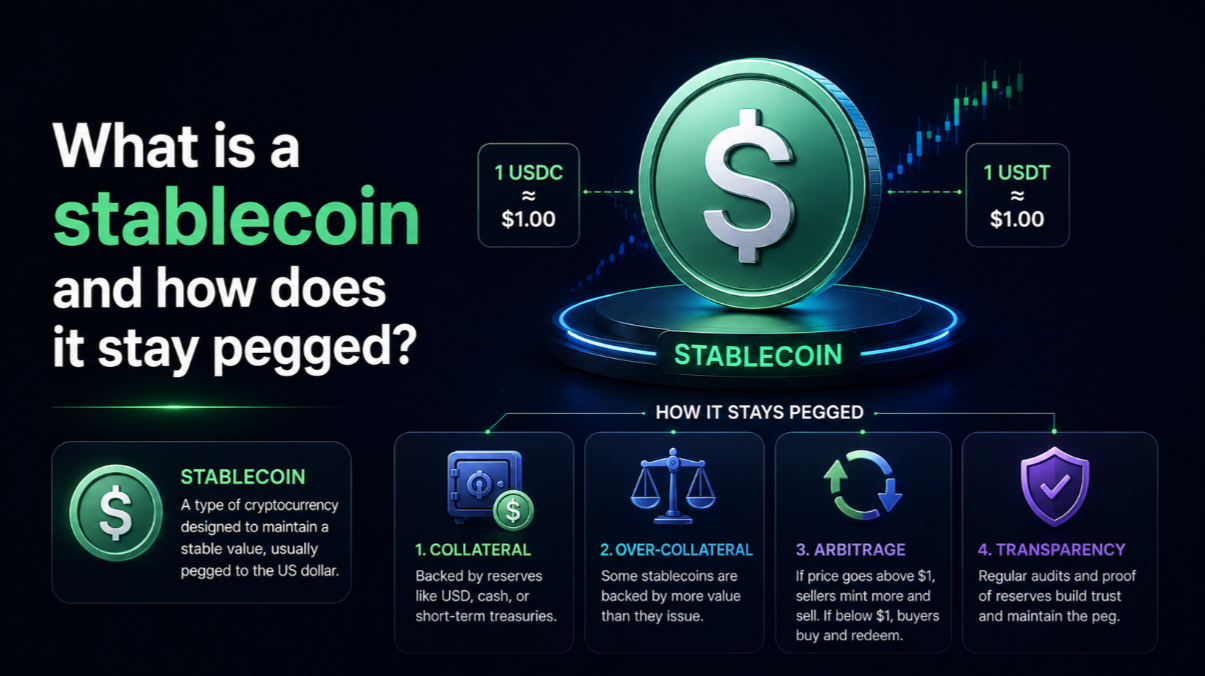
A stablecoin is a cryptocurrency designed to hold a steady value by tracking an external reference, most often a fiat currency like the US dollar. While Bitcoin or Ether can swing 10% in a day, a well-run stablecoin aims to trade at or very close to its target, usually $1.00. That combination of blockchain speed and price stability is why stablecoins have become the settlement layer for much of crypto trading, lending, and cross-border payments.
The word "peg" simply means the price the coin is trying to hold. A stablecoin is pegged to $1 when the market treats one token as worth one dollar. The interesting question, and the one that separates a trustworthy coin from a risky one, is how it defends that peg when buyers and sellers push the price around.
Why they exist
Stablecoins solve a practical problem: moving value on a blockchain without exposing yourself to wild price swings. Traders use them to park funds between positions. Lenders and borrowers in decentralized finance (DeFi) quote interest in them. People in countries with high inflation use them to hold something dollar-like without a US bank account. Because they settle in minutes and run 24/7, they often move money faster and cheaper than traditional rails.
The main types of stablecoins
Not all stablecoins keep their peg the same way. The design determines the risks, so it is worth knowing which category a coin falls into before you hold it.
- Fiat-backed: Each token is backed by real dollars or short-term government debt held in reserve by a company. Examples include USDC and USDT. You trust the issuer to actually hold the money and let you redeem.
- Crypto-collateralized: Backed by other cryptocurrencies locked in smart contracts, usually over-collateralized so the backing exceeds the coins issued. DAI is the best-known example.
- Commodity-backed: Pegged to a physical asset such as gold, with each token representing a claim on a stored quantity.
- Algorithmic: No full reserve. Software expands or contracts supply to steer the price. These have the weakest track record and have failed dramatically.
How fiat-backed coins stay pegged
The most common stablecoins hold their peg through a redemption promise. The issuer keeps roughly one dollar of reserves for every token in circulation. If the coin trades below $1, arbitrage traders buy it cheaply, redeem it with the issuer for a full dollar, and pocket the difference. That buying pressure pushes the price back up. If it trades above $1, traders mint new coins for a dollar each and sell them, which pushes the price down.
This mechanism only works if the reserves are real, liquid, and actually redeemable. That is why reserve transparency and independent attestations matter so much for these coins.
How crypto-backed and algorithmic coins stay pegged
Crypto-collateralized coins keep more value in reserve than they issue, a cushion called over-collateralization. To mint $100 of DAI, you might lock $150 of Ether. If your collateral falls in value, the system automatically sells it to keep every coin fully backed. The extra margin absorbs the volatility of the underlying crypto.
Algorithmic coins try to hold the peg with incentives and supply changes rather than hard reserves. When the price drifts, the protocol rewards users for actions that nudge it back. The problem is that these incentives depend on continued market confidence. When confidence breaks, the mechanism can spiral, which is exactly what happened when TerraUSD collapsed in 2022 and erased tens of billions of dollars.
What can break a peg
A stablecoin is only as stable as the system behind it. Common failure points include:
- Reserve doubt: If people suspect the reserves are missing or illiquid, they rush to redeem and the peg cracks.
- Redemption friction: If holders cannot easily swap coins for the underlying asset, arbitrage stops working.
- Collateral crashes: A sharp drop in backing assets can overwhelm crypto-collateralized designs.
- Bank exposure: USDC briefly lost its peg in 2023 when part of its reserves sat in a failing bank.
- Reflexive design: Algorithmic models can enter a death spiral when confidence evaporates.
Practical takeaway
Before trusting a stablecoin, ask three questions: What backs it? Can you actually redeem it? And who publishes proof of the reserves? Fiat-backed coins with audited, transparent reserves carry the lowest structural risk, while purely algorithmic designs carry the most. A peg is a promise defended by economics, not a law of nature, so treat "stable" as a design goal rather than a guarantee. This article is educational and not financial advice.