US Strikes on Iran Send Bitcoin, Ethereum Lower
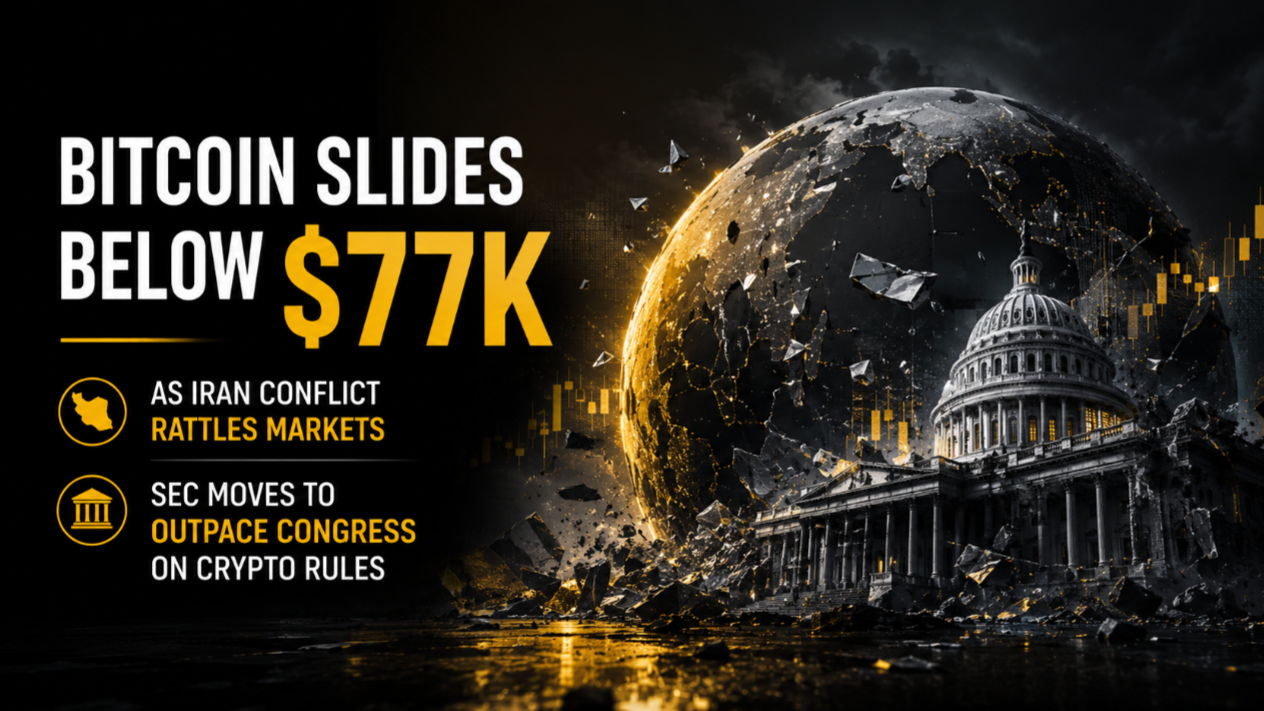
Bitcoin opened Wednesday, September 2, near $77,400 — roughly 1.5% below Tuesday's level — before slipping further to the $76,500–$77,000 range as fresh U.S. airstrikes on Iranian targets reignited hostilities between the two countries. Iran responded with rocket and drone attacks on U.S. military installations, and the escalation quickly spilled into financial markets, pushing oil prices above $93 a barrel and driving investors out of risk assets across the board.
Ethereum followed a similar path, falling more than 2% to trade near $2,375–$2,400, while Solana and XRP posted comparable declines. The total crypto market capitalization slid roughly 1.4%–2.2% on the day to around $2.59 trillion, even as the Crypto Fear & Greed Index remained in "Greed" territory, reflecting a market that had rallied hard through August before this week's pullback.
$369 Million in Liquidations as Leverage Unwinds
The sell-off was amplified by heavy leverage in the derivatives market. Roughly $369 million in long positions across Bitcoin, Ethereum, XRP and Solana were liquidated within hours as prices dropped, catching an estimated 90,000 traders off guard. Rising Treasury yields added to the pressure, with markets now pricing in a 66%–70% probability of a Federal Reserve rate hike at its September 15–16 meeting — a scenario few had positioned for heading into the week.
Despite the pullback, several analysts point out that Bitcoin remains only about 4% below its all-time high after a roughly 24% gain in August, and that U.S. spot ETF inflows resumed strongly at the end of last month, suggesting the drop is more of a leverage flush than a change in institutional conviction.
SEC Moves to Get Ahead of Congress on Tokenization
While traders absorbed the geopolitical shock, U.S. regulators made a notable move of their own. The Securities and Exchange Commission proposed a full overhaul of the rules governing transfer agents, adapting them for public blockchains, tokenized stocks and AI-driven infrastructure — effectively acting before Congress finalizes the Digital Asset Market CLARITY Act.
The Commission has scheduled a roundtable for September 17 with major players including BlackRock, Nasdaq, NYSE and Robinhood to discuss the future of 24/7 stock trading on blockchain rails. By advancing its own framework now, the SEC is positioning itself to shape how tokenized securities are regulated in the U.S., rather than waiting for lawmakers to settle jurisdictional questions between the SEC and CFTC through legislation.
What It Means for the Market
Wednesday's session captures the two forces currently defining U.S. crypto markets: acute sensitivity to geopolitical risk, and a regulatory landscape that is shifting faster through agency action than through Congress. For traders, that means near-term volatility tied to headlines out of the Middle East and the Fed; for the industry longer-term, it means the SEC's tokenization rulebook — not just the CLARITY Act — may end up defining how digital assets trade on Wall Street.