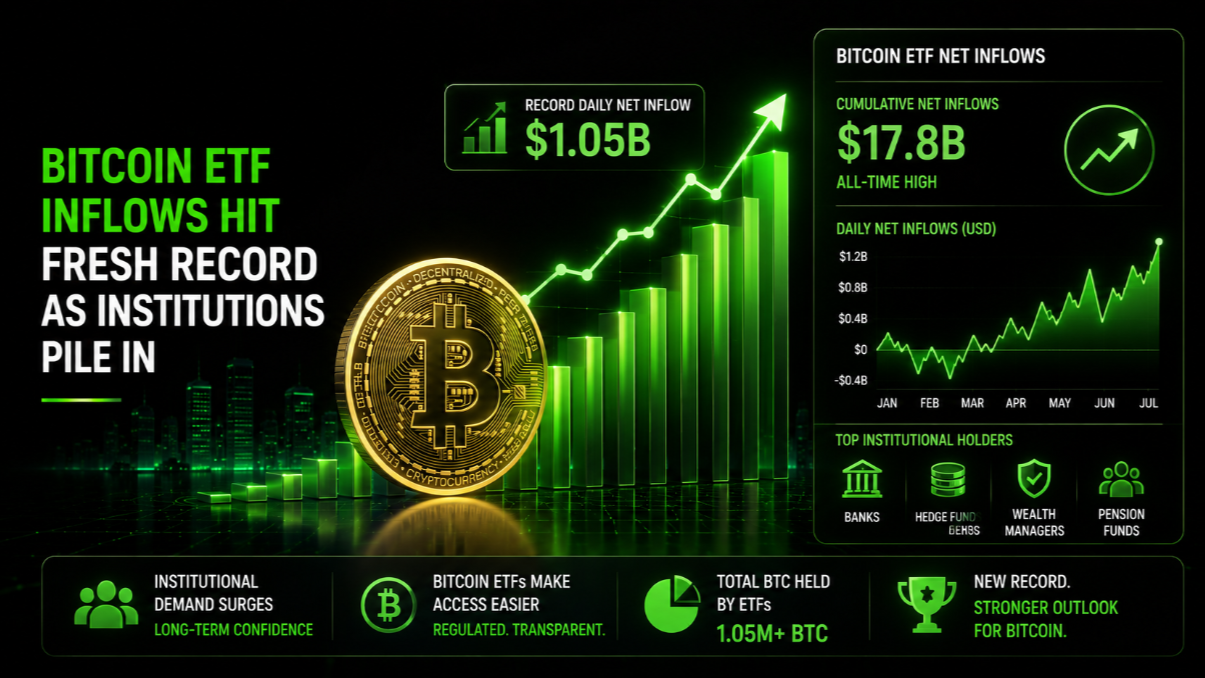
Spot Bitcoin exchange-traded funds recorded their largest weekly net inflows on record, extending a stretch of institutional buying that has reshaped how the asset trades. The surge underscores a maturing market structure, but it also raises fresh questions about concentration and what happens when the flows reverse.
What happened
Across the roster of U.S.-listed spot Bitcoin funds, net creations outpaced redemptions by a wide margin over the past five trading sessions, topping the previous high set earlier this year. Issuers reported that the bulk of the demand came through registered investment advisers and model portfolios rather than short-term trading desks, a signal that allocations are being embedded into longer-horizon strategies.
Assets under management across the category have climbed accordingly, with the largest fund continuing to account for a substantial share of total holdings. Trading volumes rose in tandem, though liquidity remained concentrated in a handful of products.
Why it matters
ETF wrappers give pensions, endowments and wealth managers a familiar, regulated route into Bitcoin without the operational burden of custody and key management. That accessibility is one reason the current wave looks different from prior retail-led rallies: the marginal buyer is increasingly an institution operating under a mandate rather than a speculator chasing momentum.
Sustained creations also tighten available supply on exchanges, since coins moving into ETF custody are effectively removed from active circulation. Over time, that dynamic can amplify price moves in both directions. It is not a guarantee of higher prices, but it does change the mechanics of how demand is expressed.
Market context
The record flows arrive against a backdrop of easing macro uncertainty and growing comfort among allocators who spent the past two years studying the product structure before committing capital. Advisers who once limited clients to a token position have, in several cases, raised target weightings as tracking performance and spreads proved reliable.
Still, the picture is not uniformly bullish. A meaningful portion of ETF activity reflects basis trades, where investors buy the fund and short futures to capture a spread, meaning some inflows are hedged rather than outright directional bets. Untangling conviction buying from arbitrage is difficult from headline numbers alone, and analysts caution against reading every dollar of inflow as a vote of long-term confidence.
What to watch
The key question is durability. Watch whether daily creations hold up through the next bout of volatility, or whether redemptions accelerate at the first sign of a drawdown, as they have in past episodes. Concentration is another factor: with holdings clustered in a few funds, a shift at one large issuer could move the entire category.
Also worth tracking are disclosures from pensions and corporate treasuries in upcoming filings, which would confirm whether the institutional narrative is backed by balance-sheet commitments. For now, the flows are real and record-setting, but the story of who is buying, and why, will take several more quarters to fully resolve.
This article is for informational purposes only and does not constitute financial advice.