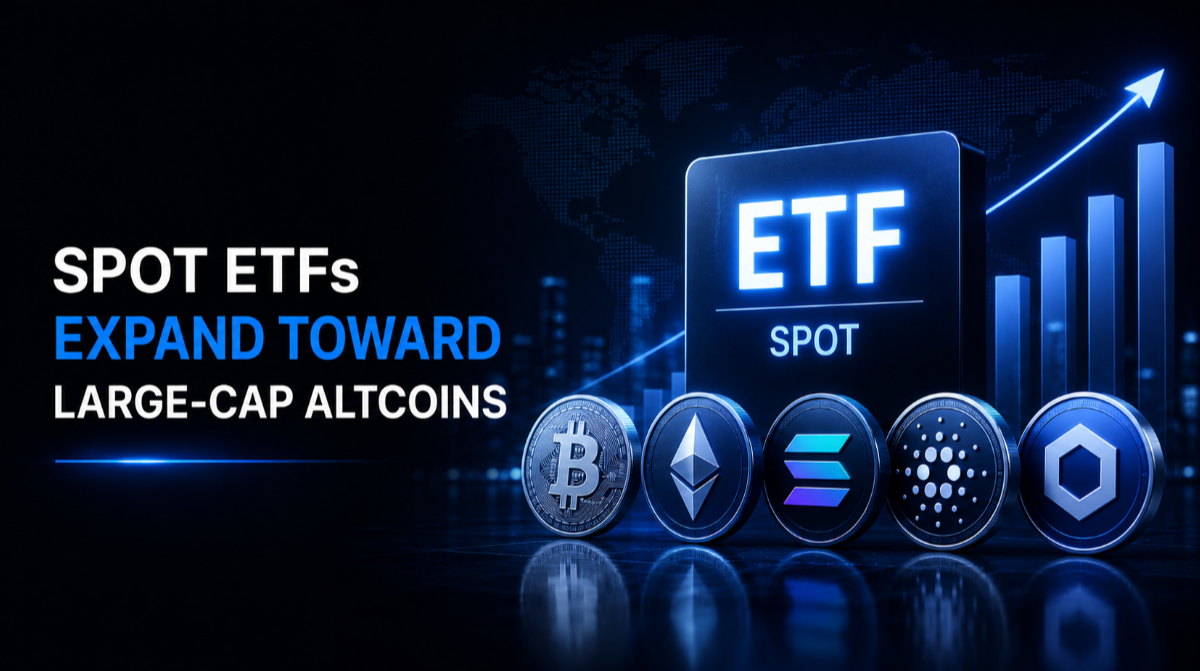
The spot exchange-traded fund model that opened Bitcoin and Ether to mainstream portfolios is now reaching further down the market-cap ladder. A widening slate of filings and early launches targeting large-cap altcoins, with Solana at the front of the queue, signals that issuers see the wrapper as a template rather than a one-off. Whether demand follows is a separate question.
What happened
Several asset managers have advanced spot ETF applications tied to large-cap tokens beyond the two majors, and a handful of products tracking Solana have moved from proposal to trading. Issuers have leaned on the same operational blueprint used for Bitcoin and Ether funds: regulated custody, in-kind or cash creation mechanics, and surveillance-sharing arrangements meant to satisfy market-integrity concerns. Filings for other high-liquidity names are working through the review process, though timelines remain uncertain and approvals are not guaranteed.
Early trading volumes for the newly listed altcoin products have been modest relative to the Bitcoin category, which is unsurprising for a nascent segment. The more telling detail is breadth: issuers are no longer treating crypto ETFs as a two-asset business.
Why it matters
For allocators, a spot ETF removes the operational friction of self-custody, exchange onboarding and key management. Extending that access to altcoins gives advisers and institutions a regulated route into assets they previously could reach only through offshore venues or direct wallets. That lowers a practical barrier that has kept many mandate-bound investors on the sidelines.
It also marks a shift in how regulators and issuers weigh these assets. Bringing a token into an ETF implies a baseline judgment about its liquidity, custody readiness and market structure. That does not settle the long-running debate over how such tokens should be classified, but it does move parts of the altcoin market closer to the regulated core of the industry.
Market context
The expansion arrives after spot Bitcoin funds proved the demand case and Ether products followed without disrupting the underlying market. Solana has drawn early attention because of its deep liquidity, active developer base and relatively concentrated staking and validator ecosystem, which issuers argue makes it more tractable to wrap than smaller, thinner tokens.
The picture is not uniformly bullish. Altcoins carry higher volatility and thinner spot liquidity than Bitcoin, which can complicate creation and redemption during stress. Questions around staking treatment inside a fund structure, concentration among a few large holders, and how much of any inflow reflects genuine allocation rather than hedged basis trades all remain open. Analysts caution that a filing is not a launch, and a launch is not proof of durable demand.
What to watch
The near-term signal is approvals: which additional large-cap tokens clear review, and on what conditions around custody and staking. Sustained net creations, rather than opening-day volume, will show whether allocators are actually building positions. Watch too for how issuers handle staking yield, since excluding it changes the return profile investors receive.
Concentration is another factor. If altcoin ETF assets cluster in one or two products, a shift at a single issuer could move an entire segment. For now, the expansion is real but early, and the question of who buys these funds, and whether they hold through the next drawdown, will take several quarters to answer.
This article is for informational purposes only and does not constitute financial advice.