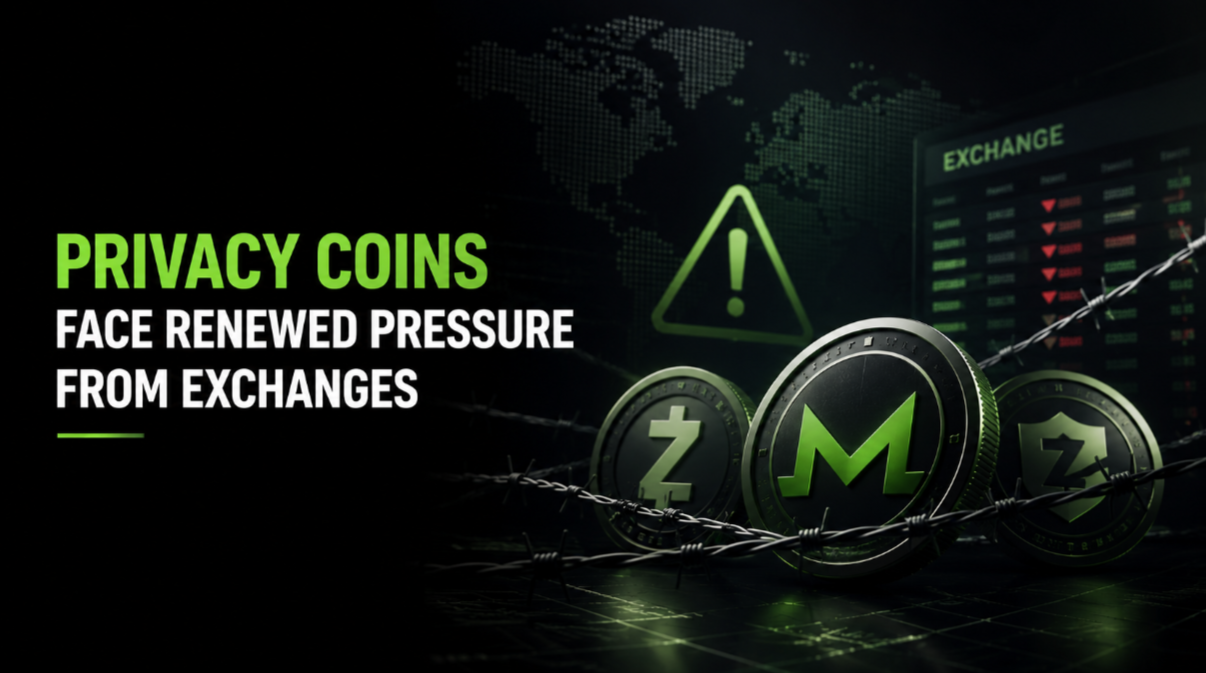
Privacy-focused tokens are again in the spotlight as several trading venues move to restrict or drop them, reviving a long-running tension between financial privacy and compliance obligations. Monero, the largest privacy coin by market value, sits at the center of the latest round of changes.
What happened
Over recent weeks, multiple centralized exchanges have signaled tighter handling of privacy coins, ranging from full delistings to region-specific trading limits and stricter deposit checks. Some venues cited difficulty meeting travel-rule requirements, which oblige firms to share sender and receiver information for transfers. Others pointed to guidance from local regulators or banking partners uneasy about assets designed to obscure transaction trails. The moves affect Monero most directly, along with tokens such as Zcash and Dash, and in several cases give holders a defined window to withdraw or convert balances before order books close. The pattern echoes earlier delisting waves, but the current round spans a wider set of jurisdictions at once.
Why it matters
Centralized exchanges remain the main on-ramp between fiat currency and crypto, so their listing decisions shape liquidity, price discovery and everyday access. When large venues pull support, spreads can widen and it becomes harder for ordinary users to buy or sell at fair prices. For privacy coins, the stakes are sharper because their core feature, shielded transaction data, is exactly what makes compliance teams cautious. The result is a structural push toward decentralized exchanges, peer-to-peer markets and atomic swaps, which are harder to shut down but also less liquid and less familiar to newcomers. The episode highlights a broader question facing the sector: whether assets built for confidentiality can coexist with a regulated exchange system built on identification and traceability.
Market context
Privacy coins occupy a modest slice of total crypto market value, and their trading has long been concentrated on a smaller set of venues than assets like Bitcoin or Ether. That concentration makes them sensitive to individual exchange decisions. Supporters argue that financial privacy is a legitimate goal and that most privacy-coin activity is lawful, comparable to the confidentiality of cash. Critics and some regulators counter that shielded transfers complicate anti-money-laundering enforcement. Developers have responded by improving decentralized trading tools and cross-chain swap options, which reduce reliance on any single listing. Even so, thinner centralized liquidity tends to increase volatility, and traders should expect wider price gaps during periods of stress or sudden delisting news.
What to watch
Key signals in the coming months include how many major venues follow through on restrictions versus reversing course, and whether any large exchange reaffirms support to differentiate itself. Watch trading volume shifting toward decentralized and peer-to-peer channels as a gauge of how effectively users route around delistings. Regulatory clarity, or the lack of it, on travel-rule expectations for shielded assets will be pivotal, as will any statements from banking partners that back exchanges. Finally, monitor developer activity around swap protocols and privacy upgrades, which will show whether the ecosystem can sustain access without centralized listings. This article is analysis, not financial advice.