What are gas fees on Ethereum?
Gas fees on Ethereum are the payments you make to have the network process your transaction. Every action on Ethereum, whether sending ETH, swapping tokens, or minting an NFT, requires computation from the thousands of computers that run the network. Gas is the unit that measures how much computational effort an action takes, and the gas fee is what you pay the validators who do that work. Think of gas as the metered fuel your transaction burns, priced in a tiny fraction of ETH.
Fees exist for two practical reasons. First, they compensate the people securing the network. Second, they prevent spam: if computation were free, anyone could flood Ethereum with junk transactions and grind it to a halt. Attaching a real cost keeps demand honest.
How gas is measured
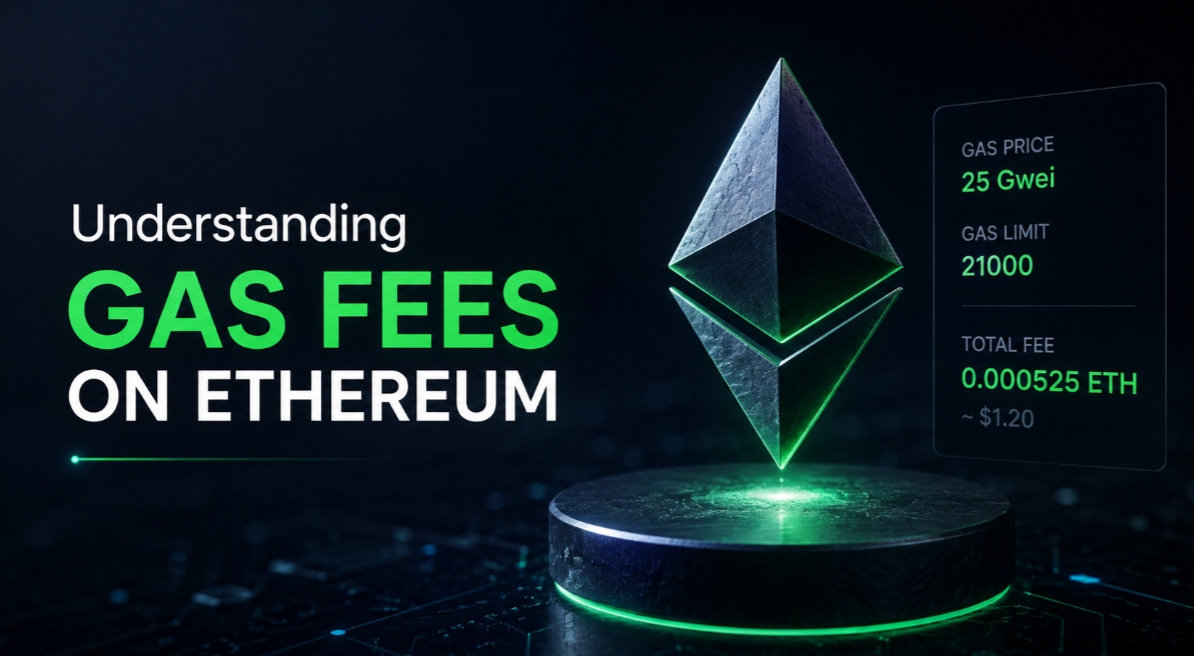
Gas has two moving parts: the amount of gas an action consumes, and the price you pay per unit of gas. A standard ETH transfer always costs 21,000 gas. More complex operations, such as interacting with a smart contract, consume more because they ask the network to do more work.
Gas prices are quoted in gwei, a denomination of ETH. One gwei equals 0.000000001 ETH (one billionth). Your total fee comes from three simple ingredients:
- Gas units used - how much computation your action requires
- Gas price in gwei - what you agree to pay per unit
- Total fee = gas units multiplied by gas price, converted to ETH
So a 21,000-gas transfer at 20 gwei costs 420,000 gwei, or 0.00042 ETH. The formula never changes; only the price per gwei moves around.
Why gas fees change so much
Ethereum has limited space in each block, and that space is auctioned to whoever wants it. When lots of people transact at once, demand for block space rises and gas prices climb. When the network is quiet, prices fall. This is ordinary supply and demand playing out roughly every twelve seconds.
Several situations reliably push fees up:
- A popular NFT drop or token launch that spikes activity
- Sharp market moves that send everyone trading at the same time
- Congestion from complex DeFi transactions competing for the same block
Because these conditions shift constantly, the fee for the exact same action can be a few cents late at night and several dollars during a busy afternoon.
Understanding EIP-1559 and the fee split
In 2021, an upgrade called EIP-1559 reshaped how fees work. Instead of a single blind bid, your fee now splits into two parts. The base fee is set automatically by the network based on how full recent blocks have been, and it is burned, meaning it is permanently removed from circulation. The priority fee, sometimes called a tip, goes to the validator as an incentive to include your transaction sooner.
You also set a max fee, the ceiling you are willing to pay. If the base fee ends up lower than your ceiling, you are refunded the difference. This design made fees more predictable, because the base fee adjusts in measured steps rather than swinging wildly on every block.
Gas limits and failed transactions
When you send a transaction, your wallet sets a gas limit: the maximum gas you will allow it to consume. For a simple transfer, 21,000 is enough. For contract interactions, wallets estimate a higher limit automatically.
Setting the limit too low is risky. If a transaction runs out of gas partway through, it fails, but the work already done still costs you. In other words, you can pay a fee and get nothing in return. This surprises many newcomers, so it is worth stating plainly: a failed transaction is not a free transaction. Letting your wallet estimate the limit usually avoids this trap.
How to pay lower gas fees
You cannot control the network, but you can control your timing and tools. A few habits make a real difference:
- Transact during off-peak hours. Weekends and late nights (UTC) are often cheaper because demand is lower.
- Watch a gas tracker. Tools like Etherscan's gas tracker show current prices so you can wait for a dip.
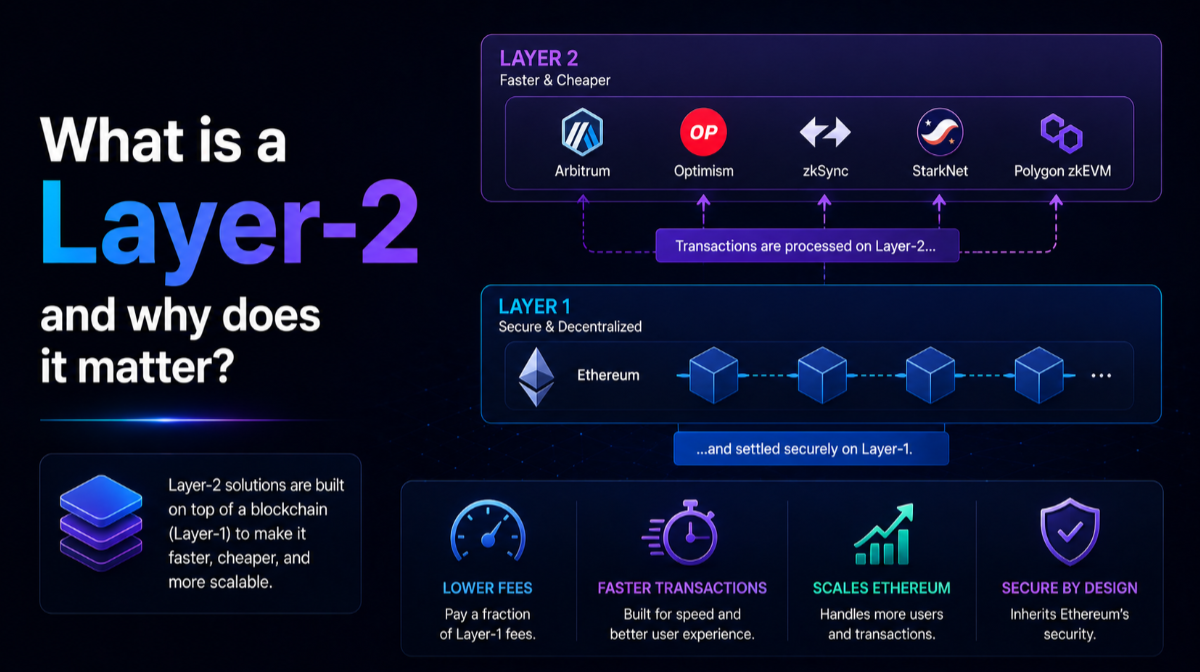
- Use Layer 2 networks. Rollups such as Arbitrum, Optimism, and Base process transactions off the main chain and settle them in batches, often cutting fees dramatically.
- Batch your actions. Some wallets and apps let you combine several operations into one transaction, spreading the fixed cost.
- Keep a small ETH buffer. Gas is always paid in ETH, so holding a little on hand means you can always move your other assets.
Key takeaways
Gas fees are simply the price of using shared, secure infrastructure, and once you understand the mechanics they stop feeling mysterious. Remember that your fee equals gas used times gas price, that EIP-1559 splits that price into a burned base fee and a validator tip, and that failed transactions still cost money. If fees feel steep on Ethereum's main network, Layer 2 rollups are the single most effective way to transact for a fraction of the cost.
This guide is educational and is not financial advice. Always verify current network conditions and do your own research before transacting.