What is blockchain?
Blockchain is a shared digital record that many computers keep copies of at the same time. Instead of one company storing the data on a single server, a blockchain spreads identical copies across a network so that no single party fully controls it. Each new batch of information is bundled into a "block" and linked to the block before it, forming a chain that grows over time. Because every participant holds the same history, the record is hard to secretly alter, which is why blockchain is often described as trustworthy without a middleman.
The idea rose to fame alongside Bitcoin in 2009, but the underlying concept is broader than any single cryptocurrency. At its core, a blockchain is simply a way to agree on a set of facts, such as who owns what, among people who do not necessarily trust each other.
How does a blockchain work?
When someone wants to record a transaction, that request is broadcast to the network. Computers called nodes check whether the request is valid, for example confirming that the sender actually holds the funds they are trying to move. Valid transactions are grouped into a block, and the network runs a process called consensus to agree that the block is legitimate before adding it to the chain.
Each block carries a cryptographic fingerprint known as a hash, plus the hash of the previous block. If anyone tampers with an old block, its fingerprint changes and no longer matches the next block, so the alteration is immediately obvious to everyone. This linking is what makes the ledger tamper-evident.
- Transaction: a user requests a transfer or an update.
- Validation: nodes verify the request against the existing history.
- Block creation: approved transactions are bundled together.
- Consensus: the network agrees the block is valid.
- Confirmation: the block is added and copied to every node.
Key features that make it different
A few properties set blockchains apart from ordinary databases. Understanding them helps explain why people find the technology compelling.
- Decentralization: no single server or company is the sole point of control or failure.
- Transparency: on public blockchains, anyone can inspect the full transaction history.
- Immutability: once data is confirmed, rewriting it is extremely difficult.
- Security: cryptography protects records and links each block to the last.
Consensus: how the network agrees
Since there is no central authority, a blockchain needs a rule for deciding which version of the truth everyone accepts. This rule is the consensus mechanism. The two best known approaches are proof of work and proof of stake.
Proof of work, used by Bitcoin, asks computers to solve a hard mathematical puzzle to earn the right to add a block. It is secure but consumes significant energy. Proof of stake, used by Ethereum since 2022, selects validators based on the amount of cryptocurrency they lock up as collateral, which uses far less power. Both aim for the same result: a network that stays honest without a boss.
Public and private blockchains
Not all blockchains are open to the world. Public blockchains like Bitcoin and Ethereum let anyone join, read, and participate. Private or permissioned blockchains restrict access to approved members and are often used by businesses that want the record-keeping benefits without full public visibility.
There are also hybrid and consortium models, where a group of organizations jointly runs the network. The right choice depends on whether the priority is open access or controlled privacy.
Where blockchain is actually used
Blockchain is best known for cryptocurrencies, but its uses reach further. Because it can record any kind of agreement, developers have applied it well beyond digital money.
- Payments: sending value across borders without a traditional bank.
- Supply chains: tracking goods from factory to shelf for authenticity.
- Smart contracts: self-executing agreements that run automatically when conditions are met.
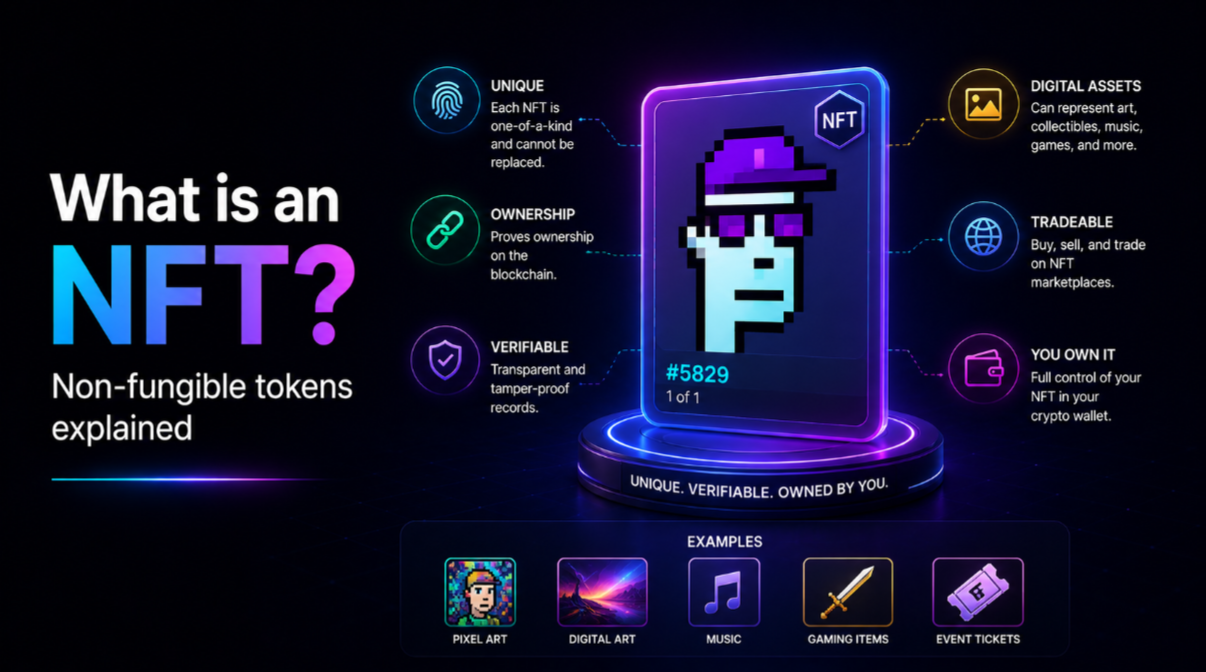
- Digital ownership: proving who holds an asset such as a token or certificate.
- Record keeping: tamper-evident logs for identity, voting research, or health data.
Limitations to keep in mind
Blockchain is powerful but not magic. Public networks can be slow and expensive during busy periods, and storing large amounts of data on-chain is impractical. "Immutable" also means mistakes are hard to undo, so an error in code or a wrong transfer can be permanent. The technology reduces the need to trust a middleman, but you still have to trust the software and the people who wrote it.
Your practical takeaway
Think of blockchain as a shared notebook that everyone can read and no one can quietly rewrite. If you are just starting out, focus on the core idea first: a distributed, tamper-evident ledger secured by cryptography and agreed on through consensus. Before using any blockchain application or buying a cryptocurrency, take time to understand how that specific network works and what risks it carries. This guide is educational and is not financial advice. Start small, verify claims independently, and never commit money you cannot afford to lose.