What is yield farming?
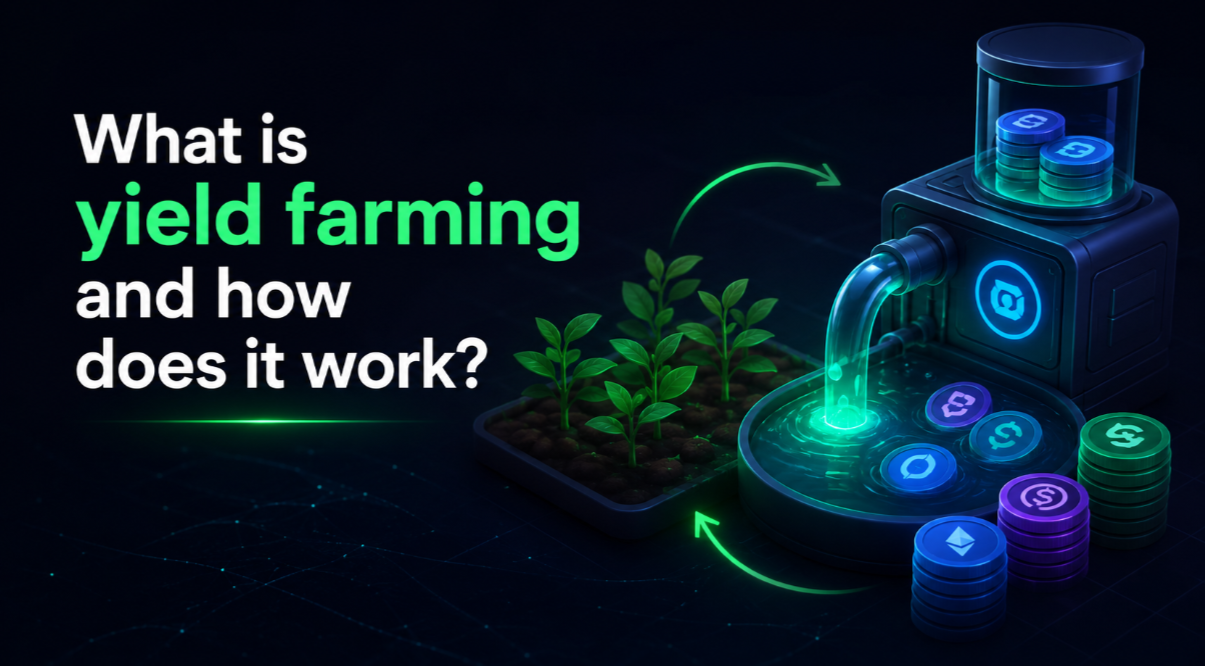
Yield farming is a way to earn rewards by putting your cryptocurrency to work inside decentralized finance (DeFi) protocols. Instead of leaving coins idle in a wallet, you deposit them into smart contracts that lend, trade, or provide liquidity on your behalf, and in return you collect interest, fees, or newly issued tokens. The practice is sometimes called liquidity mining, and it became popular in 2020 as DeFi platforms competed to attract deposits.
At its core, yield farming is the crypto version of earning a return on savings, but the mechanics, the potential rewards, and the risks all look very different from a traditional bank account. You keep custody of your assets through your own wallet, and the protocol rules are enforced by code rather than a company.
How does yield farming work?
Most yield farming starts with supplying assets to a protocol. When you deposit tokens, the smart contract issues you a receipt (often called an LP token or a deposit token) that represents your share of the pool. That share entitles you to a slice of whatever the pool earns.
The rewards usually come from one or more of these sources:
- Trading fees: On decentralized exchanges, traders pay a small fee on every swap, and that fee is split among the people who supplied liquidity.
- Lending interest: On lending markets, borrowers pay interest, which flows to the depositors who funded the loans.
- Incentive tokens: Many protocols hand out their own governance tokens as an extra reward to attract deposits.
Returns are typically quoted as APY (annual percentage yield) or APR. A key habit worth building early: check whether a headline rate comes from real fees or mostly from incentive tokens, because token rewards can lose value fast.
Common yield farming strategies
Farmers range from cautious to highly active. A few widely used approaches include:
- Liquidity provision: Deposit a pair of tokens (for example a stablecoin and ether) into a decentralized exchange pool and earn a share of trading fees.
- Lending and borrowing: Supply assets to a money market to earn interest, sometimes borrowing against that collateral to farm again.
- Staking LP tokens: Take the receipt token from a liquidity pool and stake it in a separate contract for additional incentive rewards.
- Stablecoin farming: Provide liquidity using only stablecoins to reduce price swings while still earning fees.
More advanced farmers move funds between protocols to chase the best rates, a practice nicknamed crop rotation. It can raise returns, but it also multiplies transaction costs and exposure.
What is impermanent loss?
Impermanent loss is the risk that catches many newcomers off guard. When you supply two tokens to a liquidity pool and their prices move apart, the pool automatically rebalances your holdings. The result can leave you with less total value than if you had simply held the two tokens in your wallet.
The loss is called impermanent because it can shrink if prices return to their original ratio, but it becomes permanent the moment you withdraw. Pools made of assets that tend to move together, such as two stablecoins, face far less impermanent loss than volatile pairs.
Risks to understand before farming
High advertised yields exist because the risks are real. Weigh these carefully:
- Smart contract bugs: A flaw in the code can let attackers drain a pool. Audits reduce this risk but never remove it.
- Impermanent loss: As described above, price divergence can erode your deposit.
- Token price collapse: Rewards paid in a protocol token are only worth what the market pays, and that can fall sharply.
- Rug pulls and scams: Anonymous teams sometimes launch high-yield pools, then disappear with deposits.
- Gas fees: On busy networks, transaction costs can eat small positions alive.
None of these should scare you off entirely, but they explain why the same deposit can pay very different real returns.
Getting started safely
If you decide to try yield farming, a measured approach helps you learn without betting more than you can afford to lose. A sensible starting checklist:
- Use a self-custody wallet you control, and keep your recovery phrase offline.
- Start with a small amount on an established, audited protocol.
- Prefer simpler strategies, such as stablecoin pools, before touching leveraged farms.
- Read how rewards are generated, not just the headline APY.
- Track your position over time, since rates and token prices shift constantly.
The practical takeaway: yield farming can turn idle crypto into an income stream, but the return you actually keep depends on fees, token prices, and the risks you accept. Treat early deposits as tuition for learning the mechanics, and scale up only once you genuinely understand where your yield comes from.
This guide is educational and is not financial advice. Do your own research and consider speaking with a qualified professional before investing.