What happened
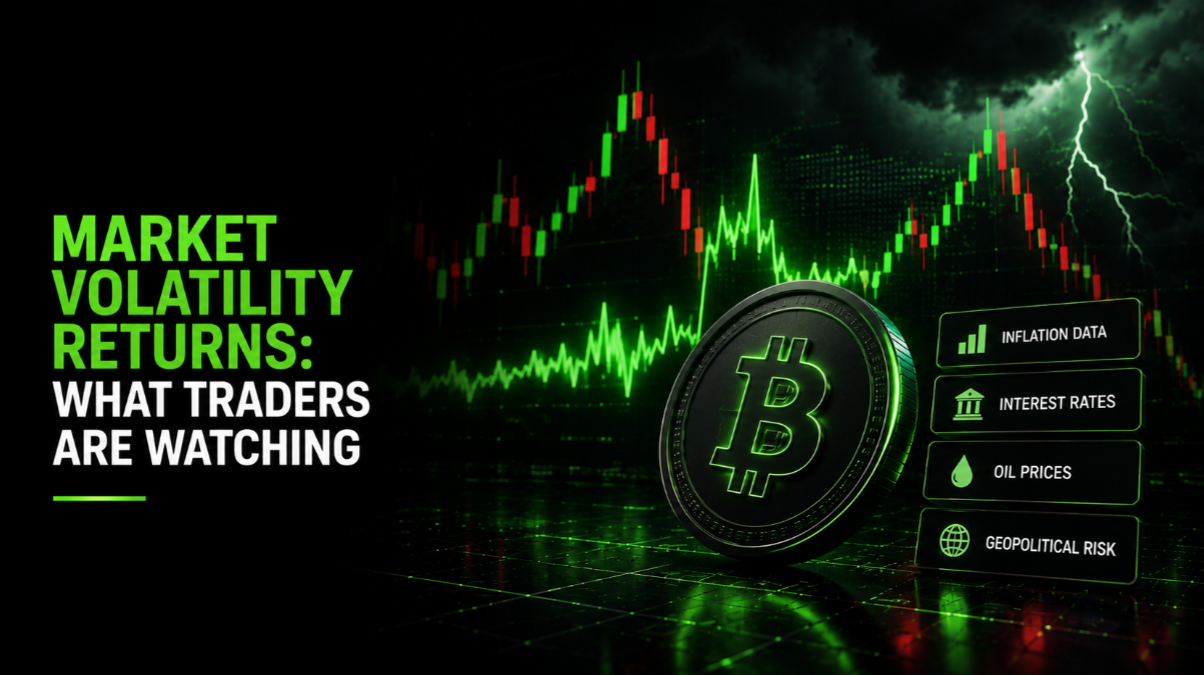
Volatility has returned to crypto markets after a comparatively quiet stretch. Bitcoin and Ether have posted wider intraday ranges over the past several sessions, with prices swinging in both directions rather than trending cleanly one way. Smaller-cap tokens, which tend to amplify moves in the majors, have seen even larger percentage swings.
The pickup shows up in more than just price. Realized volatility, a backward-looking measure of how much prices have actually moved, has climbed off recent lows. Options markets have repriced expected volatility higher, and liquidations on leveraged positions have increased as sharp moves catch traders offside. None of this points to a single cause; it reflects a market recalibrating after a period of compressed ranges.
Why it matters
Volatility is the raw material of trading, but it cuts both ways. Wider ranges create more opportunity for active traders and more risk for anyone using leverage. When prices move quickly, stop-loss orders trigger more often, funding costs on perpetual contracts can spike, and forced liquidations can feed on themselves, accelerating a move beyond what fundamentals alone would justify.
Periods of low volatility often lull participants into larger positions and tighter risk settings, on the assumption that calm will persist. The return of sharp swings tests those assumptions. For longer-term holders, elevated volatility is mostly noise, but for leveraged and short-term traders it changes the math on position sizing and risk. That is why a shift in regime, from quiet to active, tends to matter more than the direction of any single day.
Market context
The current bout arrives against a familiar backdrop. Crypto remains sensitive to macro cues, including shifts in interest-rate expectations, moves in the dollar, and risk appetite in equities. When those cross-asset signals turn choppy, crypto often magnifies the reaction because it trades around the clock and carries a thinner liquidity cushion than larger markets.
Positioning matters too. A build-up of leverage during calm periods leaves the market more prone to rapid unwinds when a catalyst appears. Thin weekend and off-hours liquidity can exaggerate moves further. It is worth remembering that volatility clusters: quiet periods tend to be followed by more quiet, and active periods by more activity, until conditions reset. History suggests these regimes can persist longer than traders expect in either direction.
What to watch
Start with the volatility signals themselves. Watch implied volatility from the options market, which reflects expected future swings, alongside realized volatility to gauge whether the move is being anticipated or is already underway. Rising funding rates and elevated liquidation volumes point to crowded, leveraged positioning that can unwind quickly.
Beyond derivatives, keep an eye on trading volume, since a volatile move on heavy volume carries more conviction than one on thin activity. Spot flows, stablecoin movement, and whether the swings are broad-based or concentrated in a few tokens all help clarify the picture. Cross-asset context, from equities to the dollar, remains a useful backdrop for whether crypto is leading or simply following broader risk sentiment.
This article is analysis, not financial advice. Crypto markets are volatile and can move sharply in either direction, and readers should do their own research and manage risk before making any decisions.