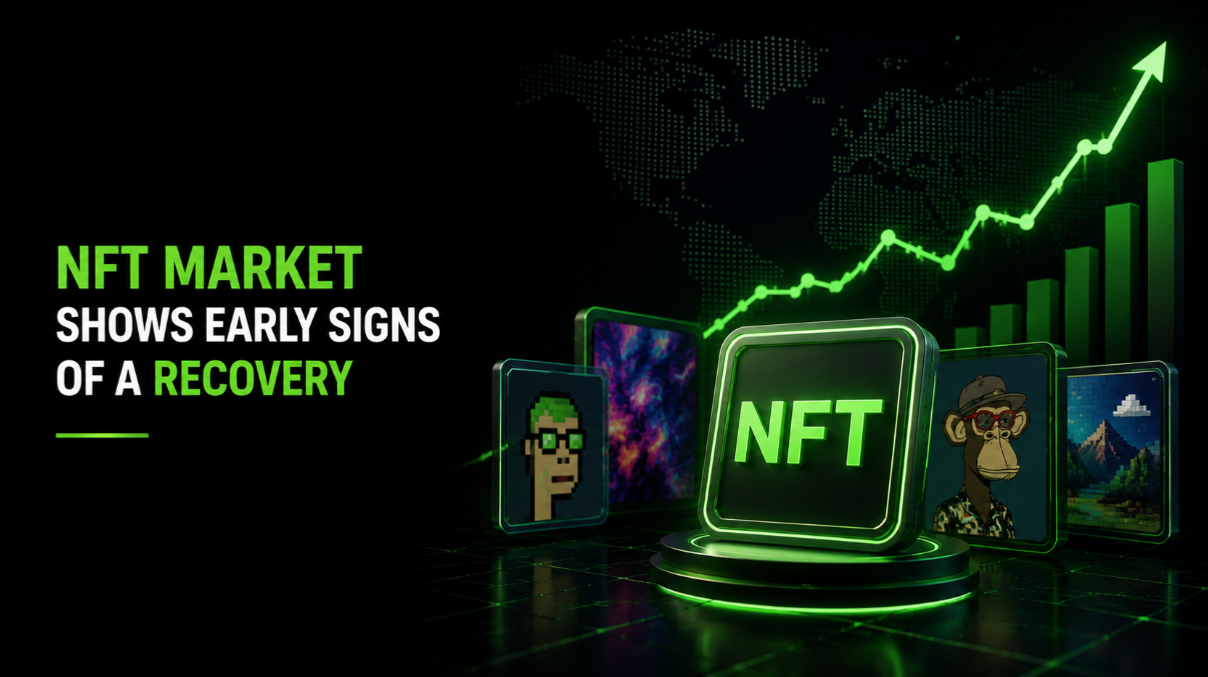
After nearly two years of shrinking volumes and fading headlines, the market for non-fungible tokens is showing tentative signs of life. The data does not point to a boom, but several indicators that had been flat or falling have started to move in the other direction.
What happened
Weekly NFT trading volume across major chains has risen for several consecutive weeks, reversing a long stretch of decline. The number of unique active wallets buying or selling collectibles has also edged higher, suggesting the uptick is not driven by a handful of large traders alone.
Blue-chip Ethereum collections have led the move, with floor prices on a few established projects recovering part of the ground lost during the downturn. Marketplaces have reported modest increases in listings and completed sales, while gaming and utility-linked NFTs have drawn renewed interest from a segment of buyers who had stepped away.
Why it matters
The NFT sector became a symbol of speculative excess during the 2021 mania and then a symbol of the hangover that followed. A sustained recovery, even a partial one, would signal that a durable base of buyers remains after the froth cleared. It would also matter for the broader digital-asset economy, where NFTs serve as a testing ground for on-chain identity, ticketing, and in-game ownership.
For creators and platforms that survived the lean period, improving volumes translate directly into revenue from royalties and fees. A firmer floor also reduces the risk of forced selling that can feed downward spirals in thin markets.
Market context
Context is essential here. Current activity remains far below the peaks of the last cycle, and much of the recent trading is concentrated in a small group of collections rather than spread across the market. Liquidity for the long tail of projects stays thin, and wide bid-ask spreads make exiting positions difficult.
The move also tracks broader crypto sentiment. When major tokens rally, risk appetite tends to spill into NFTs, and when it fades, collectibles usually fall faster and further. That correlation means the current strength may reflect macro conditions as much as anything specific to the sector. Wash trading, where the same party sits on both sides of a trade to inflate figures, continues to distort headline volume numbers and warrants scrutiny of any single data point.
What to watch
Several signals will show whether this is a turn or a bounce. Watch whether active-wallet growth broadens beyond the top collections, whether floor-price gains hold through the next bout of market volatility, and whether new project launches attract genuine demand rather than quick flips.
Royalty enforcement and marketplace fee models remain unresolved questions that shape creator economics. Progress on real utility, from event access to in-game assets, would give the recovery a foundation less dependent on speculation. For now the prudent read is cautious: the early data has improved, but a few good weeks do not confirm a trend.
This article is analysis, not financial advice. NFT markets are volatile and illiquid, and readers should do their own research before making any decision.