Coordinated POPCAT manipulation: about $3M spread over 19 wallets opened ~$26M of leveraged longs, then a $20M buy wall was pulled
Nov 12, 2025not recovered- Outcome
- No confirmed recovery
- Loss
- ~$4.5–4.9M (HLP)
- Recovered or reimbursed
- None reported
Hyperliquid is a layer-1 blockchain built around a trading engine. Its HyperCore layer runs fully on-chain order books for perpetual futures and spot tokens, and every order, cancellation and liquidation is recorded on the chain 1. Users trade from their own wallets. Mainnet launched in 2023, and the HYPE token was airdropped to users on November 29, 2024 3. Since late 2025, third-party builders can also list their own markets. In 2026 these markets, covering stocks, indices and commodities such as oil, grew to nearly half of Hyperliquid's perpetuals volume 67. Hyperliquid's terms reportedly bar US persons 5.
Hyperliquid works like a centralized exchange's order book, except the book itself is part of the blockchain's state. You post limit orders or take liquidity with market orders (see order types explained). Each fill, cancel and liquidation is finalized in one block under HyperBFT consensus 1. Hyperliquid says the system currently handles about 200,000 orders per second 1.
Perpetual futures have no expiry. Positions are margined in USDC, and funding payments between longs and shorts keep prices close to the index. Leverage limits are set per market and can change. After a March 2025 liquidation event, for example, Hyperliquid cut maximum leverage to 40x on BTC and 25x on ETH 9.
HyperEVM, a separate smart-contract environment on the same chain, lets developers build apps that use HyperCore's liquidity directly 1.
HIP-3, live on mainnet since October 2025, lets any builder that stakes 500,000 HYPE deploy its own perpetual markets on Hyperliquid 6. The deployer chooses the market, supplies the price oracle and earns a share of the fees 26.
The best-known deployer is trade.xyz, which by mid-2026 held more than 90% of HIP-3 open interest 7. Its markets include the XYZ100 Nasdaq-100 index, single stocks such as Nvidia and Tesla, crude oil and Brent, and a SpaceX contract. That contract traded about $1.4 billion on SpaceX's IPO day in June 2026 78. HIP-3 volume grew from about 2% of Hyperliquid's perpetuals volume at the start of 2026 to close to 50% by July 7.
What these contracts are and are not:
Hyperliquid charges by tier, based on 14-day weighted volume. Spot volume counts double toward the tier 2. As of October 2026, the base rates are:
| 14-day weighted volume | Perps taker / maker | Spot taker / maker |
|---|---|---|
| Below $5M | 0.045% / 0.015% | 0.070% / 0.040% |
| > $5M | 0.040% / 0.012% | 0.060% / 0.030% |
| > $25M | 0.035% / 0.008% | 0.050% / 0.020% |
| > $100M | 0.030% / 0.004% | 0.040% / 0.010% |
| > $500M | 0.028% / 0% | 0.035% / 0% |
| > $2B | 0.026% / 0% | 0.030% / 0% |
| > $7B | 0.024% / 0% | 0.025% / 0% |
Staking HYPE cuts these fees by 5% (more than 10 HYPE staked) up to 40% (more than 500,000 HYPE) 2. High-share makers can earn small rebates. HIP-3 markets can carry an extra deployer fee on top 2.
Illustrative example (assumptions stated): a new user with no staked HYPE who opens and closes a $10,000 BTC perp position with market orders pays 0.045% twice, or $9, plus funding.
Fees go to the HLP vault, the assistance fund and, for HIP-3 or spot assets, the deployers. The assistance fund automatically converts its share to HYPE, and that HYPE is burned 2.
HLP (Hyperliquidity Provider) is a community vault that makes markets and takes over positions the liquidation system cannot close in the order book. Anyone can deposit and share its profit and loss. That makes HLP the backstop in stress events: in three separate 2025 episodes, HLP absorbed losses from manipulated or oversized positions (see the incident record) 91011. Depositors should treat HLP returns as variable and capable of being negative.
HYPE is the chain's native token. Total supply is 1 billion, and about 436 million were staked as of mid-2026 4. The November 2024 airdrop distributed 310 million HYPE 3. Staking HYPE with a validator secures the chain and lowers your trading fees 2.
Control of the chain is concentrated. Five validators run by the Hyper Foundation held about 48.9% of staked HYPE in June 2026. Governance votes are weighted by stake, and as of September 2026 no proposal to reduce the Foundation's share had been announced 4. The JELLY episode showed what that means in practice: validators voted to delist a market and settle it at a price far below live oracle prices 10.
The front end at app.hyperliquid.xyz is reportedly operated by Hyperliquid Labs. Its Terms of Use reportedly prohibit US persons, and US IP addresses are blocked 5. The chain itself is permissionless, but third-party interfaces don't change your legal position. Check the terms that apply to you before trading.
None of these incidents involved a hack of Hyperliquid's code. They are market events in which the HLP vault or validators had to step in. A further manipulation episode involving TST in July 2025 has been reported, but no loss figure was found 11.
Hacks in DefiLlama’s public database are also scored as the security record on the Hyperliquid rating page.
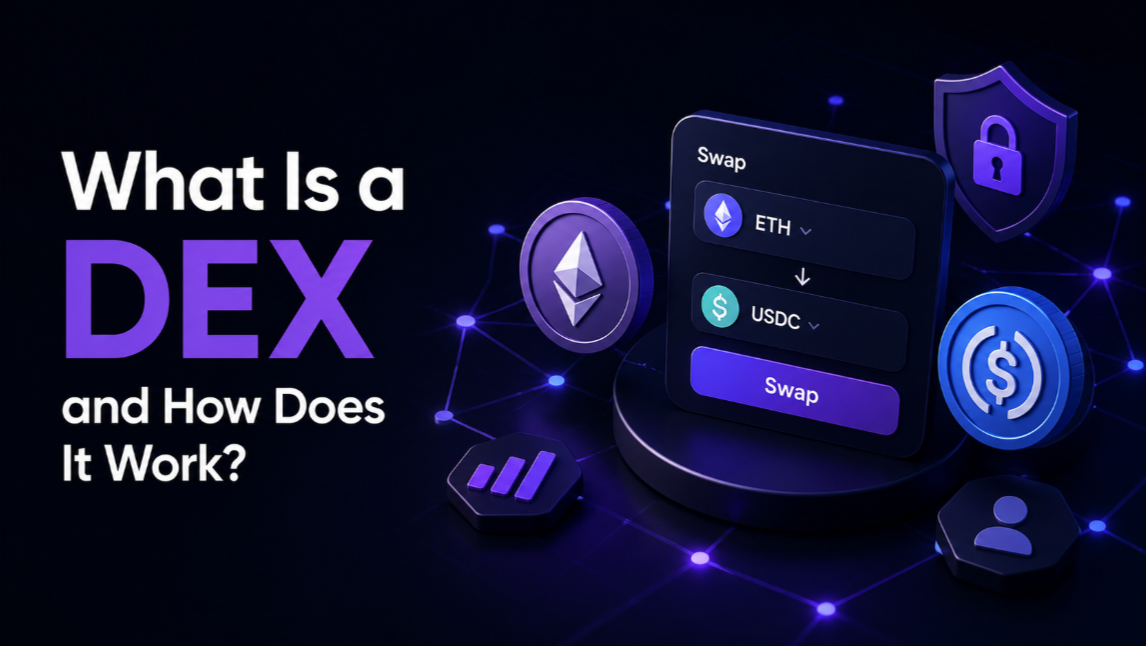
DeFiWhat Is a DEX and How Does It Work?A DEX is a decentralized exchange that lets you swap tokens directly from your own wallet using smart contracts, with no company holding your funds.6 min read·
DeFiAutomated Market Makers (AMMs), ExplainedAn AMM is a smart contract that prices and settles token swaps against a pooled reserve using a formula, replacing the traditional order book.6 min read·
ExchangesCEX vs DEX: Which Should You Use?CEX vs DEX comes down to custody, convenience and control. Compare how centralized and decentralized exchanges work so you can pick the right one.5 min read·
TechnologyUnderstanding gas fees on EthereumA guide to how Ethereum gas fees work, why they change, and practical ways to pay less when you transact on-chain.8 min read·
MarketsBitcoin Slides Below $60,000 as Wall Street Sells Off and CFTC Outlines Rules for Onchain TradingBitcoin fell under $60,000 and touched its lowest level since September 2024 as an AI-driven stock selloff and ETF outflows hit risk assets. Meanwhile, the CFTC chairman laid out how onchain perpetual futures venues can serve US retail traders.3 min read·
MarketsHawkish Fed Minutes and ETF Outflows Push Bitcoin Toward $62,000Bitcoin dipped to about $62,000 after the Fed’s minutes pointed to a bigger December hike, while US spot bitcoin ETFs logged a second straight day of outflows.3 min read·
MarketsBitcoin Slides Below Its 200-Week Average as Washington Crypto Bill StallsBitcoin dropped to about $62,000 over the weekend as liquidations topped $1.8 billion and ETF outflows continued. In Washington, the CLARITY Act looks set to stall as Congress turns to SEC and CFTC nominations.4 min read·Related: dYdX · GMX · Circle · All company profiles