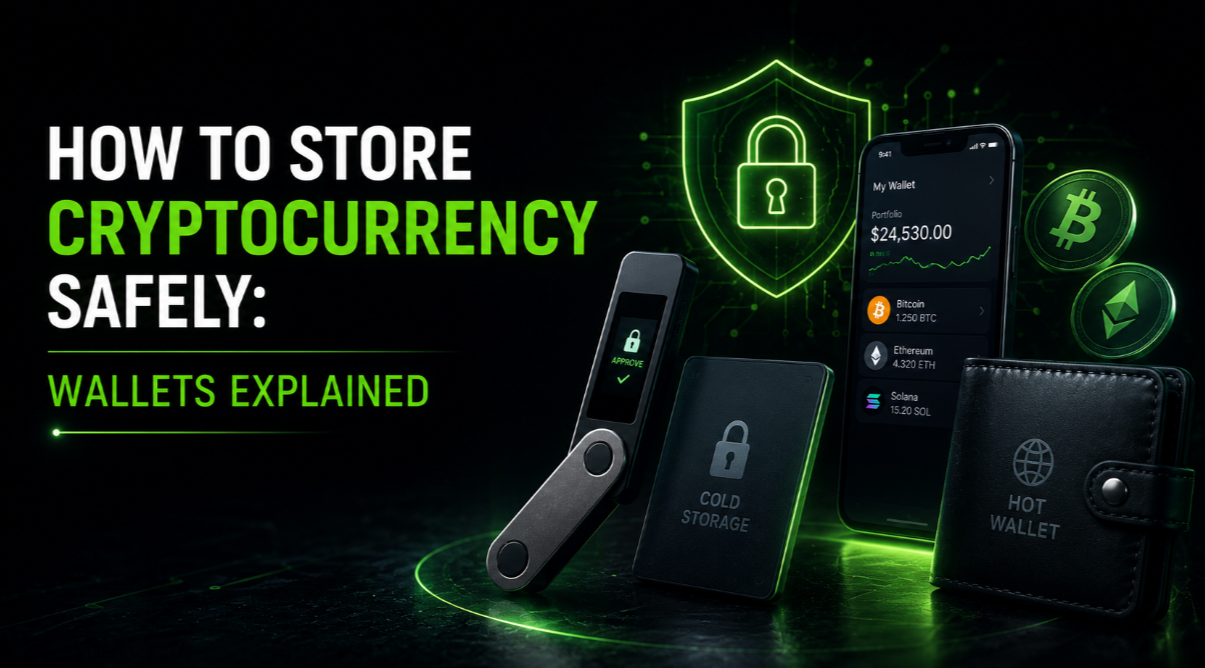
Hot wallet vs cold wallet: the core difference
When people compare a hot wallet vs cold wallet, they are really talking about one thing: whether the wallet's private keys ever touch the internet. A hot wallet stays connected online, which makes it fast and convenient for everyday use. A cold wallet keeps your keys completely offline, which makes it far harder for a remote attacker to reach them. Neither option is universally better. The right choice depends on how much you hold, how often you transact, and how much responsibility you want to manage yourself.
A crypto wallet does not actually store your coins. Your assets live on the blockchain, and the wallet stores the private keys that prove ownership and authorize transactions. Whoever controls the keys controls the funds, so the real question behind hot versus cold is simply: where do those keys live, and who can reach them?
What is a hot wallet?
A hot wallet is any wallet that runs on an internet-connected device. This includes mobile apps, browser extensions, desktop software, and the wallets built into most exchanges. Because they are always online, hot wallets let you send, receive, swap, and interact with apps in seconds.
Common examples include:
- Mobile apps like a phone-based self-custody wallet
- Browser extension wallets used for on-chain apps and trading
- Exchange-hosted wallets where the platform holds keys for you
- Desktop wallet software installed on a laptop
The trade-off is exposure. An always-online key is reachable, at least in theory, by malware, phishing pages, fake browser extensions, and compromised apps. Hot wallets are excellent for small, active balances, but they are not where most people should park long-term savings.
What is a cold wallet?
A cold wallet keeps your private keys offline. The most common form is a hardware wallet, a small dedicated device that signs transactions internally and never exposes the keys to your connected computer or phone. Paper wallets and offline air-gapped machines are older approaches in the same category.
To move funds, you connect the device briefly, confirm the transaction on its own screen, and approve it with a physical button press. Even if your computer is infected, the malware cannot extract keys that never leave the hardware. That isolation is the entire point of cold storage, and it is why long-term holders and larger balances usually end up here.
The trade-offs are cost and friction. Hardware wallets cost money, add a few extra steps to every transaction, and put full recovery responsibility on you.
Weighing security against convenience
Every wallet decision is a balance between how easy it is to use and how hard it is to attack. Hot wallets optimize for speed; cold wallets optimize for protection. Here is how the main factors compare:
- Accessibility: Hot wallets win for instant, frequent use. Cold wallets add deliberate friction.
- Attack surface: Hot wallets face online threats constantly. Cold wallets remove nearly all remote risk.
- Cost: Most hot wallets are free. Hardware devices are a one-time purchase.
- Best fit: Hot for spending money and active trading; cold for savings and larger holdings.
A useful mental model: treat a hot wallet like the cash in your pocket and a cold wallet like a vault. You would not carry your life savings around, but you also would not walk to the vault every time you buy coffee.
Which one should you use?
For most people, the honest answer is both. A common and practical setup is to keep a small, spendable amount in a hot wallet for daily activity and store the bulk of your holdings in a cold wallet you rarely touch. A few guidelines:
- If you are just starting with small amounts, a reputable hot wallet is a fine place to learn.
- If your balance has grown past what you would be comfortable losing to a phishing click, add a hardware wallet.
- If you trade or use on-chain apps often, keep a dedicated hot wallet funded only with what that activity needs.
- If you are holding for the long term, move those assets to cold storage and leave them there.
This is educational information, not financial advice. Your circumstances, local regulations, and risk tolerance should guide any decision.
Protecting your recovery phrase
Whichever type you choose, your recovery phrase (also called a seed phrase) is the master key to everything. Anyone who reads it can drain your funds, hot or cold, no device required. Protect it carefully:
- Write it on paper or steel and store it offline, never as a photo, screenshot, or cloud note.
- Never type it into a website, chat, or support ticket. Legitimate services never ask for it.
- Keep at least one secure backup in a separate physical location.
- Treat unsolicited messages, giveaways, and urgent security warnings as likely scams.
The practical takeaway
Hot wallets trade a wider attack surface for everyday convenience, while cold wallets trade convenience for strong offline protection. You do not have to pick just one. Match the tool to the job: a hot wallet for the funds you actively use, and a cold wallet for the savings you want to keep safe for years. Whatever you choose, guarding your recovery phrase matters more than the wallet brand or type you settle on.