What happened
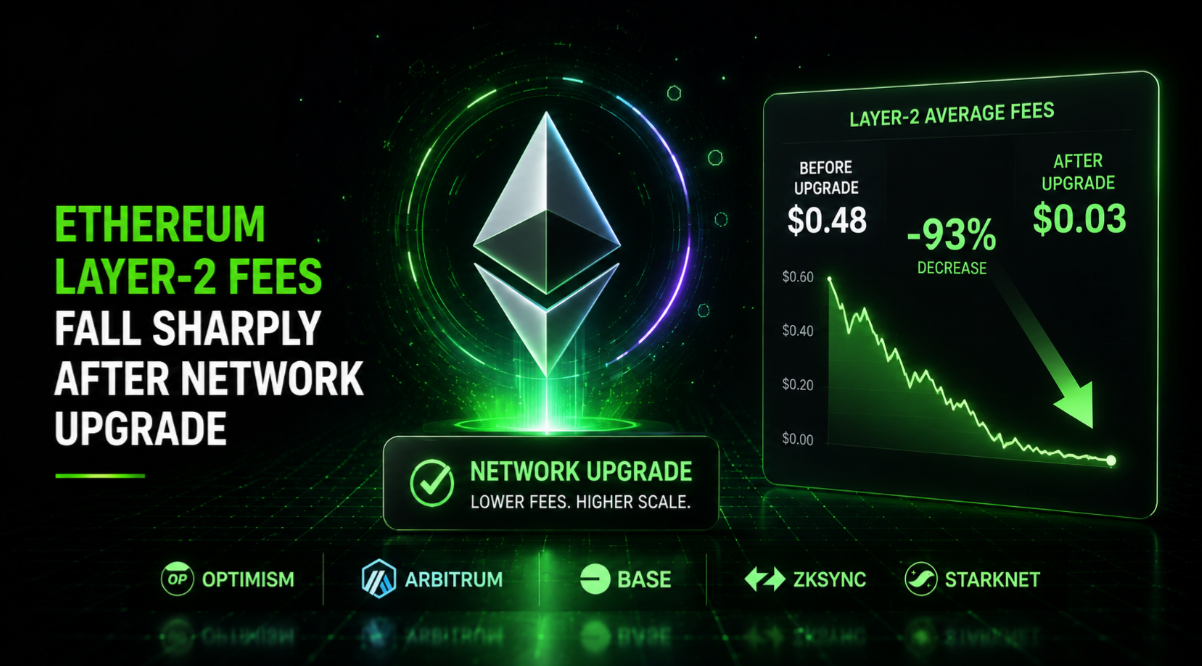
Average transaction fees on Ethereum's leading Layer-2 networks fell sharply in the days following the latest base-layer upgrade, according to on-chain fee trackers. Users of major optimistic and zero-knowledge rollups reported swap and transfer costs dropping from tens of cents to a few cents, with some routine transactions clearing for a fraction of a cent during off-peak hours.
The move follows an upgrade that expanded and repriced the data space rollups use to post transaction batches back to Ethereum. Because a large share of a rollup's cost comes from settling data on the base layer, cheaper and more plentiful data capacity flows fairly directly into lower fees for end users. Several L2 teams confirmed they passed the savings through rather than retaining them as margin.
Why it matters
Fees are one of the clearest measures of whether Ethereum's rollup-centric scaling strategy is working. For years, high costs during periods of congestion pushed everyday users toward cheaper alternative chains. A durable drop in L2 fees narrows that gap and strengthens the case that most activity can live on rollups while Ethereum handles settlement and security.
Lower costs also change what is economically viable on-chain. Micro-payments, frequent game actions, and smaller DeFi positions that were uneconomical at higher fees become practical again. That said, cheaper transactions cut into a revenue line for both rollups and, indirectly, the base layer, which raises longer-term questions about how the ecosystem funds security as fee income compresses.
Market context
The fee decline continues a trend that began with earlier upgrades aimed at making rollup data cheaper. Each step has lowered the floor on L2 costs, and competition among rollups has pushed teams to pass reductions to users rather than absorb them. The result is a fee environment that looks very different from the peak-congestion periods of prior cycles.
It is worth keeping the scale in perspective. Fee levels still move with demand: a burst of activity, a popular token launch, or heavy trading can push costs back up temporarily, because block space and data capacity remain finite. The upgrade lowers the baseline and adds headroom, but it does not eliminate the link between congestion and price. Ether's market price, meanwhile, responds to many factors beyond fees, and a cheaper network does not automatically translate into token appreciation.
What to watch
The key question is whether the lower fees hold as usage grows. If cheaper transactions attract more activity, that added demand will test how much spare data capacity the upgrade actually created. Watch how quickly the new headroom fills and whether fees creep back up during busy stretches.
Also worth tracking: whether more applications and users migrate onto rollups now that costs are lower, how individual L2s compete on price and features, and how the broader ecosystem addresses the trade-off between affordable transactions and sustainable network revenue. None of this is investment advice, but for anyone following Ethereum's scaling roadmap, sustained low fees under real load would be the signal that the strategy is delivering.