What happened
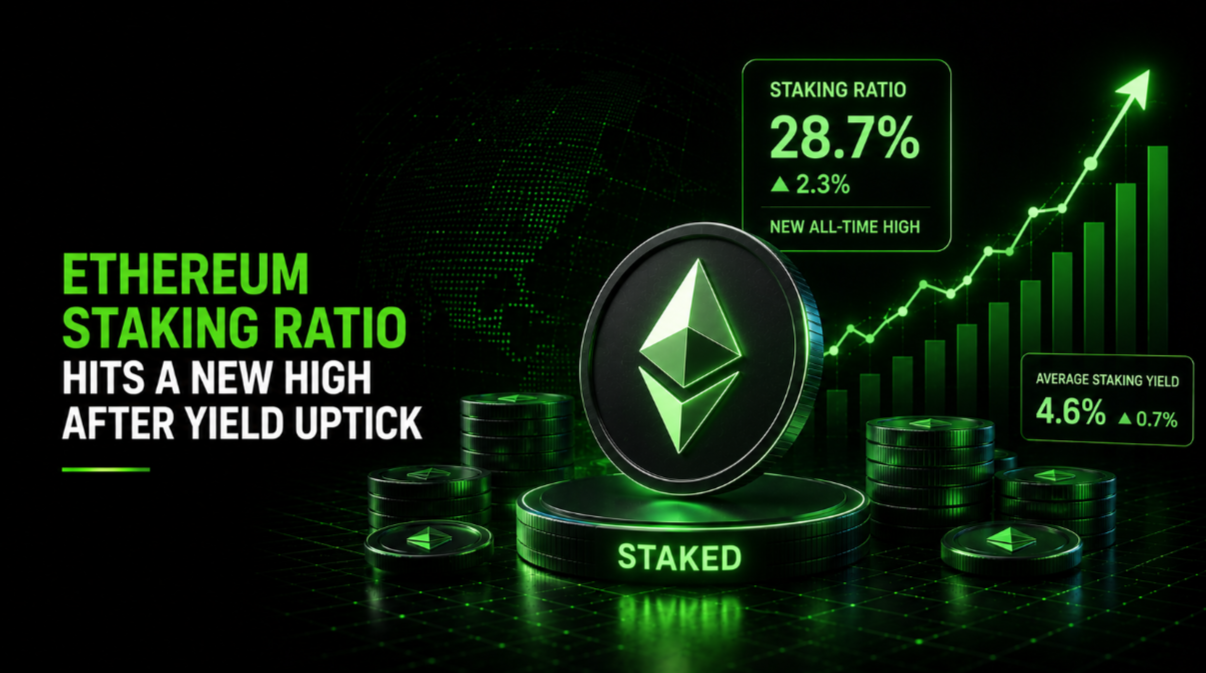
The share of circulating ether committed to Ethereum's proof-of-stake network has climbed to a new high, with roughly 30 percent of total supply now locked in validator contracts. The move followed a short-lived uptick in staking yields, which drifted back above 3 percent annualized after a stretch of subdued network activity earlier in the quarter. The higher rewards, driven partly by a rebound in transaction fees and priority tips, appear to have nudged more holders toward staking their coins.
The increase is incremental rather than dramatic. Staked ETH has risen steadily for months, but crossing this threshold matters because it marks the largest portion of supply ever removed from immediate circulation through native staking. Validator entry queues, which measure demand to join the network, also lengthened modestly in the days surrounding the yield bump.
Why it matters
A rising staking ratio has two-sided implications. On one hand, more staked ETH signals confidence in the network's long-term security, since validators lock capital and accept slashing risk in exchange for rewards. A larger validator set also makes the chain harder to attack. On the other hand, coins committed to staking are less readily available for trading, lending, or spending, which can tighten liquid supply over time.
Yield is the mechanism connecting the two. When rewards rise, staking becomes more attractive relative to simply holding, and capital tends to flow in. That inflow can, in turn, dilute the per-validator yield as more participants share a similar pool of rewards. The recent uptick was small, so analysts caution against reading too much into a single data point. The relationship between yield and participation is self-correcting rather than one-directional.
Market context
The milestone arrives against a backdrop of steady but unspectacular on-chain activity. Liquid staking tokens and restaking protocols continue to account for a meaningful slice of staked ETH, meaning much of the locked supply is not fully illiquid; holders can often access derivative representations of their positions. That nuance complicates any simple narrative that a higher staking ratio automatically constrains market float.
Comparisons with other proof-of-stake networks put the figure in perspective. Several competing chains stake well over half their supply, so Ethereum's ratio remains moderate by industry standards. Some researchers have argued that an ever-rising ratio could eventually raise centralization or liquidity concerns, and Ethereum's core developers have discussed mechanisms that would temper unbounded growth in the validator set. For now, those remain design conversations rather than imminent changes.
What to watch
The key question is whether the yield uptick proves durable or fades as network conditions normalize. If fees retreat, rewards could compress and slow new deposits. Watch the validator entry and exit queues for signs of momentum in either direction, along with the spread between staking yield and returns available in decentralized lending markets, which shapes where capital migrates.
Also worth monitoring is how liquid staking and restaking flows evolve, since they influence how much of the locked supply is genuinely out of circulation. Governance discussions around validator set growth could resurface if the ratio keeps climbing. As always, staking participation is one input among many, and readers should treat these figures as market context rather than a signal to act. This article is not financial advice.