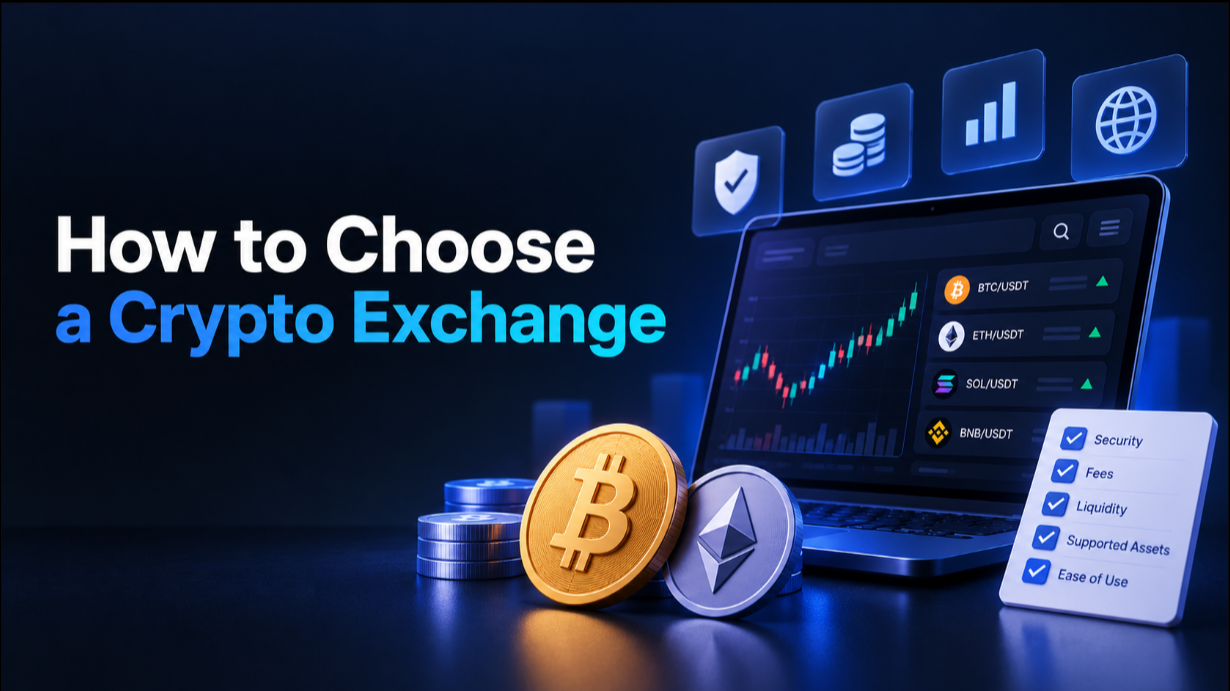
To choose a crypto exchange well, judge it on a short list of factors that actually protect your money: security and custody practices, fees, supported assets and payment methods, liquidity, regulation, and the quality of support. A flashy interface or a sign-up bonus tells you almost nothing about whether a platform will keep your funds safe or let you withdraw them when you want. The goal is to work through a consistent checklist rather than pick the first name you recognise from an advertisement.
Key takeaways
- Security first: look for strong account protection, a track record, and evidence of how customer funds are held.
- Understand the full cost of trading, deposits and withdrawals, not just the headline trading fee.
- Check the essentials for you: supported coins, payment methods, and whether the platform serves your country.
- Verify legitimacy carefully, because fake exchanges are designed to look real; use independent ratings before you deposit.
Start with security and custody
Because an exchange usually holds your funds, its security is the single most important factor. Look for platforms that require and support strong two-factor authentication, offer withdrawal address allow-lists, and have a history without repeated, poorly handled breaches. Ask how customer assets are held: are they segregated, and does the platform publish any evidence of reserves? No control removes all risk, but a serious operator will make its security posture easy to find rather than hiding it behind marketing.
Treat an exchange as a place to transact, not a long-term vault. Even a well-run platform is a custodian, which means your balance depends on that company staying solvent and honest. For holdings you do not plan to trade soon, moving funds to a wallet you control reduces your exposure.
Compare the true cost of trading
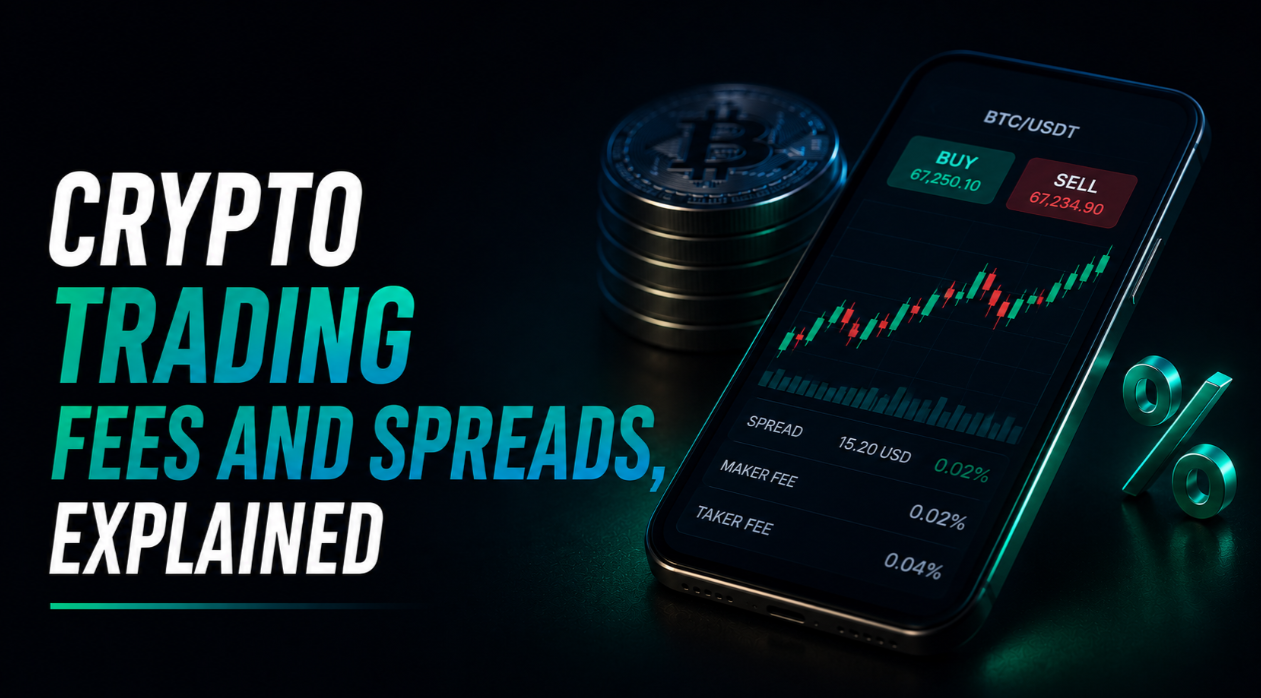
Fees are easy to underestimate because they show up in several places. The headline is the trading fee, often split into maker and taker rates, but the spread between buy and sell prices can cost more than the stated fee, especially on thinly traded pairs. Deposit and withdrawal charges, currency conversion, and network fees all add up. Our explainer on crypto trading fees and spreads shows how to add these together so you compare platforms on the total you actually pay, not just one line item.
- Trading fees: the percentage taken on each buy or sell.
- Spread: the gap between bid and ask, a hidden cost on illiquid pairs.
- Deposit and withdrawal fees: what it costs to move money in and out.
- Conversion costs: extra margin when buying with a non-native currency.
Match features to your needs
The best platform for someone else may be wrong for you. Confirm the exchange supports the coins you want, accepts a payment method you can use, and legally serves residents of your country. If you value privacy, note the level of identity verification required. If you want to trade actively, liquidity matters, because deep markets mean your orders fill near the quoted price. If you are only buying and holding, ease of use and reliable withdrawals matter more than advanced charting.
Centralized or decentralized?
Part of choosing is deciding what kind of venue fits the task. Centralized exchanges are simpler and accept cash, while decentralized ones let you trade from your own wallet without a custodian. Our comparison of CEX vs DEX explains the trade-offs so you can decide which model, or which combination, suits how you plan to use crypto.
Verify legitimacy and avoid fakes
Fraudulent platforms are one of the biggest dangers for newcomers, because a fake exchange can look indistinguishable from a real one. Scammers clone websites, buy ads that rank above the genuine site, and promise unrealistic returns to lure deposits, then block withdrawals. Protect yourself by checking the exact web address, avoiding links from unsolicited messages, and confirming a platform's reputation through independent sources before you send any money. Comparing options against a vetted list of Crypto exchanges is one of the most effective ways to filter out imposters and weak operators before they ever touch your funds.
- Type the address yourself or use a bookmark; do not trust links in emails or DMs.
- Be sceptical of guarantees: promised profits and "risk-free" returns are red flags.
- Test small: before committing serious money, verify you can actually withdraw a small amount.
Support, transparency and track record
When something goes wrong, responsive support and clear policies make the difference between a quick fix and a lost balance. Look for accessible help channels, published fee schedules and terms, and honest communication during past incidents. A platform that is transparent about how it operates and how it has handled problems is generally more trustworthy than one that stays vague. Search complaints and reviews for recurring themes such as frozen accounts or withdrawal delays.
Regulation is part of the same picture. A platform that operates under recognised licences in the regions it serves is generally more accountable than one that avoids oversight entirely, because it has obligations to protect customers and to handle funds responsibly. This does not guarantee safety, and rules differ widely from place to place, but a willingness to work within a legal framework is a meaningful signal. Weigh it alongside how long the platform has operated and whether it has weathered difficult market conditions without failing its users. A long, uneventful track record is one of the hardest things for a bad actor to fake, which is why it carries real weight in your decision.
Risks and what to watch
No exchange is completely safe. Custodial platforms carry the risk that the operator is hacked or becomes insolvent, and even legitimate ones can freeze withdrawals during stress. Reduce your exposure by not keeping more on any platform than you need for near-term trading, enabling every security feature offered, and spreading larger holdings across your own wallets. Watch for warning signs over time: sudden changes to withdrawal limits, pressure to deposit more, or support that goes quiet. If a platform makes it hard to take your money out, treat that as a reason to leave, not a hurdle to push through. For broader grounding, browse our other guides before you commit funds.