What Is Dune Analytics? How Dune's Blockchain Data Platform Works
Dune, still widely called Dune Analytics, is a web platform for querying public blockchain data with SQL and turning the results into charts and dashboards 2. Its operator is Dune Analytics AS, a Norwegian company founded in Oslo in 2018 12. Anyone can browse and copy the community's public dashboards for free, but running and scheduling your own queries requires a paid plan as of October 2026 4. Dune is a data tool, not an exchange or wallet: it never holds funds and has no token. Its dashboards are only as accurate as the SQL behind them.
At a glance
What Dune is and who runs it
Dune is a data company, not a crypto protocol. Its Terms of Service name Dune Analytics AS, a Norwegian registered company, as the provider of every Dune service 2. According to Dune's About page, two founders, Fredrik and Mats, started the company in Oslo in 2018 by cleaning up Ethereum data for a single paying customer 1.
The company grew quickly during the 2021–22 market. In February 2022 it raised a $69.42 million Series B at a $1 billion valuation, led by Coatue, with existing investors Multicoin Capital and Dragonfly Capital also taking part 3. Dune now says it has raised $80 million in total and employs more than 50 people 1. Those figures are self-reported.
Over time Dune's emphasis has moved from a community dashboard site toward paid data products for teams: enterprise plans, data connectors and curated datasets 1.
How Dune works: queries, dashboards and data layers
Dune ingests blockchain data, organizes it into tables and lets users query those tables with SQL in a browser editor. Results can be saved, turned into charts and assembled into public dashboards 2.
Three data layers. Dune's catalog organizes data in layers that build on each other 6:
- Raw: blocks, transactions, logs and traces indexed directly from nodes.
- Decoded: contract events and function calls translated into readable tables using verified contract ABIs on EVM chains, or IDLs on Solana.
- Curated: cleaned, cross-chain datasets such as DEX trades, NFT trades, balances, prices, bridges, lending and labels. Much of this layer is built in Spellbook, Dune's open dbt project on GitHub. Each model there is a SQL query, and Dune accepts outside contributions selectively 8.
DuneSQL. Queries run on DuneSQL, Dune's modified fork of the Trino query engine. It adds data types for blockchain values such as addresses and hashes 5.
Community dashboards. Most dashboards people search for, such as ones tracking a specific DEX or prediction market, are written by independent analysts or by the projects themselves. Dune hosts them but does not vouch for their logic. Before relying on a number, open the underlying query: a wrong filter, missing chain or stale label can change the result.
Beyond the browser. Dune also offers a SQL API for running queries programmatically, the Sim API for real-time wallet balances and transactions, data uploads, and Datashare, which pipes Dune data into Snowflake, BigQuery or Databricks 27.
Which blockchains and data it covers
Dune's documentation lists raw, decoded and curated data across "100+ blockchains" 6. (The pricing page's description says 130+; the figure depends on how chains are counted 9.) Coverage is uneven by layer. For example, the curated DEX trades dataset covers 50 EVM chains plus Solana. Some datasets, including stablecoins, EVM balances, perpetuals trading and most prediction-market tables, are gated and need a workspace entitlement 6.
Plans and pricing
Dune sells subscriptions priced in credits. Running queries, exporting results and making API calls all consume credits. Larger query engines finish faster but cost more credits per run 4.
| Plan (as of Oct 23, 2026) | Price | Seats | Monthly credits | Key inclusions |
|---|---|---|---|---|
| Free | $0 | 1 | — | View and copy any dashboard or query; browse data |
| Analyst | $65/mo | 3 | 4,000 | Run and schedule queries, team workspace, API |
| Plus | $349/mo | 10 | 25,000 | Private queries and dashboards, CSV exports, priority email support |
| Enterprise | Custom | Custom | 100,000+ | Curated datasets, Datashare, dbt connector, SSO, SLAs |
Source: dune.com/pricing 4. Annual billing is advertised at 15% off. Extra credits cost $0.016 each on Analyst and $0.014 on Plus. API limits are 40 calls a minute on Analyst and 200 on Plus.
Three details are easy to miss 24:
- Self-serve plans license data for internal use only. Commercial redistribution needs an Enterprise agreement.
- Paid plans attach to a Team, not an individual account. You create or join a team, then upgrade it.
- Dune's terms reserve the right to make free features paid later.
Accounts, privacy and security
You need a Dune account, with a login and password, to use the platform; payment details are required only for paid plans 2. Dune reads public blockchain data, so using it never requires your private key or seed phrase. Treat any "Dune" page that asks for one as a scam. Queries and dashboards on lower plans are public by default; private queries start on the Plus plan 4.
Dune publishes a public status page at status.dune.com that records service incidents 10.
Incident record
No security breach or loss of user funds found. Research on October 23, 2026 found no reported breach of Dune user data. As a data platform, Dune does not custody crypto. Dune's status page logs operational incidents such as query or login disruptions; those are service-availability events, not security incidents 10. Verdict: No known security incident (operational outages only).
No security incident found in the sources checked as of October 23, 2026. That is a dated observation, not a promise that none has happened.
Hacks in DefiLlama’s public database are also scored as the security record on the Dune rating page.
Questions about Dune
Is Dune the same as Dune Analytics?
Is Dune free to use?
Does Dune support Solana?
Who creates the dashboards on Dune?
Does Dune have a token?
See CoinPulse's Dune rating and evidence and the NFT and AI tool ratings. For background, read what DeFi is, how a DEX works and crypto portfolio trackers.
Dune elsewhere on CoinPulse
Guides for analytics & risk users
All guides →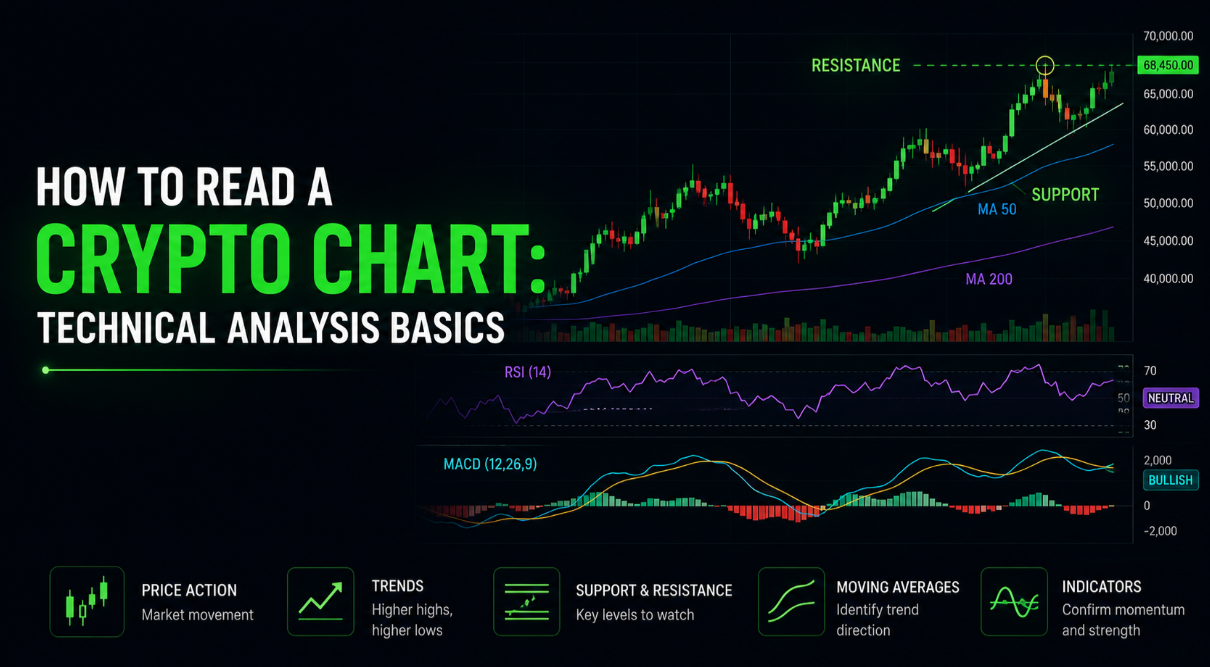 TradingHow to read a crypto chart: technical analysis basicsLearn to read a crypto chart from candlesticks to trendlines, with beginner-friendly technical analysis basics you can apply on any exchange.8 min read·
 Taxes & CardsHow to Track Your Crypto PortfolioA crypto portfolio tracker gathers your holdings across wallets and exchanges into one view so you can see value, performance, and tax data clearly.5 min read·
Latest news
All news → RegulationBitcoin ETF Outflows Weigh on Market as Interactive Brokers Launches Ethereum StakingSpot Bitcoin ETFs recorded $65.4 million in net outflows as hawkish Federal Reserve comments pressured prices. Meanwhile, Interactive Brokers rolled out Ethereum staking for eligible US clients.4 min read·
 MarketsCFTC Opens Retail Crypto Leverage Rulemaking as Bitcoin Holds Near $84KThe CFTC has begun a rulemaking on leveraged retail crypto trading, while Bitcoin hovers near $84,000 and traders wait for U.S. inflation data and the Fed’s October meeting.4 min read·
 MarketsUS Moves $1B in Seized Bitcoin as Senate Scrutiny of Tether GrowsU.S.-linked wallets shifted 12,267 BTC from a Bitfinex hack seizure address without any exchange deposit, while Senator Richard Blumenthal pressed Cantor Fitzgerald over its Tether partnership.3 min read·
Sources
- 1Dune — About.dune.com
- 2Dune — Terms of Service (updated 2026-06-03).dune.com
- 3The Block — Dune Analytics raises $69.42 million in Series B, now valued at $1 billion (2022-02-02).theblock.co
- 4Dune — Pricing.dune.com
- 5Dune Docs — Query engine overview.docs.dune.com
- 6Dune Docs — Data catalog overview.docs.dune.com
- 7Dune Docs — Home.docs.dune.com
- 8Spellbook on GitHub.github.com
- 9Dune — Pricing page description (130+ chains).dune.com
- 10Dune — Status page.status.dune.com
Other analytics & riskAll →



What changed on this page
- 2026-10-23Profile created.