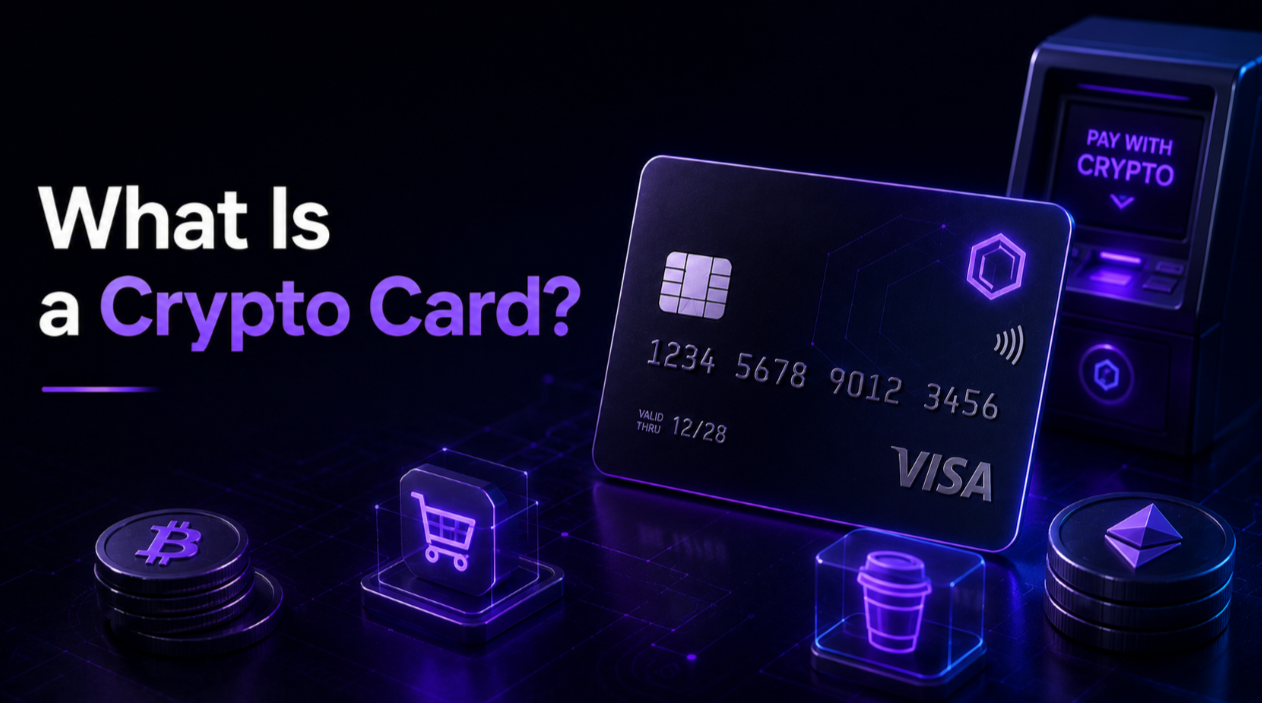
A crypto card is a payment card that lets you spend cryptocurrency at everyday merchants, typically by converting your digital assets into fiat currency at the moment you pay. To the shop or website, the transaction looks like any ordinary card payment, because most crypto cards run on the same major payment networks. Behind the scenes, the provider handles the conversion, so you can use crypto for a coffee or an online order without the merchant needing to accept crypto directly.
Key takeaways
- A crypto card converts crypto to fiat at the point of sale so you can spend anywhere cards are accepted.
- The two main types are debit-style cards, which spend what you hold, and credit-style cards, which let you borrow.
- Spending often counts as a disposal, which can create a taxable gain or loss.
- Fees, conversion spreads, and custody arrangements vary widely between providers.
- Rules and features differ by jurisdiction, so read the terms and check local tax treatment.
How a crypto card works
When you tap or enter a crypto card, the provider checks your available balance, converts the required amount of crypto into the local fiat currency, and settles the payment over a standard card network. The merchant receives fiat as usual. The key detail for you is that a conversion has taken place, and that conversion is what most cards are really doing every time you spend.
Some cards convert on the fly from whichever asset you choose, while others require you to pre-load a fiat or stablecoin balance that then funds purchases. The experience feels familiar, but the mechanics under the hood matter for both fees and taxes.
The two main types
Crypto debit cards
A debit-style crypto card spends from crypto you already own. When you pay, the provider sells the necessary amount of your holdings and forwards fiat to the merchant. You are spending your own assets, so there is no borrowing involved. This is the most common model and the most straightforward to understand.
Crypto credit cards
A credit-style card works more like a traditional credit card. You spend in fiat and repay later, and in some designs you can borrow against crypto you pledge as collateral rather than selling it. This can defer a disposal, but it introduces borrowing risk, including the possibility of collateral being liquidated if its value falls. Understand the terms carefully before using one.
Fees and the fine print
Crypto cards can carry several layers of cost, and comparing them is worthwhile.
- Conversion spread applied when crypto is turned into fiat.
- Foreign transaction fees for spending in another currency.
- ATM withdrawal fees if the card supports cash access.
- Account or top-up fees charged monthly or per load.
Read the terms closely, because the headline features are often paired with limits, regional restrictions, and conditions that change what the card actually costs to use.
Rewards, limits, and staking tiers
Many crypto cards market rewards, often paid back in crypto on your spending. These can be genuinely appealing, but they deserve scrutiny. Rewards are sometimes tied to holding or locking a certain amount of a specific token, which introduces its own market risk, and the reward itself may be treated as income for tax purposes when you receive it. A reward is only worthwhile once you have weighed the conditions attached to it.
Cards also come with limits that shape everyday use, including daily spending caps, ATM withdrawal limits, and country availability. Some features are offered only in certain regions or to users who meet particular requirements. Before you rely on a card for routine spending, confirm that the limits fit how you actually intend to use it.
A card is one way to off-ramp
It helps to see a crypto card as one route among several for turning crypto into spending power. Instead of selling on an exchange and withdrawing to your bank, you spend directly and let the provider convert in the background. That convenience is the appeal, but it also means the off-ramp happens in many small pieces rather than one deliberate transaction, which has record-keeping consequences we cover next.
The tax angle you cannot ignore
Here is the part many new users miss. In most jurisdictions, converting crypto to fiat is a disposal, and a disposal can create a taxable gain or loss based on your cost basis. Because a crypto debit card converts at nearly every purchase, casual spending can quietly generate a long list of small taxable events, each of which may need to be reported.
This makes record-keeping especially important for cardholders. Our explainer on the taxable events when spending crypto covers this in more depth, and the broader picture is in our guide to crypto tax. This is not tax advice, and rules differ by country, so confirm how card spending is treated where you live and consult a qualified professional.
Custody and security
When you load funds onto a crypto card, they are usually held by the provider until spent, which means you are trusting that company with custody. Consider the provider's reputation, security practices, and terms before loading significant amounts. Treat the card like any payment tool: enable strong authentication, monitor your transactions, and keep only what you plan to spend on the card rather than your entire portfolio.
Is a crypto card right for you?
A crypto card can be convenient if you genuinely want to spend crypto in daily life and you are comfortable with the fees, custody, and tax paperwork that come with it. If your goal is simply to convert to cash occasionally, a direct off-ramp may be simpler. Weigh the convenience against the record-keeping burden, compare providers carefully, and browse our guides to understand the full picture before you decide.
Independent reviews of Crypto cards can help you compare providers on fees, custody, and features side by side. A sensible way to test whether a card suits you is to start small. Load only what you plan to spend in the near term, use it for a few ordinary purchases, and then look honestly at the experience: were the fees acceptable, did the rewards live up to their conditions, and how much extra record-keeping did each transaction create? For some people the convenience clearly earns its place. For others, the steady drip of taxable events makes an occasional deliberate cash-out the better fit. There is no universal answer, only the one that matches how you actually live and spend.