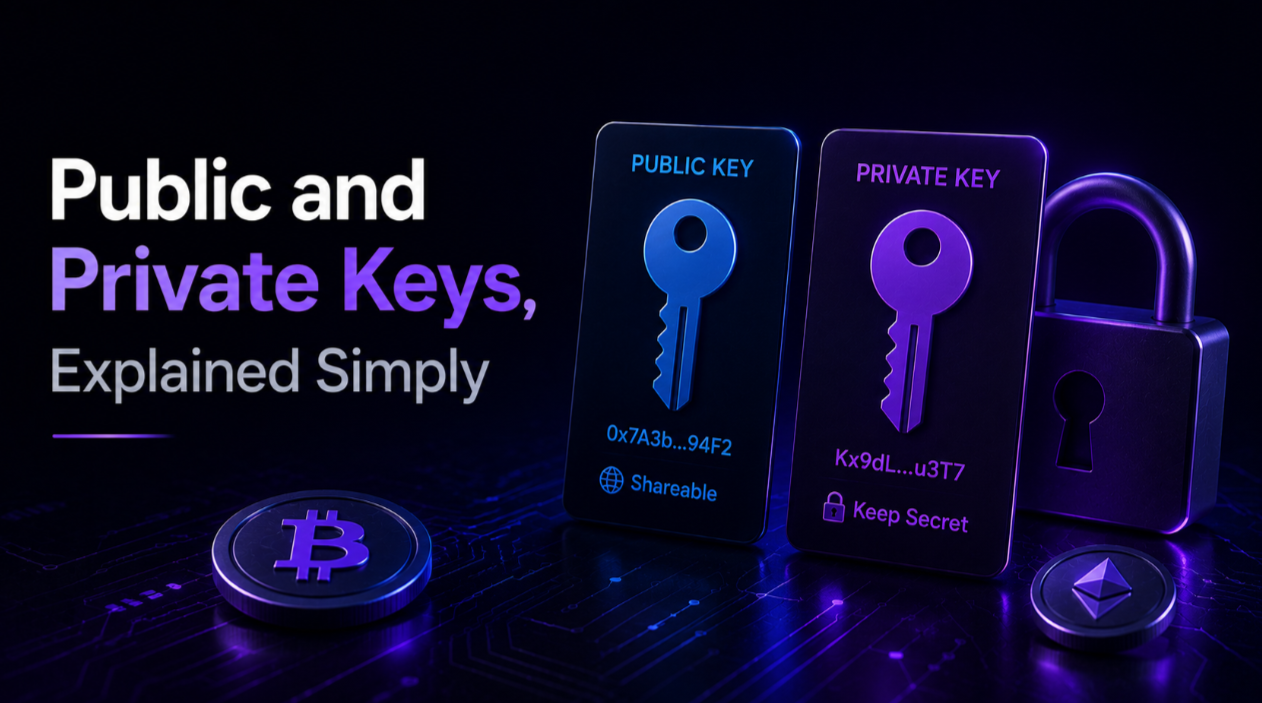
Public and private keys are a matched pair of long numbers that together prove you own and can spend your cryptocurrency. Your public key produces the address others use to send you funds, while your private key is the secret that authorises spending from that address. Anyone who holds the private key controls the money, which is why keeping it secret is the single most important habit in crypto.
Key takeaways
- A private key is a secret that lets you spend your crypto; a public key and address let others pay you.
- The public key is mathematically derived from the private key, but the reverse cannot be worked out.
- Sharing your address is safe; sharing your private key or recovery phrase gives away your funds.
- Wallets exist mainly to store and protect these keys, not to hold coins themselves.
A simple way to picture it
Think of your address like an email address and your private key like the password to that inbox. You can hand your email address to anyone who wants to write to you, and no harm is done. But if you give away the password, someone else can read and send from your account. Crypto works the same way: the address is for receiving, the private key is for control.
These keys are what make ownership on a blockchain possible without a company holding your account for you.
This is a genuine shift in how money can work. In the traditional world, a bank vouches for who you are and controls access to your account. With crypto, the maths does that job instead: proving you hold the right private key is all the authorisation the network needs. The upside is freedom from gatekeepers; the downside is that the responsibility for safekeeping rests entirely with you.
How the two keys relate
The pairing relies on a branch of maths called public-key cryptography. A private key is generated first, usually as a huge random number. From it, the public key is calculated, and from the public key an address is derived.
The clever part is that this only works in one direction. It is easy to produce a public key from a private key, but effectively impossible to reverse the process and discover the private key from public information. That one-way relationship is what keeps your funds safe while your address sits out in the open.
What happens when you send crypto?
When you spend coins, your wallet uses your private key to create a digital signature for the transaction. The network can check that signature against your public key to confirm the request genuinely came from the key holder, without ever seeing the private key itself.
In other words, the private key proves ownership without being revealed. This is how the network can trust a transaction it has no other way of verifying.
How addresses are used day to day
In practice you will rarely interact with a raw public key. What you hand out is an address, a shorter string derived from it. When someone wants to pay you, they send funds to that address, and the transaction becomes part of the public record on the blockchain.
A few practical habits make working with addresses safer:
- Copy and paste rather than type, since a single wrong character sends funds somewhere unrecoverable.
- Check the first and last characters after pasting, because some malware swaps the clipboard contents.
- Send a small test amount first when using a new address for a large transfer.
- Remember addresses are public, so anyone you share one with can view its transaction history.
Because addresses reveal your activity, some people use a fresh one for different purposes to keep their finances less easy to link together.
Where do wallets fit in?
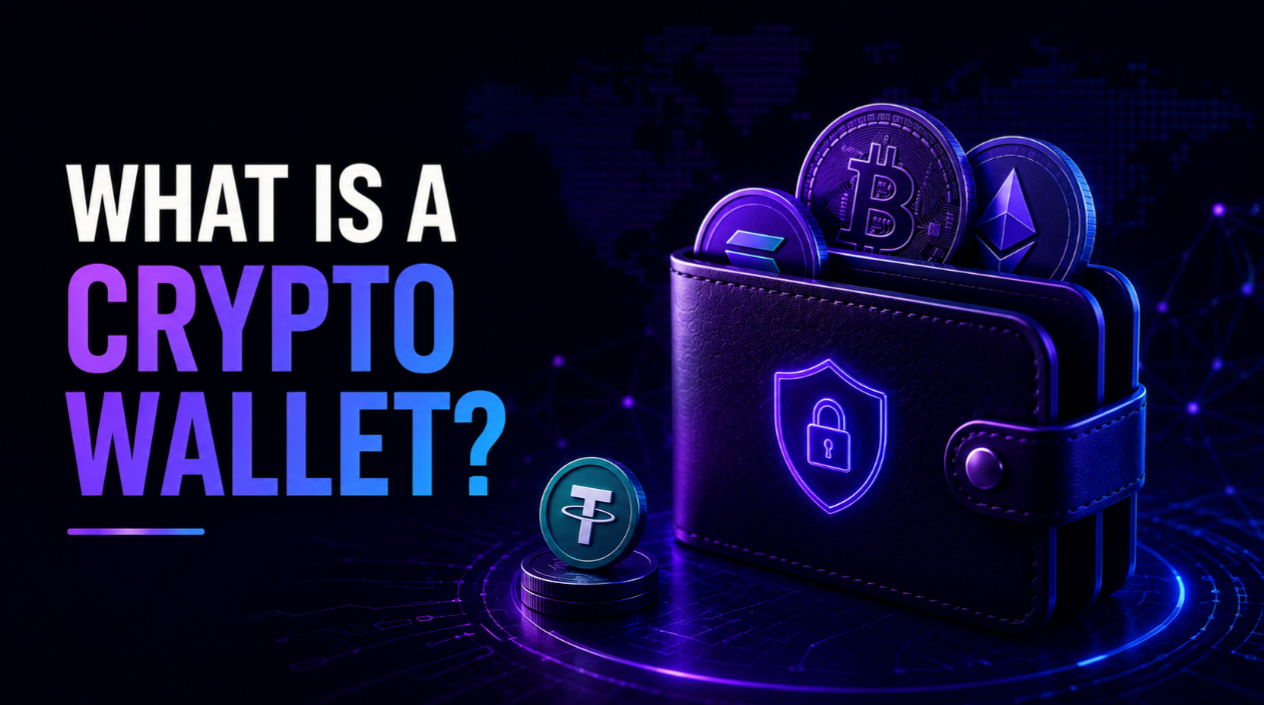
A common misunderstanding is that a wallet holds your coins. It does not. Your coins only ever exist as records on the ledger. A wallet stores and manages your keys and signs transactions on your behalf.
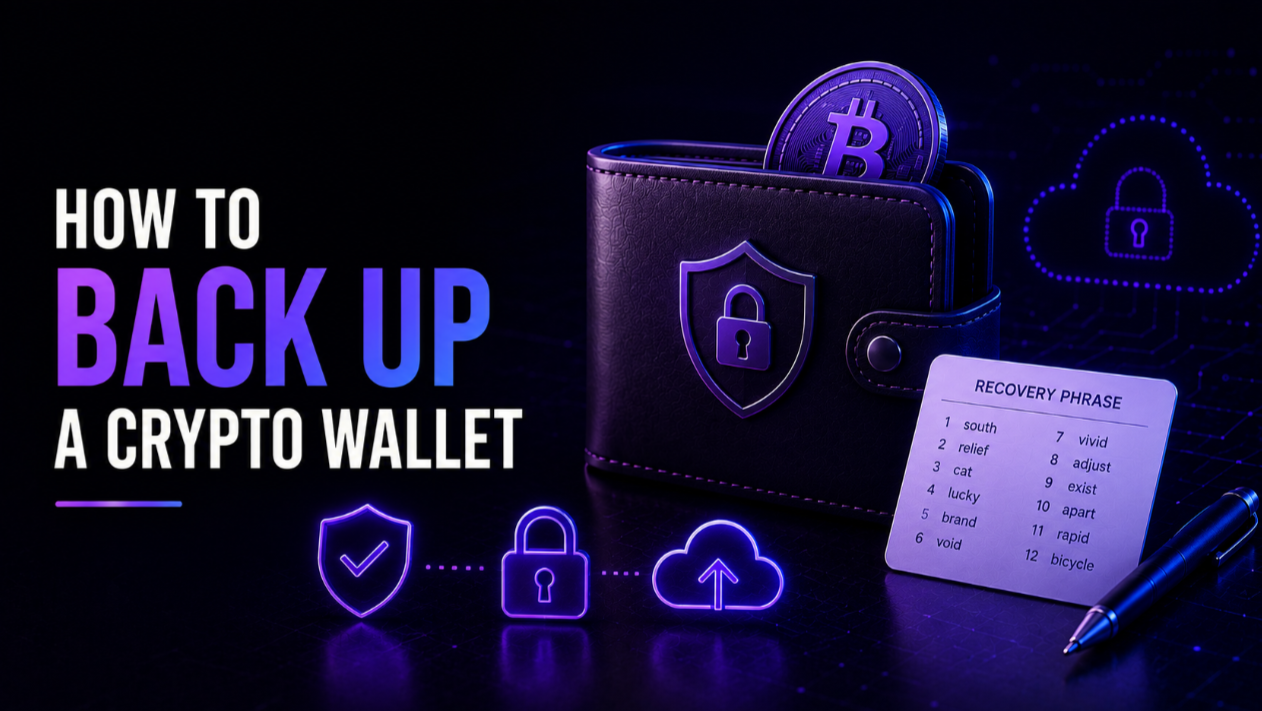
Most people never type a raw private key. Instead, wallets show you a recovery phrase (also called a seed phrase), a list of words that can regenerate all your keys if your device is lost. Treat that phrase with the same care as the private key itself. Our guide to buying your first cryptocurrency covers moving funds into a wallet you control.
Common mistakes and risks
- Sharing the wrong thing: giving out your address is fine; giving out your private key or recovery phrase is catastrophic.
- Storing keys in plain text: screenshots, notes apps and cloud documents are all vulnerable to theft.
- Falling for fake support: no legitimate service will ever ask for your private key or seed phrase.
- No backup: lose your only copy of the key or phrase and the funds are unrecoverable.
- Trusting screens blindly: malware can swap addresses, so always verify before signing.
The bottom line
Once you understand keys, the rest of crypto security clicks into place. Everything comes down to protecting one secret: the private key, usually in the form of a recovery phrase. Guard it well, back it up offline, and never share it, and you have mastered the most important safety lesson in the whole space. From here, the wider guides and our overview of what cryptocurrency is build on this foundation.