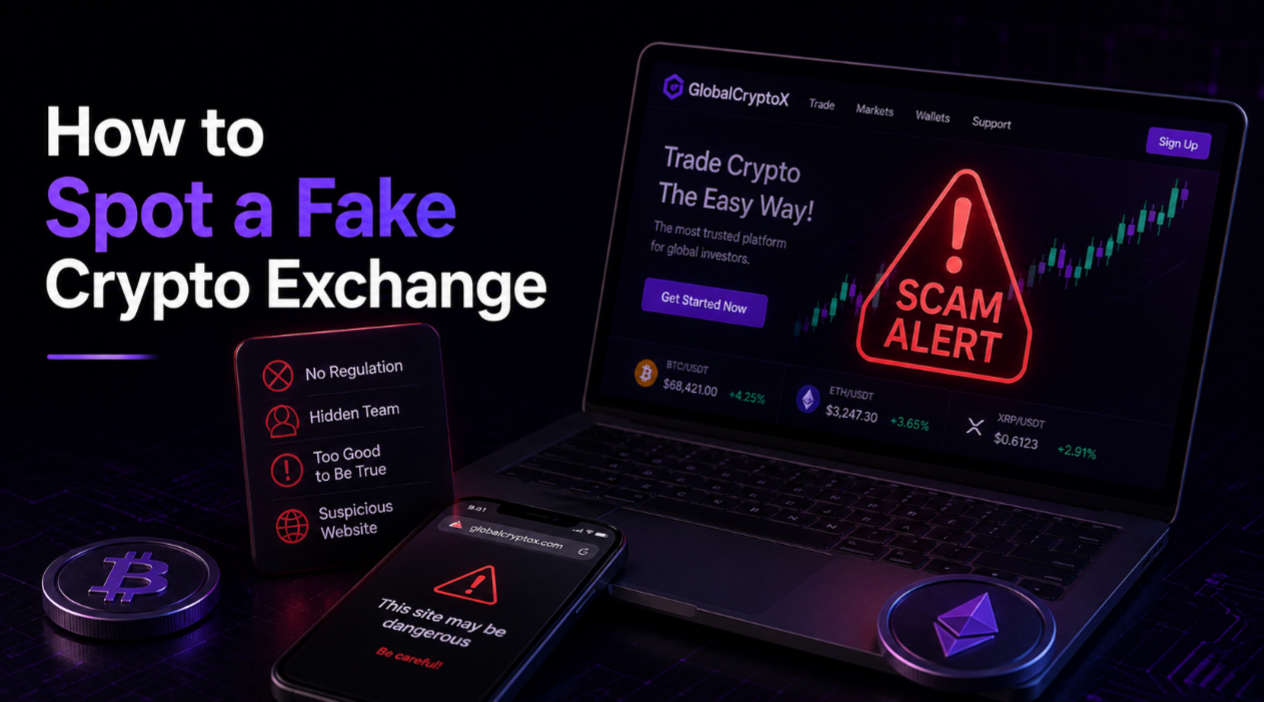
A fake crypto exchange is a fraudulent platform built to look like a genuine trading venue so that it can take your deposits and never let you withdraw them. It may have a polished website, a convincing app, live-looking price charts, and even a working "balance" that climbs as you trade, but the money only ever flows one way. Spotting one before you deposit is entirely possible, because fake exchanges share a consistent set of tells that a short verification routine will expose.
Key takeaways
- Fake exchanges are designed to accept deposits and block withdrawals, often hiding this behind fake fees or "verification" charges.
- The clearest test is whether real users can actually withdraw funds; blocked or fee-gated withdrawals are a decisive red flag.
- Verify the exact domain, company background, and independent reputation before depositing anything.
- Cross-check any platform against trusted, independent reviews rather than ads, DMs, or social media hype.
How fake exchanges operate
Most fake exchanges follow one of two playbooks. The first is a complete fabrication: a brand-new platform, sometimes cloned pixel-for-pixel from a real one, that advertises unbeatable prices, bonuses, or "guaranteed" returns to draw deposits. The second is impersonation: a lookalike domain or fake app pretending to be a well-known exchange, capturing logins and deposits from people who think they are on the real site.
In both cases the trap springs at withdrawal. Your balance may show healthy profits, but when you try to take money out you hit a wall of excuses: an unexpected "tax," a "security deposit," an account-verification fee, or an escalating series of payments that supposedly unlock your funds. Each payment is another deposit into the scammer's pocket. Sometimes the site simply freezes your account or disappears once deposits slow.
Red flags of a fake exchange
- Withdrawals are blocked or fee-gated. Being asked to pay taxes, fees, or a deposit to release your own funds is the single biggest sign of fraud.
- Guaranteed returns or bonuses. Promises of fixed profits, signup bonuses that seem too generous, or "risk-free" trading are marketing for a scam.
- Pressure and urgency. Countdown offers, pushy "account managers," and encouragement to deposit more, fast, are designed to override caution.
- No verifiable company or history. No real registration, no team, no track record, and no coverage from independent sources.
- Lookalike domains and unofficial apps. Slightly misspelled URLs, odd domain endings, or apps installed from links outside official stores.
- Unsolicited contact. Being invited to a platform by a stranger, a new online friend, or a social media message.
- Poor or evasive support that deflects direct questions about withdrawals and regulation.
The verification checklist
Before you send any funds to an exchange you do not already trust, work through this list. If a platform fails any single point, treat that as a reason to stop.
- Confirm the exact domain. Type the address yourself or use a bookmark, and inspect it character by character for misspellings or unusual endings.
- Check independent reputation. Look the platform up in trusted review sources and communities, not just on its own site or in ads. Cross-reference with our crypto exchange ratings to see whether it has a credible track record.
- Test small, then withdraw first. Before committing meaningful funds, deposit a small amount and successfully withdraw it. A platform that blocks or fee-gates a small withdrawal will do the same with a large one.
- Verify the company and licensing. Look for a real registered entity, transparent ownership, and applicable regulatory registration for your region.
- Scrutinise the offer. Any guaranteed return, generous bonus, or pressure to deposit more is a warning, not a perk.
- Check the app source. Install only from official app stores, verify the publisher, and be wary of apps distributed by direct link.
- Assess security and transparency. Genuine exchanges publish clear security practices, and some also provide reserve attestations that show customer balances are backed, though such claims should be independently verified rather than taken at face value.
Why smart people still get caught
Fake exchanges succeed because they attack judgement, not intelligence. The interface looks professional, the fake balance grows, and a friendly "account manager" builds rapport. Early small withdrawals may even be allowed to build confidence before a larger deposit is trapped. The emotional pull of watching "profits" rise, combined with the sunk cost of money already deposited, makes people rationalise paying "just one more fee" to unlock it. Recognising that these feelings are engineered is part of the defence. When a platform's story depends on you paying to access your own money, the story is the scam.
For the wider set of tactics that fake platforms are paired with, read our guide on how to avoid crypto scams, and see how impersonation is delivered in our piece on crypto phishing. More walkthroughs are collected in our learning hub.
What to do if you deposited to a fake exchange
If you believe you are dealing with a fake exchange, stop depositing immediately, no matter what fee is supposedly standing between you and a withdrawal; paying more never releases the funds. Secure any accounts that share a password or email with the platform, and enable strong two-factor authentication. Gather evidence, including the domain, screenshots, and any transaction hashes, and report the fraud to your local authorities and relevant consumer-protection bodies. Recovery is unlikely once funds leave your wallet, so be especially wary of "recovery agents" who contact victims promising to retrieve losses for an upfront fee, as these are a common second scam.
One habit deserves special emphasis because it defeats almost every fake exchange on its own: never let anyone else choose the platform for you. The overwhelming majority of victims arrive at a fake exchange through a link they were sent, an ad they clicked, or a recommendation from someone they met online, rather than through their own independent research. If you decide where to trade based on trusted reviews and your own verification, and reach the site only through a bookmark you created, you remove the exact channel scammers rely on to reach you in the first place.
The reassuring reality is that fake exchanges rarely survive scrutiny. A few minutes verifying the domain, checking independent reviews, and confirming that a small withdrawal actually works will unmask nearly all of them before your money is at risk.