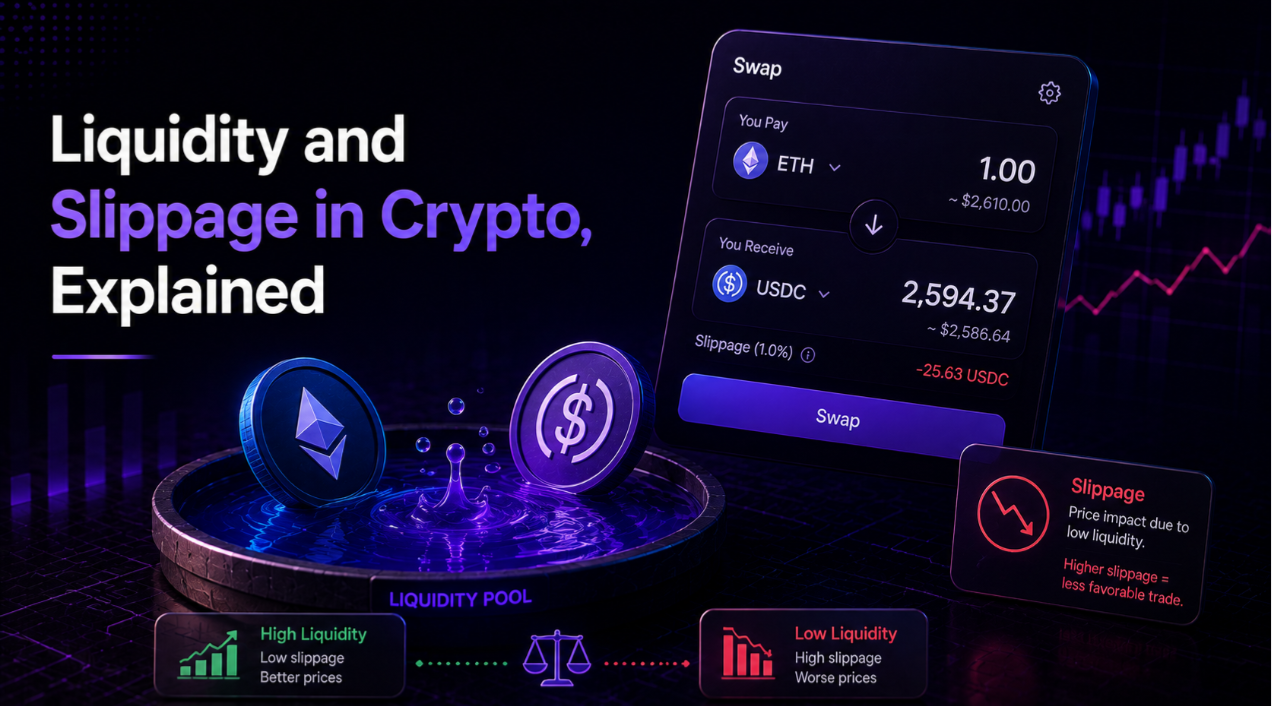
Slippage in crypto is the difference between the price you expect when you place a trade and the price you actually receive when it settles. It happens because markets move and because the pool or order book you trade against has limited depth, so your own trade can push the price against you. The thinner the liquidity, the larger the slippage you should expect.
Key takeaways
- Slippage is the gap between the quoted price and the executed price of a trade.
- It is driven by limited liquidity and by price impact, which grows with trade size relative to the pool.
- A slippage tolerance sets the worst price you will accept, so a trade fails instead of filling badly.
- Deep liquidity, smaller trades, and splitting large orders all reduce slippage.
- Loose slippage settings expose you to poor fills and to sandwich attacks by bots.
Liquidity: the foundation
Before slippage makes sense, you need to understand liquidity, which is how easily an asset can be traded without moving its price. A market with deep liquidity has plenty of tokens available near the current price, so even a large order fills close to the quote. A market with shallow liquidity has little available, so a modest order can move the price sharply. Liquidity is the cushion; slippage is what you feel when the cushion is thin.
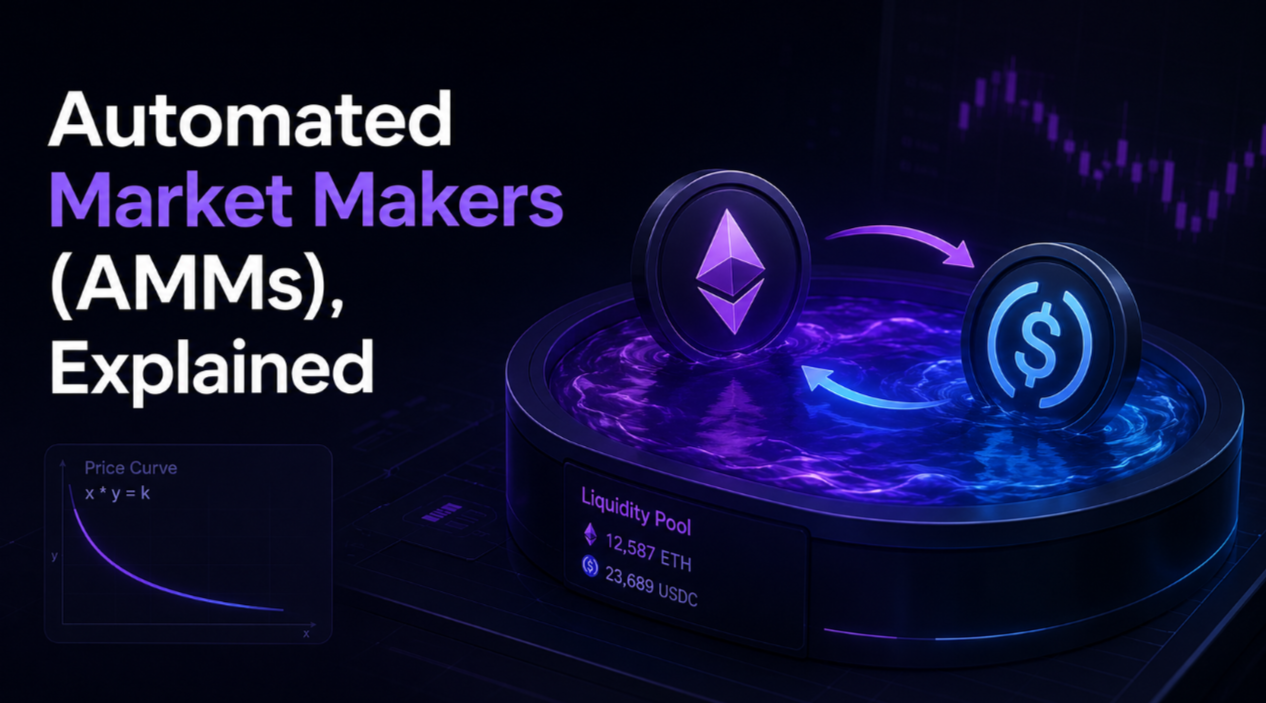
On an automated market maker, liquidity lives in a pool of two tokens. The size of that pool relative to your trade determines how much the price shifts. On an order book, liquidity is the stack of resting buy and sell orders at each price level. Either way, the principle is the same: more depth means less slippage.
Why slippage happens
There are two distinct causes, and it helps to separate them:
- Price impact: your own trade consumes available liquidity and moves the price as it fills. Buying a large amount from a small pool pushes the price up before your order completes, so your average price is worse than the starting quote.
- Market movement: between the moment you submit a transaction and the moment it confirms on-chain, the market price can change on its own, especially during volatile periods or network congestion.
Price impact is predictable and grows with trade size; market movement is unpredictable and grows with how long confirmation takes. Both show up as slippage in your final fill.
A quick example
Suppose a token is quoted at a price you like, but the pool backing it is small. You place a large buy. As your order fills, each successive unit costs a little more because the pool is rebalancing, so your average price ends up several percent above the quote. That difference is slippage from price impact. Had you traded a smaller amount, or used a deeper pool, the gap would have been far narrower. The relationship between pool depth and price movement follows directly from the constant product formula that AMMs use.
Slippage can go both ways
It is worth noting that slippage is not always negative. If the market moves in your favor between submitting and settling a trade, you can receive a slightly better price than quoted, sometimes called positive slippage. In practice, though, price impact from your own order only ever works against you, and the unpredictable market component is just as likely to hurt as to help. That is why the sensible mindset is to treat any quote as an estimate and to protect yourself against the downside rather than hoping for a favorable move.
How to control slippage
Most trading interfaces let you set a slippage tolerance, the maximum price movement you are willing to accept. If the market moves beyond that limit before your trade confirms, the transaction reverts instead of filling at a bad price. Setting it too tight means trades fail often during volatility; setting it too loose means you may accept a poor fill. A modest tolerance is usually the right balance for liquid pairs, with a little more room for volatile or thin markets. The right number is not a fixed rule but a judgment based on how deep the market is and how fast it is moving, so it pays to check the estimated price impact the interface shows before you confirm rather than accepting a default without thinking.
Beyond the tolerance setting, several habits reduce slippage directly:
- Trade in deeper markets: favor tokens and pools with substantial liquidity.
- Size trades sensibly: keep your order small relative to the available depth.
- Split large orders: breaking a big trade into pieces over time can lower total price impact.
- Use limit orders where available: they let you set a firm price rather than accepting whatever the market gives.
- Avoid peak congestion: slower confirmation times widen the window for the price to move.
Risks tied to slippage
Slippage is not just a cost; loose settings can be exploited. Understanding the dangers helps you set sensible limits:
- Sandwich attacks: because pending on-chain trades are public, bots can place an order just before yours and another just after, profiting from the price movement you cause. A high slippage tolerance makes this far more profitable for the attacker and costly for you.
- Failed transactions: a tolerance set too tight can cause trades to revert repeatedly, and on some networks you still pay gas for a failed attempt.
- Low-liquidity traps: some scam tokens have almost no real liquidity, so any sell suffers extreme slippage or cannot execute at all. Always check pool depth before buying an unfamiliar token.
- Volatility gaps: during sharp market moves, even liquid pairs can slip more than usual, so treat quotes as estimates, not guarantees.
Putting it together
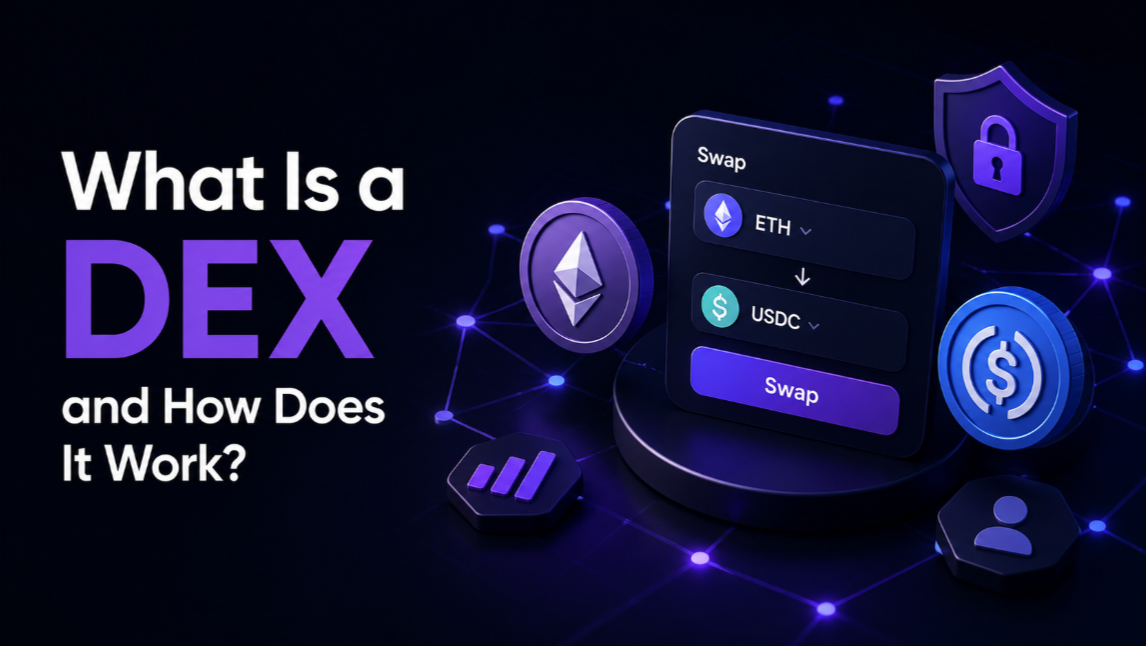
Slippage is a normal, unavoidable part of trading, but it is manageable once you understand its two causes. Watch liquidity, size your trades to the depth available, set a sensible tolerance, and be extra cautious with unfamiliar or thinly traded tokens. These habits are core to safe on-chain trading and connect directly to the wider mechanics of decentralized finance. For related topics, explore our full library of guides and pair this with our explainer on how DEXs work.