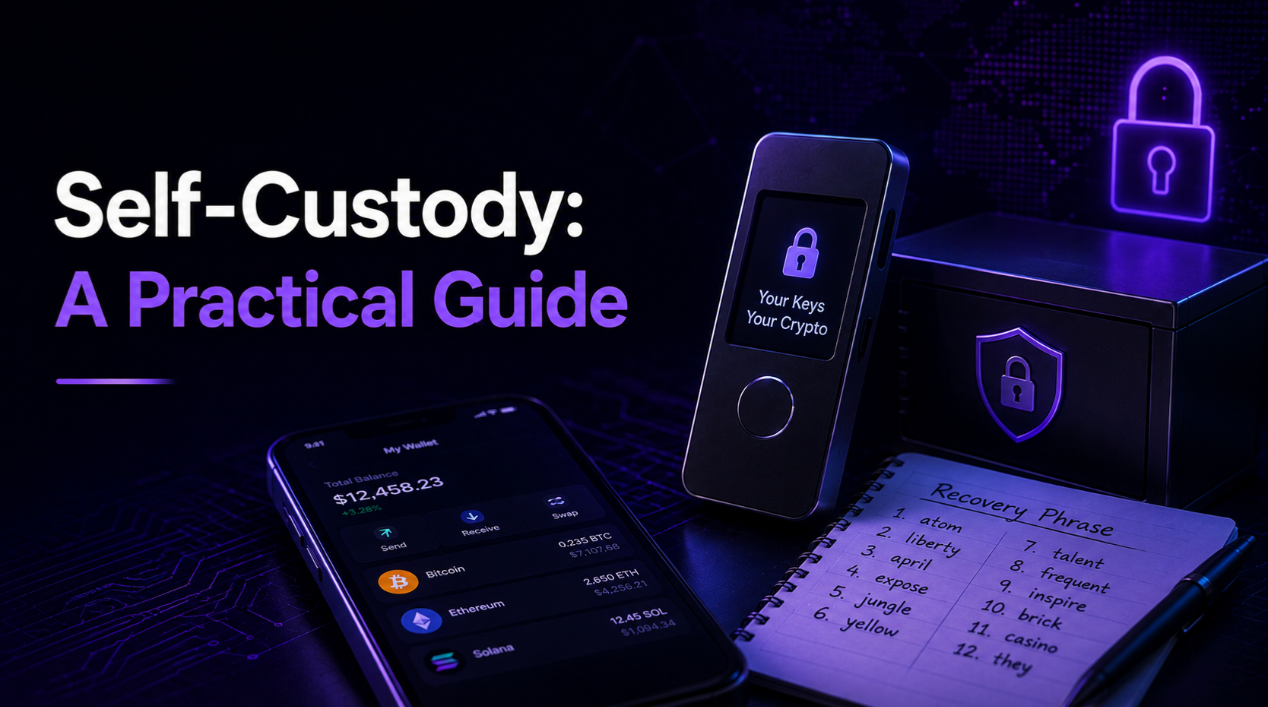
Self-custody means you personally hold the private keys that control your crypto, rather than leaving them with an exchange or other company. It gives you direct ownership and removes the risk of a custodian freezing, losing, or mishandling your funds — but in exchange, you take on full responsibility for keeping those keys safe. Understanding that trade-off is the whole point of this guide.
Key takeaways
- Self-custody puts the private keys in your hands, so no third party can freeze or lose your funds — and no one can restore access if you lose the keys.
- The recovery phrase is the account: protect it offline, in multiple places, and never share it.
- Good self-custody is mostly about routine and redundancy, not technical wizardry.
- You can mix approaches: custodial services for convenience, self-custody for savings you want to truly own.
What self-custody really means
There is a well-known saying in crypto: "not your keys, not your coins." It captures the core idea. When you leave crypto on an exchange, the exchange holds the keys and you hold a promise — an IOU on their books. That is convenient and often fine, but it means your access depends on that company staying solvent, honest, and operational. History has shown those assumptions can fail.
With self-custody, you use a non-custodial wallet that generates keys only you control. Your funds still live on the blockchain, but only your keys can move them. No one can reverse a transaction for you, and no one can lock you out. You become, in effect, your own bank — with the freedom and the burden that implies.
Keys, addresses, and the recovery phrase
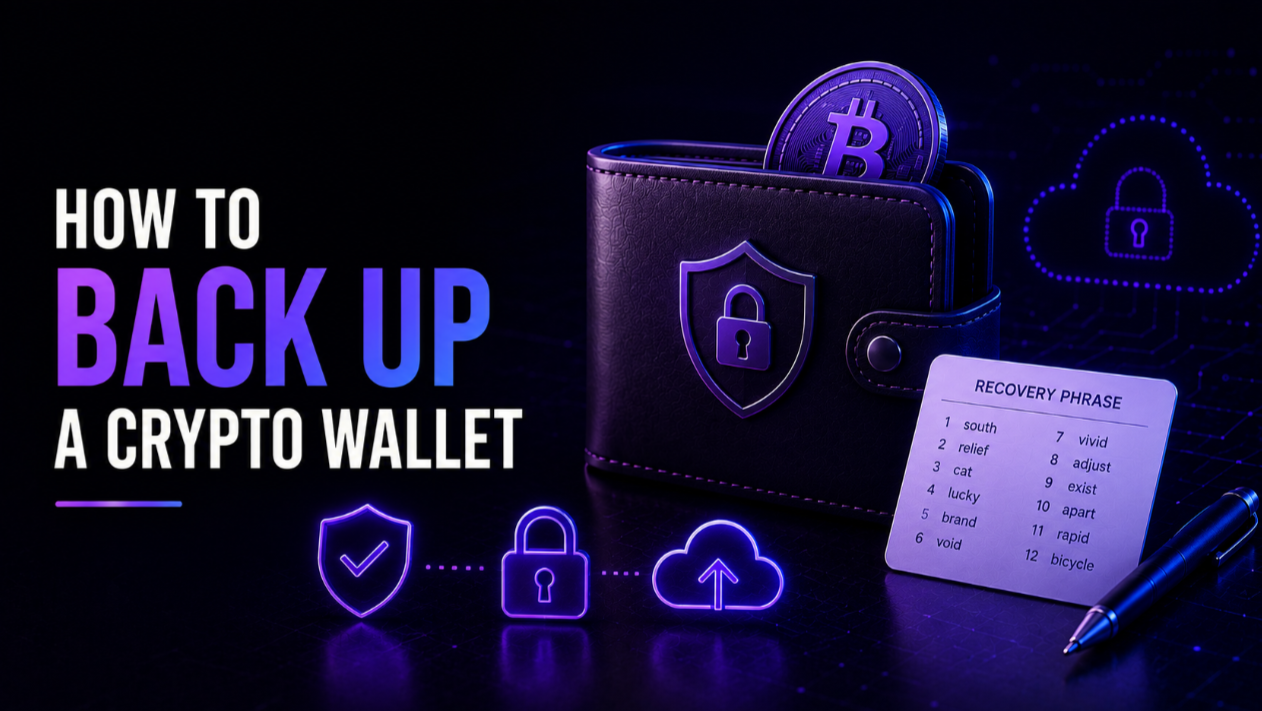
A wallet manages three related things: a public address you share to receive funds, a private key that authorises spending, and a recovery phrase (usually 12 or 24 words) from which the keys are derived. In everyday use you rarely see the raw private key; the recovery phrase is what you back up. Whoever holds that phrase controls the wallet, which is why guarding it is the single most important habit in self-custody.
How to hold crypto yourself
Getting started is straightforward, and you can scale up your security as your holdings grow.
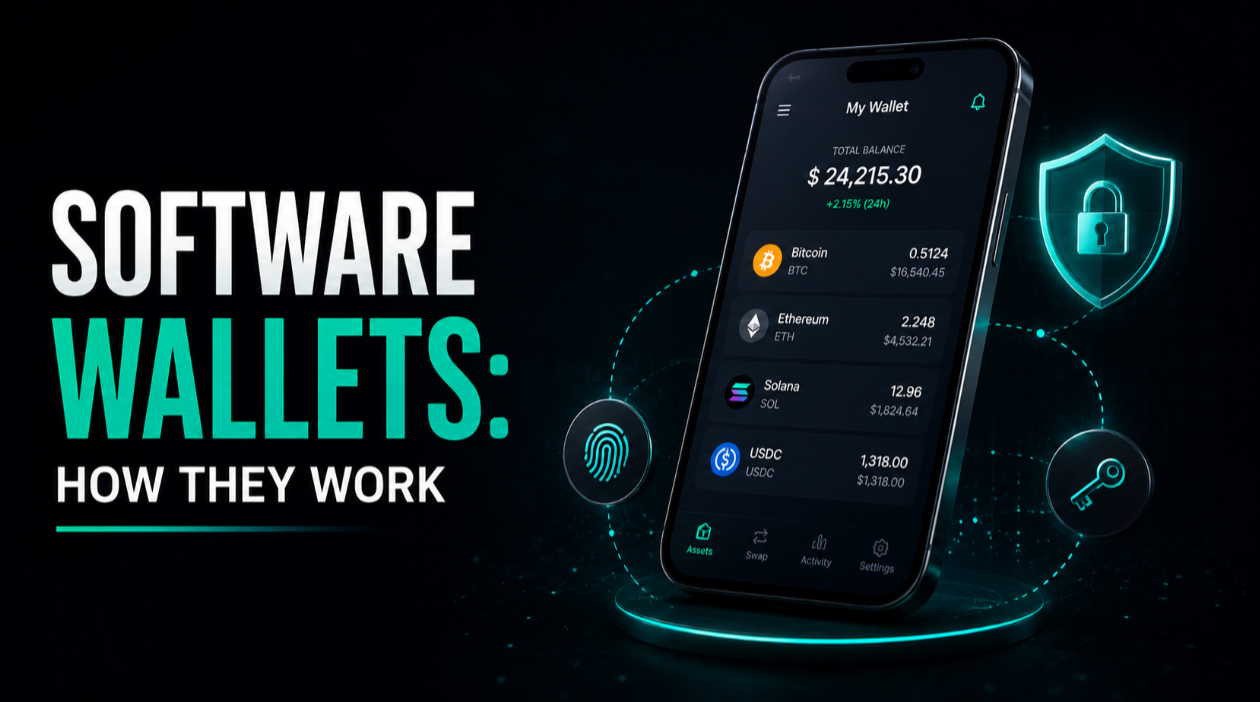
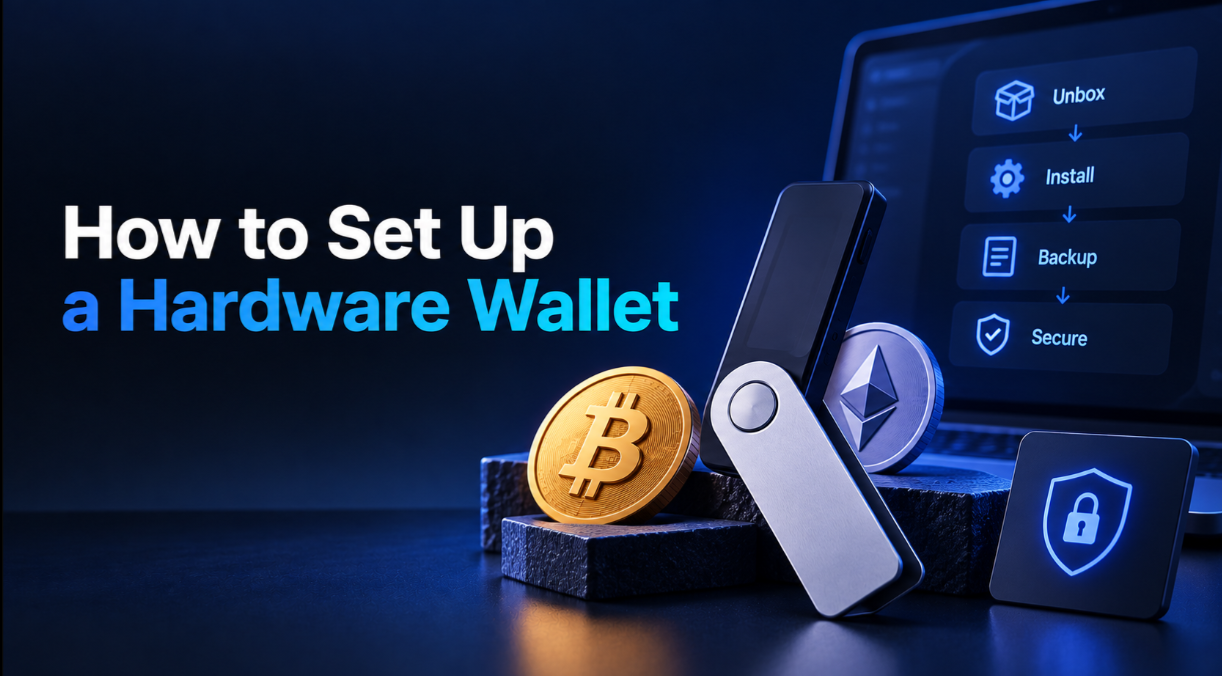
- Choose a wallet that fits. A software wallet on your phone or computer is a fine starting point for smaller, active balances; a hardware wallet suits larger or long-term holdings.
- Generate and record the recovery phrase. Let the wallet create a fresh phrase and write it down offline, in order, on paper or metal.
- Move a small amount first. Send a test transfer, confirm it arrives, then move more once you trust the setup.
- Verify addresses. Always check the receiving address carefully, ideally on a hardware device's screen, before sending.
The responsibilities you take on
Self-custody is empowering, but it is honest to say it is not effortless, and it removes the safety nets people are used to. There is no password reset, no fraud department, and no one to call if you make a mistake. That reality should shape how carefully you plan.
The biggest ongoing responsibility is protecting and backing up your recovery phrase against everyday disasters — loss, fire, water, theft, and simple forgetfulness. The second is verifying what you sign, because in self-custody a transaction you approve is final. The third, often overlooked, is planning for the unexpected: if something happened to you, could a trusted person recover the funds? Thinking through inheritance and emergency access is part of doing self-custody responsibly. A common middle path is to leave sealed instructions with a trusted person or lawyer that explain where backups are kept and how to use them, without exposing the phrase itself while you are alive.
Security best practices
Strong self-custody comes from a few durable habits rather than any single tool.
- Keep the phrase offline and redundant. Store at least two copies in separate secure places, so no single fire, flood, or theft wipes out your access.
- Never digitise the phrase. No photos, cloud notes, emails, or password managers for the seed words themselves.
- Separate spending from savings. Use a hot wallet for small day-to-day amounts and colder storage for the bulk you rarely touch.
- Guard against phishing. No legitimate service will ever ask for your recovery phrase; treat any such request as an attack.
- Review token approvals. When using on-chain apps, grant only the permissions needed and revoke old ones periodically.
Common mistakes
Most people who lose self-custodied crypto do so through preventable errors, not exotic hacks.
- Only one backup. A single copy of the phrase is one accident away from permanent loss.
- Storing the phrase online. The moment the words touch an internet-connected file, they are exposed.
- Rushing large transfers. Skipping a test transaction or a careful address check can send funds somewhere unrecoverable.
- Trusting "support" that contacts you. Unsolicited helpers who ask for your phrase or remote access are scammers.
- No plan for emergencies. Perfect secrecy is useless to your family if no one can ever recover the funds when it matters.
Is self-custody right for you?
Self-custody is worth adopting once you value truly owning your crypto and are willing to take backup and security seriously. For beginners with small amounts, a gradual path works well: start with a software wallet, learn the habits, then add a hardware wallet as your holdings grow. There is no rule that you must self-custody everything — many people keep an active balance on a custodial service for convenience while holding savings themselves.
To go deeper on the tools, read our explainers on what a hardware wallet is and how a software wallet works, and browse the rest of our guides for related topics. If you decide a dedicated device is the right foundation, our independent hardware wallet ratings can help you compare options without any promotion.
Done well, self-custody is less about technical skill and more about discipline: protect the phrase, keep redundant backups, verify what you sign, and plan for the worst. Those habits turn the freedom of holding your own keys into lasting peace of mind.