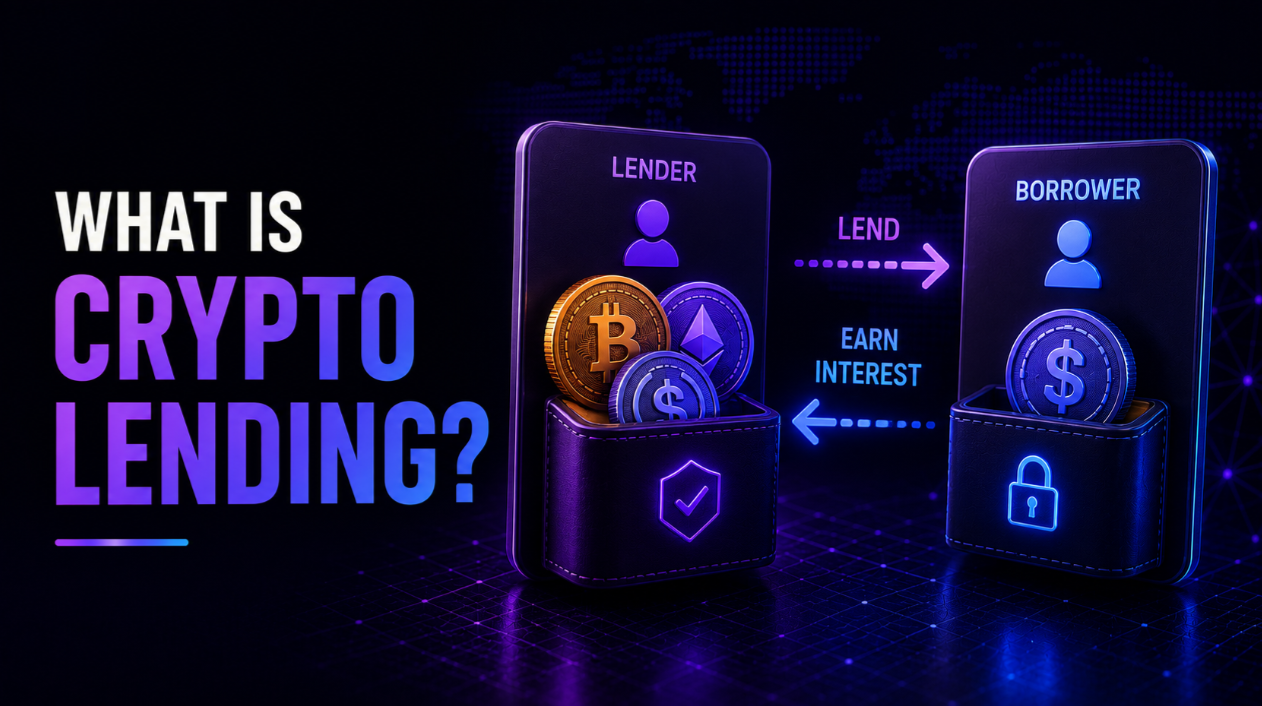
Crypto lending is the practice of earning interest by supplying your assets to a lending market, or borrowing assets by posting collateral, with interest rates set automatically by supply and demand. In decentralized lending, there is no loan officer: smart contracts pool the deposits, track each borrower's collateral, and enforce the rules, so lenders earn yield and borrowers get liquidity without selling what they own.
Key takeaways
- Lenders deposit assets into a pool and earn interest paid by borrowers.
- Borrowers must post collateral worth more than they borrow, a model called overcollateralization.
- Interest rates adjust algorithmically based on how much of the pool is being borrowed.
- If collateral value falls too far, the position is liquidated automatically.
- The main risks are liquidation, smart-contract exploits, oracle failures, and variable rates.
How crypto lending works
Decentralized lending is built around shared pools. Lenders deposit an asset into a pool and immediately begin earning interest; in return they usually receive a token that represents their deposit plus accrued interest. Borrowers draw from the same pool, but only after locking up collateral. Because everything is enforced by smart contracts, the process is continuous and permissionless, with no application or credit check. For the broader context, see our DeFi overview.
Interest rates are not fixed by a company. They move with utilization, the share of the pool that is currently borrowed. When lots of borrowers want funds, utilization is high and rates rise, which attracts more lenders and encourages repayment. When demand is low, rates fall. This feedback loop keeps the pool balanced without any central decision-maker.
Why loans are overcollateralized
Because borrowers are anonymous and there is no way to pursue them for repayment, decentralized lending relies on overcollateralization. To borrow, you must lock collateral worth more than the loan itself, often significantly more. If you want to borrow a given amount, you might need to post collateral worth well above it. This buffer protects lenders: if a borrower never repays, the collateral covers the debt.
Why borrow instead of sell?
It can seem odd to post more collateral than you borrow, but there are practical reasons. Borrowing lets you access liquidity without selling an asset you want to keep, which can matter for tax timing or long-term conviction. Some users borrow a stablecoin against a volatile holding to spend or invest elsewhere while retaining upside on the collateral. Others use borrowing to manage cash flow on-chain. The key is that a loan is not free money: you pay interest, and you take on liquidation risk.
Centralized versus decentralized lending
Crypto lending comes in two broad forms. In centralized lending, a company takes custody of your assets, lends them out, and pays you a rate it sets, much like a crypto-native bank. This can feel simpler, but it means trusting that firm to manage risk and stay solvent, and history has shown that opaque centralized lenders can fail and take customer funds with them. In decentralized lending, smart contracts hold the assets and enforce the rules transparently, so you can verify collateral and reserves on-chain at any time. The trade-off is that you take on responsibility for your own wallet security and for understanding the protocol. This guide focuses mainly on the decentralized model, since that is what most people mean by DeFi lending.
A note on flash loans
One feature unique to DeFi is the flash loan, an uncollateralized loan that must be borrowed and repaid within a single transaction. If the borrower cannot repay by the end of that transaction, the entire operation reverts as though it never happened, so the lender is never at risk. Flash loans are used for legitimate purposes like arbitrage and refinancing, but they have also been used to fund attacks that manipulate prices or exploit buggy contracts. They are an advanced tool, not something a beginner needs to use, but understanding them explains many DeFi exploits you may read about.
Liquidation, explained
Every borrowing position has a threshold, often expressed through a loan-to-value ratio or a health factor, that measures how close it is to danger. If the collateral falls in value, or the borrowed asset rises, the position can cross that threshold. At that point the protocol allows liquidators to repay part of the debt in exchange for the borrower's collateral at a discount. Liquidation keeps the pool solvent, but it is costly for the borrower, who loses collateral plus a penalty.
Managing liquidation risk is the single most important skill for a borrower. That usually means borrowing well below the maximum, monitoring positions during volatility, and keeping a buffer or a plan to add collateral or repay quickly if prices move. You can compare independently reviewed venues on our lending platforms ratings page rather than relying on any single protocol's marketing.
Risks to understand
Lending and borrowing both carry real risks, and yield is never a substitute for understanding them:
- Liquidation risk: borrowers can lose collateral, plus a penalty, if its value drops below the required threshold during volatility.
- Smart-contract risk: the pool is a program, and a bug or exploit can drain deposits. Favor audited, established protocols and treat unaudited ones as high-risk.
- Oracle risk: lending protocols rely on price feeds to value collateral. A manipulated or faulty oracle can trigger unfair liquidations or let an attacker borrow against bad prices.
- Interest-rate risk: rates are variable, so a comfortable borrowing cost can spike when utilization rises, and lender yields can fall when demand drops.
- Liquidity risk: if utilization is very high, lenders may be temporarily unable to withdraw until borrowers repay or new deposits arrive.
- Collateral risk: using a volatile or low-quality asset as collateral makes liquidation far more likely.
A cautious approach
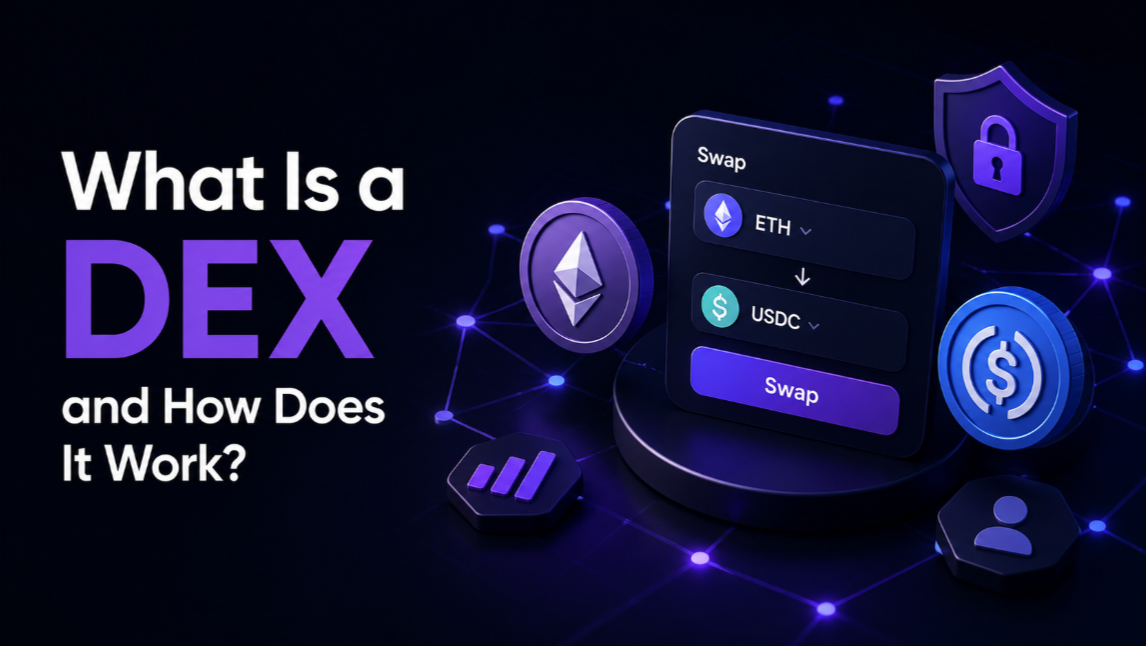
If you want to try crypto lending, start on the lending side with a small deposit so you can see how interest accrues and how withdrawals work. If you later borrow, keep your loan far below the maximum, use high-quality collateral, and watch your health factor closely. Understand that yields reflect risk: unusually high advertised returns usually signal unusually high danger. Build your foundation with our guides and pair this with our explainer on how DEXs work, since swapping and lending often go hand in hand in DeFi.