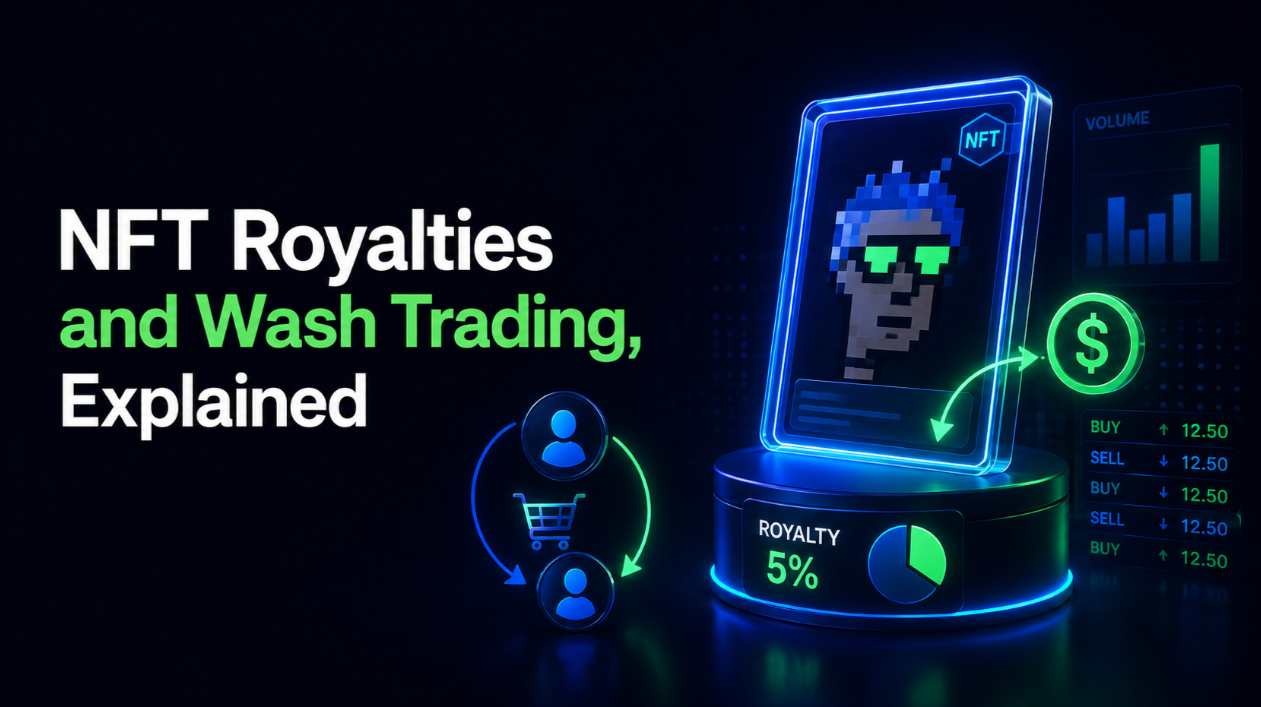
NFT wash trading is the practice of buying and selling the same token between wallets a single person controls to fabricate trading activity, and it is closely tied to how creator royalties work. By trading with themselves, actors can inflate a collection's reported volume, manufacture a misleading price history, and sometimes game reward or ranking systems, all while no genuine change of ownership occurs. Understanding wash trading alongside royalties matters because the two interact: royalty rules can both discourage and, in some incentive schemes, inadvertently encourage this behavior. This guide explains both mechanics and how to read the signs.
Key takeaways
- Wash trading is self-dealing designed to fake volume and price, not to transfer real ownership.
- It distorts the metrics buyers rely on, such as volume, floor price and momentum.
- Creator royalties are payments to the original creator on resales, and their enforcement varies widely.
- Royalties and reward programs can shape whether wash trading is profitable to attempt.
- You can spot warning signs by examining trade patterns, wallet relationships and timing.
What wash trading is
Wash trading is an old idea imported into crypto. A trader controls two or more wallets and sells an asset from one to another, then perhaps back again. On paper this generates volume and a series of sale prices, but economically nothing has changed hands because the same person owns both sides. In traditional regulated markets this is illegal manipulation. On public blockchains it is technically easy to do, which is why NFT markets, where activity metrics heavily influence perception, have been a common venue for it. If you are new to how these tokens work, our explainer on NFTs covers the basics first.
Why people do it
The motives are straightforward. Inflated volume can push a collection up marketplace rankings and "trending" lists, drawing real buyers. A rising fake price history can create the illusion of momentum that lures speculators. And where platforms have offered token rewards based on trading activity, wash trading can be a way to farm those rewards. In each case, the goal is to exploit the fact that markets treat activity as a signal of genuine demand. Because a blockchain records every transfer permanently and publicly, the irony is that wash trading leaves a visible trail; the difficulty is not seeing the trades but proving intent, since a person can always claim the wallets belong to different people.
How NFT royalties work
A creator royalty is a percentage of each secondary sale intended to flow back to the original creator, encoded as part of the sale terms. In principle it lets artists earn on resales, not just the first mint. In practice, enforcement is inconsistent. Royalties are difficult to guarantee purely at the blockchain level, so competing marketplaces have at times made them optional, reduced them, or built tools to bypass them. This means the royalty a creator expects and the amount actually paid can diverge depending on where a trade happens.
Where royalties and wash trading meet
The two topics connect through cost and incentive. Royalties and marketplace fees are a cost on every wash trade, which normally discourages the practice: paying a fee to trade with yourself is a loss. However, when a platform hands out rewards worth more than those fees, the math can flip, and self-dealing becomes profitable even after paying royalties. This dynamic is one reason marketplaces that reward volume must design incentives carefully, and it is why reducing or removing royalties can, perversely, make wash trading cheaper to execute. The interplay is a useful lens for judging whether a collection's activity is organic. When you see frantic volume on a platform that has just launched a trading-reward program, it is worth asking whether people want the tokens or simply want the rewards that trading them unlocks.
How to spot wash trading
You cannot always prove wash trading, but several patterns raise suspicion. Learning to read them protects you from paying for manufactured hype.
- Repetitive back-and-forth: the same token bouncing between a small set of wallets in quick succession.
- Connected wallets: addresses that funded each other or share a common funding source before trading.
- Round-number or identical prices: sales at oddly consistent amounts that do not reflect a real market.
- Volume without holders: high reported volume but few distinct owners or little organic chatter.
- Timing spikes: bursts of activity aligned with a reward program or a ranking snapshot.
Marketplaces and analytics tools increasingly filter suspected wash trades, but no filter is perfect, so cross-checking on-chain history yourself is worthwhile. Our guide to NFT marketplaces explains how reported figures are compiled and why they deserve scrutiny.
Risks and what to watch
For an ordinary buyer, the danger of wash trading is paying a price justified only by fake activity, then finding no real demand when you try to sell. Keep these risks in view:
- Distorted metrics: volume, floor price and momentum can all be manufactured, so never rely on them alone.
- Illiquidity on exit: a collection that looked active may have almost no genuine buyers when you list.
- Royalty uncertainty: the royalty terms you assume may not be enforced where you trade, changing your economics.
- Approval and phishing exposure: chasing a "hot" collection can push you to unfamiliar sites; review token approvals and verify contracts before signing.
- Reward-driven traps: collections pumped to farm platform rewards can collapse once the incentive ends.
Buying with your eyes open
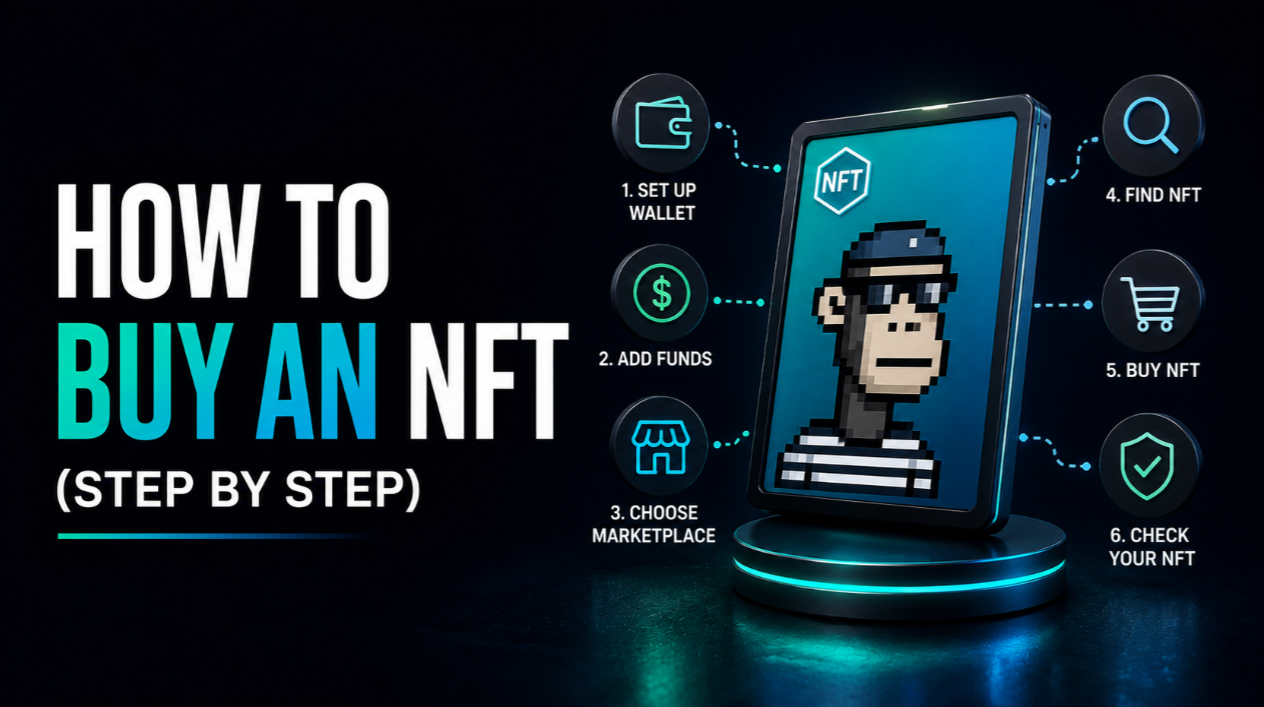
The antidote to manipulated data is doing your own verification. Look past headline volume to the number of distinct holders and the realism of the price history, be wary of collections whose activity aligns suspiciously with reward programs, and confirm royalty terms for the platform you are actually using. Before committing funds, follow a careful process such as the one in our walkthrough on how to buy an NFT, and read more widely in our other guides. Wash trading thrives on the assumption that activity equals demand; the buyers who question that assumption are the ones least likely to overpay for a mirage.