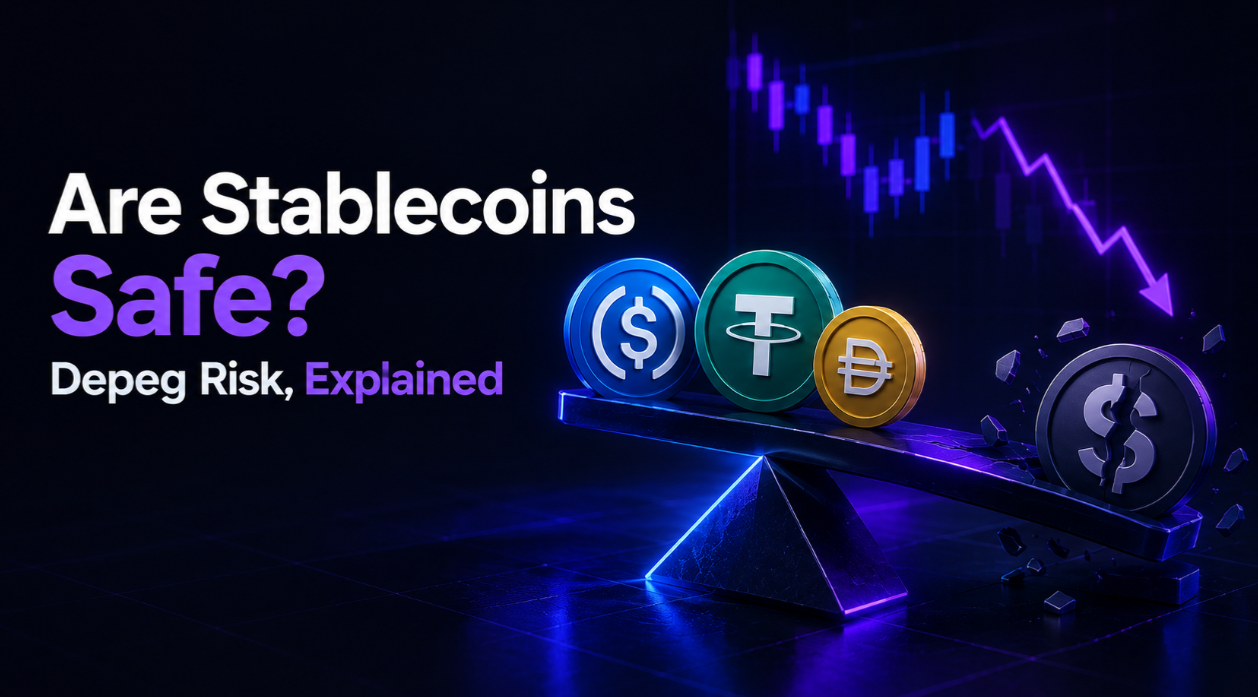
Stablecoins are only as safe as the mechanism holding their peg, and a depeg happens when a token that should trade at its target, usually one dollar, slips meaningfully above or below it. A brief wobble of a fraction of a cent is normal market noise; a sustained gap is a warning that backing, liquidity, or confidence is under strain. Understanding depeg risk is the difference between treating a stablecoin as truly stable and treating it as a claim that must be verified.
This guide explains what a depeg is, why it happens, how pegs usually recover, and how to judge whether a given stablecoin is likely to hold up when markets are stressed.
Key takeaways
- A depeg is a sustained deviation of a stablecoin's market price from its target value.
- Small, temporary deviations are normal; large or persistent ones signal a real problem.
- Depegs are driven by loss of confidence, failed redemptions, thin liquidity, collateral shortfalls, or broken mechanisms.
- Backing quality, transparency, and liquidity are the best predictors of whether a peg will hold.
What a depeg actually is
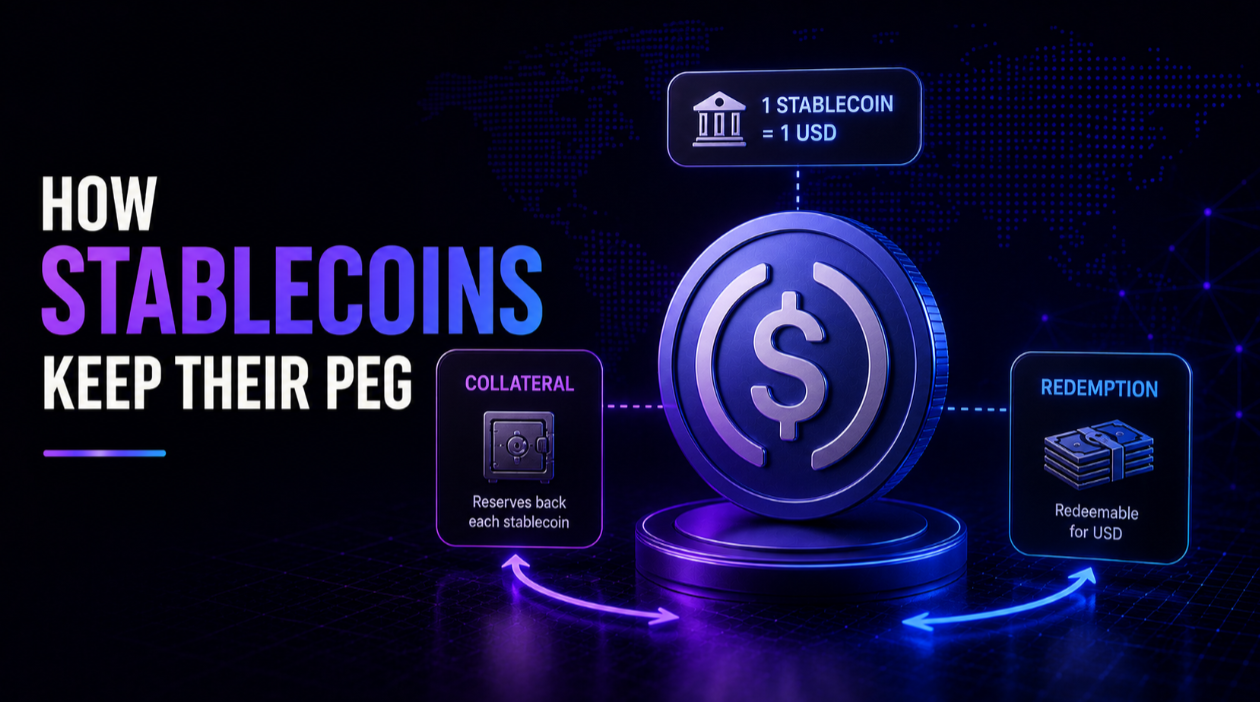
A stablecoin's peg is a target, not a physical law. The token trades on open markets, so its price is set by supply and demand at every moment. Most of the time, arbitrage keeps it glued to target: if it dips below, buyers scoop it up and redeem for full value; if it rises above, more is minted and sold. A depeg occurs when that corrective loop stops working fast enough, and the price drifts and stays there.
Direction matters. A token trading below target usually signals fear, redemption pressure, or doubts about backing. Trading above target is rarer and often reflects a supply squeeze or restricted minting. Both are deviations, but a downward depeg is the one that tends to cause losses. It is also worth remembering that the market price of a stablecoin and the value of its backing are two different things; a token can dip on an exchange purely because of a temporary imbalance between buyers and sellers, even while its reserves remain fully intact. The danger is when the price move reflects a genuine doubt about that backing rather than a passing liquidity gap. For the fundamentals behind pegs, see our overview of what stablecoins are.
Why depegs happen
Depegs are rarely random. They cluster around a few recurring causes:
- Loss of confidence: if holders doubt the issuer or the reserves, they rush to exit, overwhelming the peg.
- Redemption friction: if you cannot reliably swap the token for its underlying value, arbitrage stalls and the price drifts.
- Thin liquidity: in shallow markets, even modest selling moves the price sharply.
- Collateral shortfalls: for backed models, a fall in reserve or collateral value can leave tokens under-supported.
- Mechanism failure: algorithmic designs can enter a reflexive spiral when demand collapses.
Notice how many of these trace back to trust and transparency. A stablecoin whose backing is clear, liquid, and verifiable gives the market fewer reasons to panic in the first place.
How pegs recover, or fail to
Whether a peg snaps back depends on the strength of its redemption path. When holders can convert tokens to full value on demand, arbitrageurs step in during a dip, buy cheap, redeem, and pull the price home. That is why credible, well-collateralised tokens often recover from short shocks. When redemption is blocked, backing is questionable, or the design relies on confidence that has evaporated, the same shock can become permanent. The key variable is not the size of the initial move but whether the corrective mechanism still functions.
How to assess depeg risk
You cannot eliminate depeg risk, but you can judge it. Before holding a stablecoin, work through a few questions:
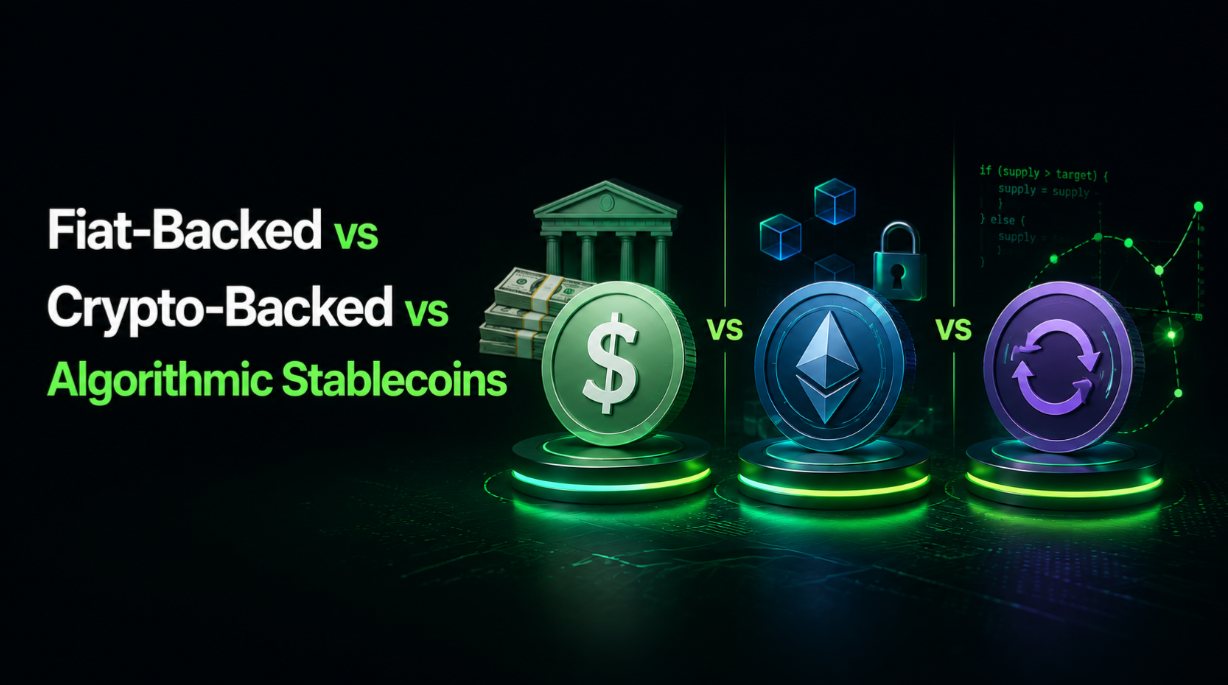
- What backs it? Cash reserves, over-collateralised crypto, or an algorithm? The different types of stablecoins carry very different fragility.
- How transparent is it? Are reserves attested or verifiable on-chain, and how often?
- How deep is its liquidity? Can large redemptions happen without moving the price?
- Who controls it? Are there central points that could freeze redemptions or fail?
Comparing these factors across issuers is far more useful than trusting a label. Our independent Stablecoins ratings and the wider guides library can help you make that comparison.
Soft depegs versus hard depegs
Not every deviation is equal, and it helps to distinguish two broad patterns. A soft depeg is a temporary, modest wobble, the token trades slightly off target during a period of stress or thin liquidity, then recovers as arbitrage catches up. These are uncomfortable but often survivable, and they are common during broad market turmoil when many assets move at once. A hard depeg is different: the price falls sharply and does not recover, usually because the backing is inadequate, redemption has failed, or confidence in the mechanism has collapsed entirely.
The danger is mistaking one for the other. A holder who assumes every dip is a soft, recoverable wobble may hold through what is actually a terminal failure. Conversely, panic-selling a fundamentally sound token during a brief liquidity crunch can lock in a loss that never needed to happen. There is no perfect way to tell them apart in the moment, which is why the pre-purchase questions above matter so much: a token with strong, verifiable backing and open redemption is far more likely to be experiencing a soft depeg than a hard one.
Managing the risk in practice
Sensible habits reduce your exposure. Prefer stablecoins with strong, transparent backing and deep liquidity. Avoid concentrating everything in a single token, especially an under-collateralised or algorithmic one. Be sceptical of unusually high yields, which often compensate for hidden risk. And remember that centralisation cuts both ways: an issuer that can freeze balances can protect the system but can also freeze yours. Spreading holdings across more than one reputable stablecoin, and keeping an eye on issuer disclosures over time, further limits the damage any single failure can do. Treating "stable" as a claim to verify, not a promise to trust, is the core of managing depeg risk.