CoinPulse
Tether
Stablecoin issuerBritish Virgin Islands· founded 2014

What Is Tether (USDT)? Issuer, Reserves, Redemption and Fees

Tether is the company that issues USD₮, usually written USDT, a token meant to hold a value of one US dollar on public blockchains. It is the largest stablecoin by supply: about $184.6 billion was in circulation at the end of June 2026 5. Tether creates USDT when verified customers deposit dollars and destroys it when they redeem, and it says the tokens are backed by reserves made up mostly of short-term US Treasuries 5. The point many holders miss is that only verified Tether customers can redeem directly. Everyone else exits USDT by selling it to someone else.

Facts checked 17 cited sources No score on this page, no affiliate links

At a glance

Issuer under current terms
Tether International, S.A. de C.V. (El Salvador) 3
Group
Tether Holdings, relocated from the British Virgin Islands to El Salvador in 2025; common ownership with the exchange Bitfinex through iFinex 16
Founded
July 2014 as Realcoin; renamed Tether in November 2014 1
CEO
Paolo Ardoino (since October 2023) 1
Main products
USD₮ (USDT); USAT, a separate US-regulated token issued by Anchorage Digital Bank 8
Model
Custodial, fiat-referenced; reserves held by the issuer; tokens freezable by the issuer 3
Reserve reporting
Quarterly attestations by BDO Italia; first full audit (KPMG) under way as of the cutoff 49
Direct access
Verified customers only; US, Canadian and Singaporean persons excluded under the terms 3
Official site
tether.to
Last checked
19 October 2026

Who runs Tether

Tether began in July 2014 as Realcoin, founded by Brock Pierce, Reeve Collins and Craig Sellars, and was renamed Tether that November 1. Today it is controlled by the same owners as the Bitfinex exchange through iFinex Inc., and the two firms share senior figures; Paolo Ardoino has been chief executive since October 2023 1.

Where the company sits legally has changed. For most of its history the group was registered in the British Virgin Islands. In January 2025 Tether Holdings obtained a digital-asset service provider licence in El Salvador and moved its domicile there 6. The current terms of service name Tether International, S.A. de C.V. as the contracting issuer and record that customer agreements were transferred to it from Tether Limited on 27 January 2025 3. If you have a dispute with the issuer, that Salvadoran entity is the counterparty.

What Tether issues

USDT is the core product. It exists on several blockchains, so the same dollar claim can move on networks such as Ethereum or Tron, each with its own transaction fees paid in that network's gas token. Tether has stopped issuing and redeeming USDT on five older networks — Omni, Bitcoin Cash SLP, Kusama, EOS and Algorand — effective 1 September 2025 3. After community pushback it dropped a plan to freeze those contracts outright, so tokens there still move but have no direct redemption route 11. It also ended redemptions of its euro token, EUR₮, from 27 November 2025 3.

USAT is a different token. It launched on 27 January 2026 for US users, issued by Anchorage Digital Bank under the federal stablecoin framework created by the GENIUS Act, with Cantor Fitzgerald as reserve custodian and Bo Hines as chief executive of the USAT business 8. Holding USAT is not the same as holding USDT, and USDT remains closed to US customers 38.

How minting and redemption work

Issuing and redeeming happens only between Tether and verified customers, mostly exchanges, trading firms and payment companies. The sequence, according to Tether's terms and fee schedule 23:

  1. Complete verification on tether.to. The fee is $150, paid in Tether tokens and non-refundable 2.
  2. To acquire USDT, wire dollars from a bank account in your own name. The minimum is $100,000 and Tether charges 0.1% 2.
  3. To redeem, send USDT back to Tether and receive dollars at the bank account on file. The minimum is again $100,000; the fee is the greater of $1,000 or 0.1% 2.

Illustrative example (assumptions stated): redeeming exactly $100,000 costs $1,000 because the $1,000 floor applies, so the customer receives $99,000 plus or minus bank charges. At $5 million, 0.1% is $5,000. These figures use the published fee schedule as of 19 October 2026 and exclude bank wire fees and blockchain gas 2.

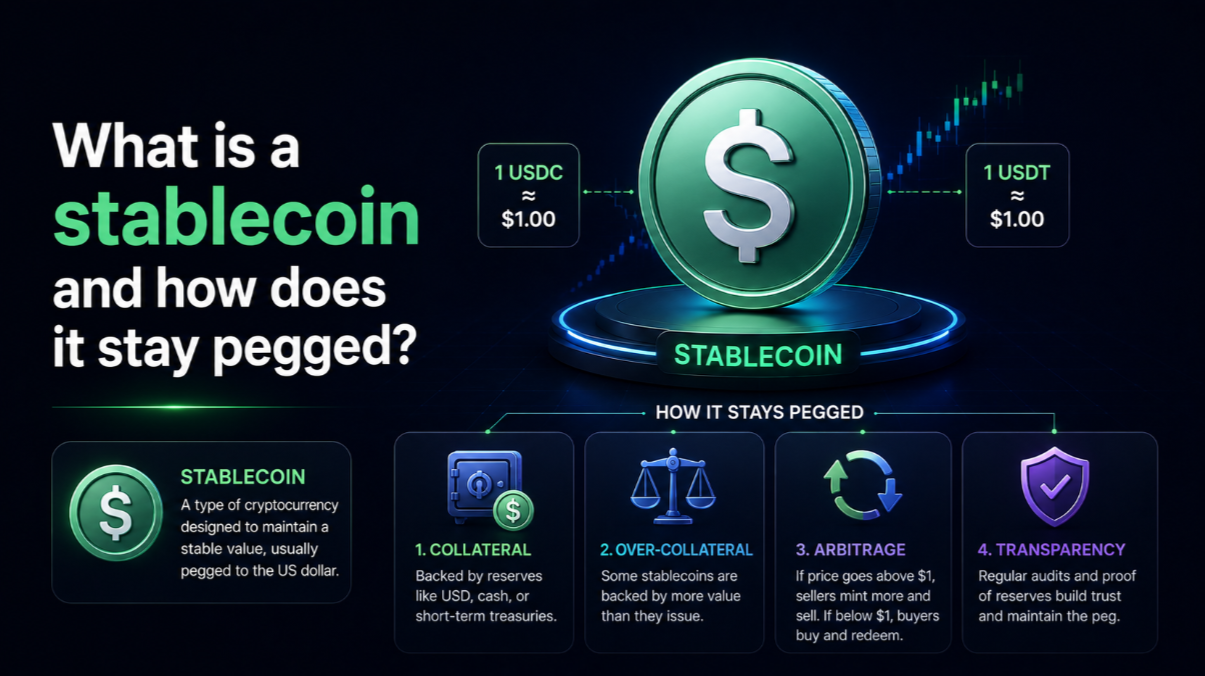
The terms describe redemption as "a contractual right personal to you" 3. A retail holder who bought USDT on an exchange has no redemption account with Tether; their exit is selling USDT on a market, where the price usually sits near $1 because large customers can arbitrage through direct redemption.

What backs USDT

Tether states that the issuer's assets exceed its liabilities, and it reports the breakdown in quarterly attestations prepared by BDO Italia 4. For 30 June 2026 the attestation showed total assets of about $187.75 billion against liabilities of about $183.64 billion, leaving an excess of roughly $4.11 billion, down from about $8.23 billion three months earlier 4. Most backing assets were short-term US Treasuries, repurchase agreements and similar instruments 5, but the reserve also includes assets that move in price: about 146 metric tons of gold and roughly 98,900 bitcoin as of that date, along with secured loans 4. The second-quarter report stopped giving a dollar value for bitcoin and showed gold by weight only, which makes the buffer harder to recompute independently 4.

Two distinctions matter. An attestation checks a balance sheet at one moment; it is not a full audit of controls and operations. In March 2026 Tether engaged KPMG for its first full financial-statement audit, with PwC preparing internal systems, according to Financial Times reporting 9. As of 19 October 2026 no audit opinion had been published. Second, USDT is not a bank deposit: the terms state that the tokens carry no FDIC or SIPC protection 3.

Who can use USDT directly

Anyone can hold USDT in a wallet, but Tether's own services are restricted. The terms list US persons (except eligible contract participants Tether agrees to), Canadian persons, Singaporean persons, the Government of Venezuela, sanctioned persons and residents of Cuba, North Korea, Iran, Syria and occupied regions of Ukraine as prohibited 3. Availability of USDT on exchanges is set by each exchange and its regulators, not by Tether.

Freezes and blacklisting

Tether can freeze USDT held at any address. Its terms let it freeze, suspend or seize tokens when it suspects prohibited use or when a government directs it 3. In April 2026 it froze more than $344 million on two Tron addresses after information from OFAC and US law enforcement, and said it had frozen more than $4.4 billion in total and worked with over 340 agencies in 65 countries 10. These totals are company-stated. For holders, the practical consequence is that USDT received from a flagged address can become unusable, and a reversal requires dealing with Tether directly.

Regulatory history

Two US settlements in 2021 concern how Tether described its reserves. In February 2021 Tether and Bitfinex agreed to pay $18.5 million to the New York Attorney General, stop serving New York customers and publish transparency reports; the investigation had alleged the firms concealed a roughly $850 million loss of commingled funds held by a payment processor. The companies did not admit wrongdoing 13. In October 2021 the CFTC ordered Tether to pay $41 million (and Bitfinex $1.5 million), finding that Tether held enough fiat reserves to back circulating USDT on only 27.6% of days in a 26-month sample from 2016 to 2018 and that it had falsely described its reserves as audited 12. Tether's 2018 credit line to Bitfinex, $750 million drawn, was repaid in full by January 2021 15.

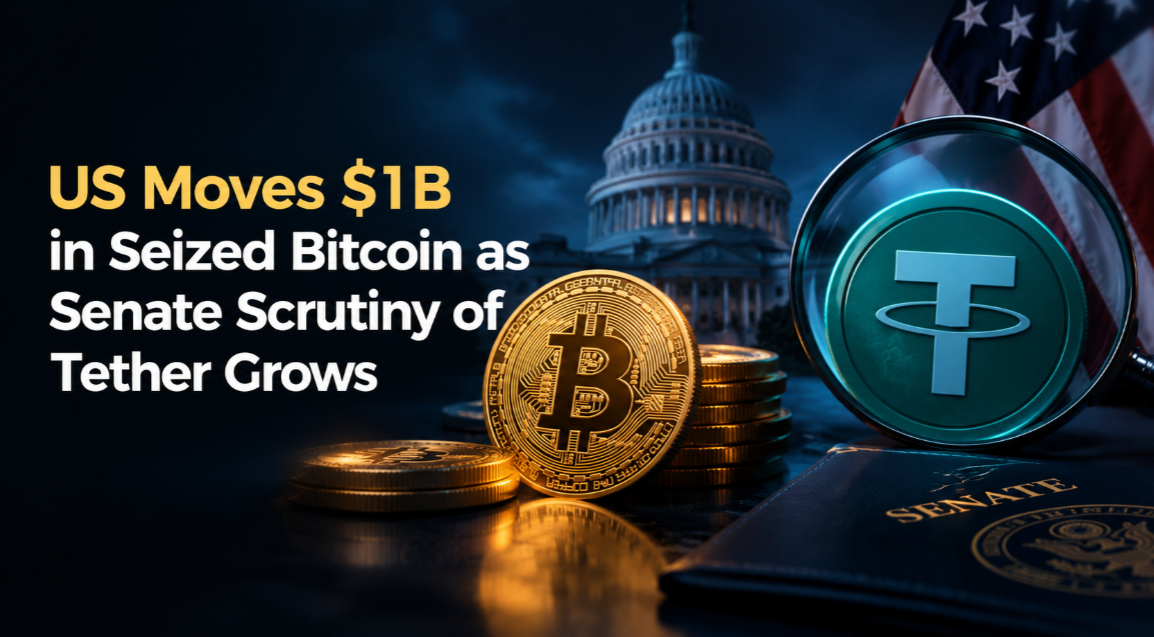
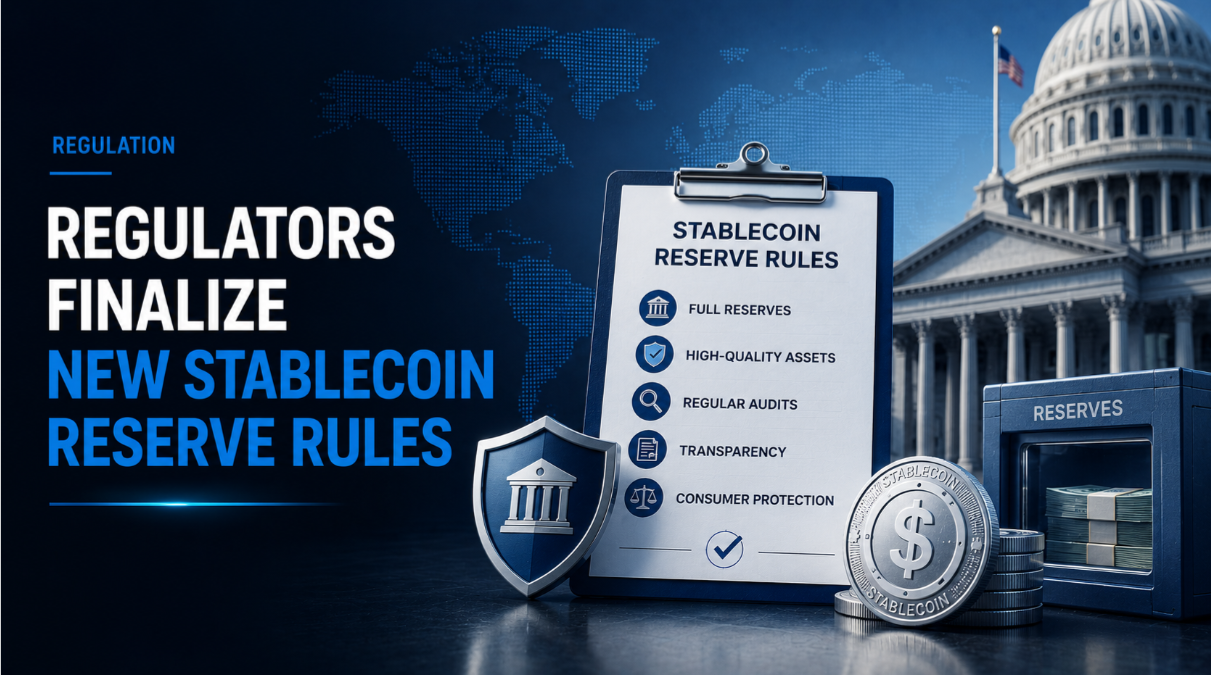
US lawmakers have continued to examine Tether's links to US firms; CoinPulsePoint has covered Senate scrutiny of Tether and new stablecoin reserve rules.

Risks to understand before holding USDT

  • Issuer and reserve risk. USDT's value depends on Tether holding enough liquid assets and honoring redemptions. Part of the reserve is in gold, bitcoin and loans, whose value can fall 4.
  • No direct exit for most holders. Without a verified account and $100,000 minimum, you rely on market liquidity 2.
  • Freeze risk. Tokens can be frozen at the issuer's discretion or on government request 3.
  • Network choice. Sending USDT on a network the receiving platform does not support, or on a legacy chain without redemption, can strand funds 311.
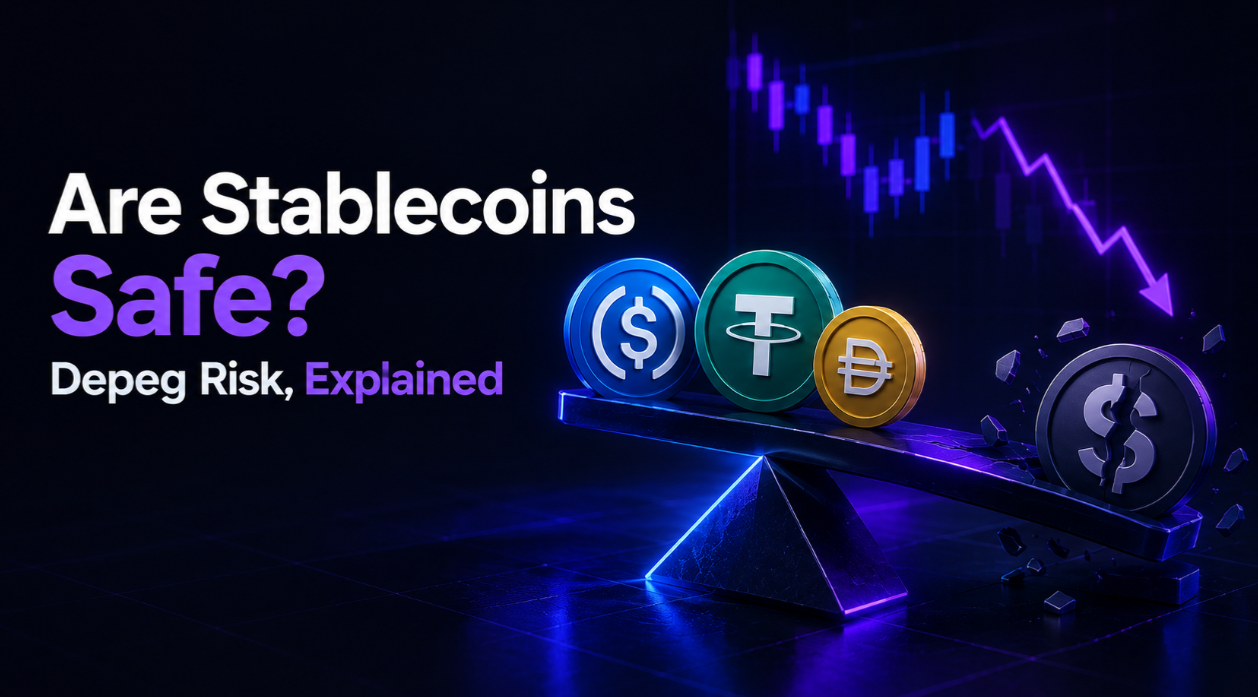
  • Depeg risk. USDT has traded below $1 during stress (see below). Our explainer on how a stablecoin depeg happens covers the mechanics.
  • Impersonation. Tether does not need your seed phrase; treat unsolicited "Tether support" messages as phishing.

Incident record

2 recovered2 partly recovered

$30,950,010 USDT moved from Tether's treasury wallet to an unauthorized address

19 Nov 2017partly recovered
Tether said it would not redeem the tokens and pushed an Omni software update to keep them from circulating.
Outcome
Partial
Loss
~$31M in tokens
Recovered or reimbursed
Tokens frozen rather than returned; no customer losses reported
Source: financemagnates.com

Roughly $850M of commingled Bitfinex/Tether funds held by payment processor Crypto Capital became inaccessible

2018 (disclosed 2019)partly recovered
Tether extended a $900M credit line to Bitfinex.
Outcome
Partial
Loss
~$850M (alleged)
Recovered or reimbursed
$750M credit line repaid by Jan 2021
Source: cnbc.com

USDT traded below $1 on several markets amid questions about banking and reserves

15 Oct 2018recovered
Outcome
Recovery confirmed
Loss
Market price only
Recovered or reimbursed
Price returned near $1
Source: cointelegraph.com

During the TerraUSD collapse USDT briefly fell to $0.95

12 May 2022recovered
Tether reported over $300M of redemptions in 24 hours.
Outcome
Recovery confirmed
Loss
Market price only
Recovered or reimbursed
Price recovered
Source: decrypt.co

Hacks in DefiLlama’s public database are also scored as the security record on the Tether rating page.

Questions about Tether

Can I redeem USDT for dollars?
Only if you are a verified Tether customer outside the prohibited jurisdictions. The minimum is $100,000 and the fee is the greater of $1,000 or 0.1%. Other holders exit by selling USDT on an exchange or to another party.
Is USDT available in the United States?
Tether's terms prohibit US persons from holding Tether wallets or using its services, with a narrow exception for eligible contract participants. Tether offers a separate token, USAT, issued by Anchorage Digital Bank, for US users.
Has Tether ever been audited?
Not with a full financial-statement audit as of 19 October 2026. It publishes quarterly attestations by BDO Italia, and it engaged KPMG in March 2026 for a first full audit.
Can Tether freeze my USDT?
Yes. The terms allow Tether to freeze or seize tokens, and it regularly freezes addresses at the request of law enforcement and sanctions authorities.
Is Tether the same company as Bitfinex?
They are separate companies under common ownership through iFinex and share senior management. Both were parties to the 2021 New York and CFTC settlements.

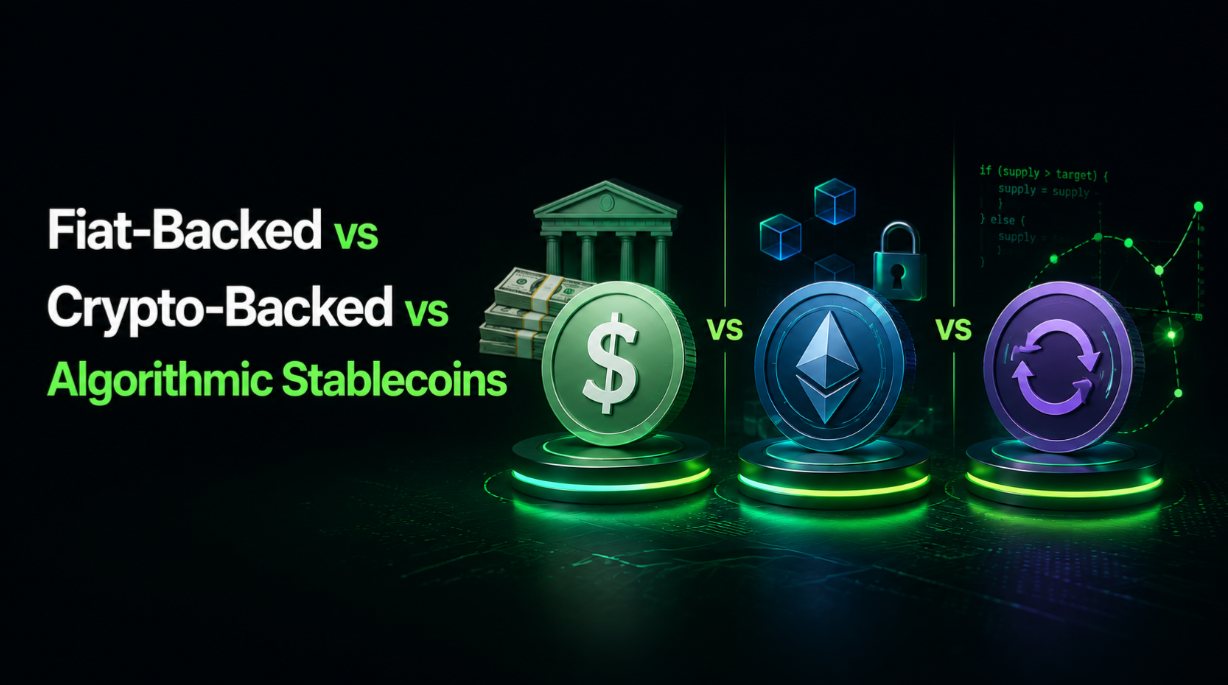
For the price of USDT, see USDT live price and market data. For CoinPulsePoint's separate evaluation, see CoinPulsePoint's rating and evidence for Tether. Related profiles: Bitfinex, Circle (USDC issuer), Ethena. Background: what a stablecoin is and types of stablecoins.

Tether elsewhere on CoinPulse

Sources

  1. 1[Tether Limited — Wikipedia](), accessed 19 Oct 2026en.wikipedia.org
  2. 2[Tether — Fees](), accessed 19 Oct 2026tether.to
  3. 3[Tether — Terms of Service (updated 26 Feb 2026)](), accessed 19 Oct 2026tether.to
  4. 4[Forkast — Tether's excess reserves halve as disclosure standards shift](), 1 Aug 2026forkast.news
  5. 5[Decrypt — Tether reports $1.5B Q2 profit, USDT supply grows](), 31 Jul 2026decrypt.co
  6. 6[Bloomberg Línea — Tether obtiene licencia para trasladar su sede a El Salvador](), 13 Jan 2025bloomberglinea.com
  7. 7[Tether Limited — Wikipedia (corporate structure)](), accessed 19 Oct 2026en.wikipedia.org
  8. 8[The Block — Tether officially launches USAT](), 27 Jan 2026theblock.co
  9. 9[The Block — Tether taps KPMG for first financial audit](), 27 Mar 2026theblock.co
  10. 10[The Block — Tether freezes $344 million in USDT on Tron](), 23 Apr 2026theblock.co
  11. 11[Cointelegraph — Tether drops plan to end USDT on five chains](), 30 Aug 2025cointelegraph.com
  12. 12[CFTC — Release 8450-21](), 15 Oct 2021cftc.gov
  13. 13[CNBC — Tether and Bitfinex agree to pay $18.5 million to end New York probe](), 23 Feb 2021cnbc.com
  14. 14[Finance Magnates — Tether plans to freeze $31 million worth of stolen tokens](), 21 Nov 2017financemagnates.com
  15. 15[The Block — Bitfinex repays Tether remaining $550 million loan balance](), 5 Feb 2021theblock.co
  16. 16[Cointelegraph — Untethered: the history of Tether and how it lost its peg](), 17 Oct 2018cointelegraph.com
  17. 17[Decrypt — Tether loses dollar peg amid stablecoin crisis](), 12 May 2022decrypt.co

Other stablecoin issuersAll →

What changed on this page

  • 2026-10-192026-10-19 — Rewritten as a full company profile: current issuer entity and El Salvador redomicile, USAT, redemption rules and fees, Q2 2026 reserve attestation and KPMG audit engagement, freeze powers, eligibility, and an incident record that now includes the November 2017 treasury theft, the 2018 Crypto Capital shortfall and two depegs. Removed the "Is Tether safe?" framing.
  • 2026-09-28Profile created: founding and offshore registration, the reserves/transparency history and BDO attestations, and the 2021 NYAG and CFTC settlements; no custodial hack, so no incidents.
All companies