No publicly reported exploit or slashing loss for Liquid Collective found in sources reviewed on October 23, 2026
—not recovered- Outcome
- None on record
- Loss
- —
- Recovered or reimbursed
- —

Liquid Collective is a liquid staking protocol built for institutions. It turns staked ETH into a token called LsETH, and staked SOL into LsSOL 1. Holders keep a transferable token while their stake earns network rewards. Unlike open protocols, minting and redeeming are permissioned. Only wallets that a platform such as Coinbase Prime has checked and added to an on-chain allowlist can deposit or redeem 24. The protocol is governed under The Liquid Foundation. Galaxy has been its development company since acquiring Alluvial Finance in December 2025 12.
Several parties share the work. The Liquid Foundation holds the protocol and the website. Galaxy describes it as an ownerless foundation meant to keep governance neutral 1112. On December 4, 2025, Galaxy announced it had acquired Alluvial Finance, the protocol's former development firm. Galaxy took over full responsibility for developing and maintaining the protocol 12. Galaxy's release names Chris Matta as Liquid Collective's CEO and says the protocol launched in 2023 12.
Day-to-day governance currently runs through a multisig of ecosystem participants. The FAQ says a governance token is planned 5. Validators are operated by outside firms. The site lists Coinbase, Figment, Staked, Blockdaemon, Galaxy and ParaFi Technologies as node operators 711.
LsETH is a "cToken." Your token count stays the same. Instead, the amount of ETH each LsETH can be redeemed for rises with rewards, or falls with penalties. Oracles update that rate about every 24 hours 3. The mainnet LsETH contract is 0x8c1BEd5b9a0928467c9B1341Da1D7BD5e10b6549 9. For background, see liquid staking.
LsSOL comes from a Solana stake pool with two allowlists. One limits stake to approved validators. The other means only approved wallets can stake and redeem 10. The protocol's homepage lists LsSOL as live 11. The Solana docs link a Quantstamp audit. They do not state a fee or unstaking timeline, so check with your platform 10.
On LsETH, the protocol takes a service fee of 10% of network rewards, paid by minting new LsETH 3. That fee is split among node operators, platforms, wallet and custody providers, service providers, the Slashing Coverage Treasury and the DAO. The docs say LsETH holders receive 85% of network rewards 3. They do not break down the remaining share. Platforms may add their own charges on top. Ask yours for its full fee terms.
To exit, you request a redemption through your platform, such as the Coinbase Prime app 4. The process has three steps:
Timing depends on oracle reports, which arrive about once a day, and on Ethereum's exit queue. The docs say that queue can take "minutes to days" 4. Until validators exit, the ETH being redeemed still carries penalty and slashing risk 4. Redemptions have been possible since June 2023 5.
Validators can be penalized ("slashed") for faults. Liquid Collective spreads any rewards and penalties across all holders in proportion to their balances 3. To soften slashing, the LsETH User Agreement includes a three-layer coverage program 6:
The docs do not publish coverage limits, the Treasury share or the operator cap 6. Smart-contract risk remains. The protocol says all mainnet code was audited by Halborn, Spearbit or Quantstamp 8. An audit does not guarantee safety. The allowlist contract also includes an access-denial function. It can block an address from sending, receiving, minting or redeeming LsETH, for security breaches or legal requirements 2. Large holders should weigh that control.
Hacks in DefiLlama’s public database are also scored as the security record on the Liquid Collective rating page.
 Staking & YieldLiquid Staking, ExplainedLiquid staking lets you stake tokens and receive a tradable receipt (an LST) that stays usable across DeFi. Learn how it works and where the risks hide.7 min read·
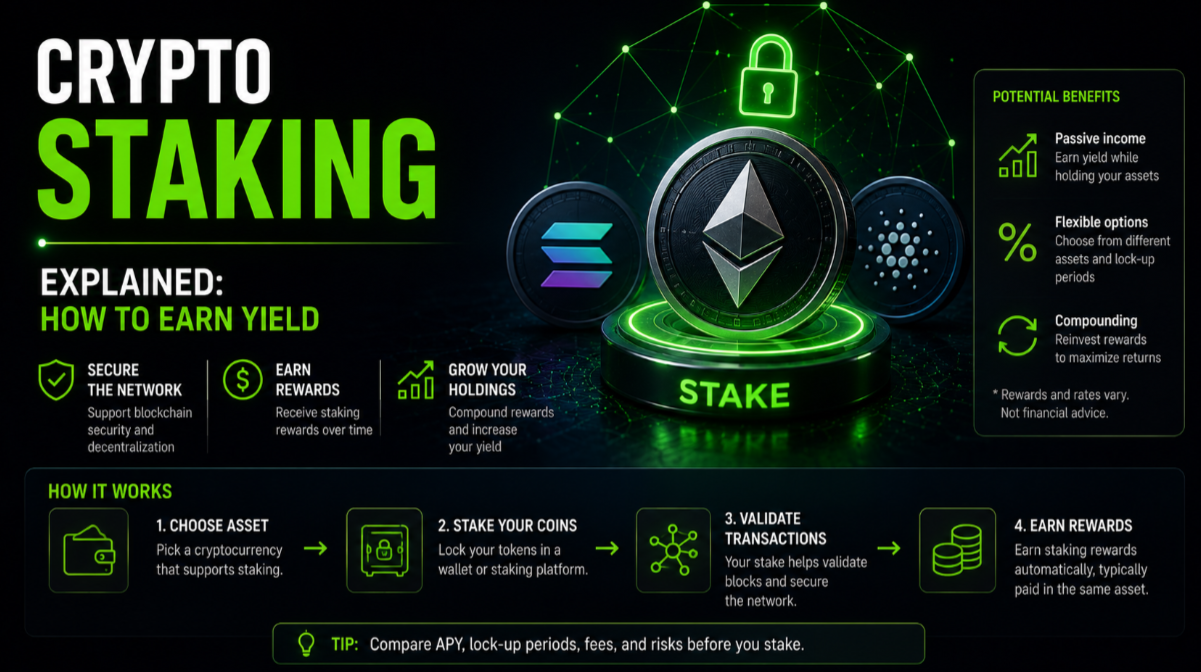 EarningCrypto staking explained: how to earn yieldA beginner-friendly guide to crypto staking: how it works, the rewards and risks, and practical steps to start earning yield safely.8 min read·
 Staking & YieldWhat Is Restaking?Restaking reuses already-staked tokens to help secure additional services, layering extra rewards on base staking. Learn the mechanics and stacked risks.7 min read·
 RegulationBitcoin ETF Outflows Weigh on Market as Interactive Brokers Launches Ethereum StakingSpot Bitcoin ETFs recorded $65.4 million in net outflows as hawkish Federal Reserve comments pressured prices. Meanwhile, Interactive Brokers rolled out Ethereum staking for eligible US clients.4 min read·
 MarketsCFTC Opens Retail Crypto Leverage Rulemaking as Bitcoin Holds Near $84KThe CFTC has begun a rulemaking on leveraged retail crypto trading, while Bitcoin hovers near $84,000 and traders wait for U.S. inflation data and the Fed’s October meeting.4 min read·
 MarketsUS Moves $1B in Seized Bitcoin as Senate Scrutiny of Tether GrowsU.S.-linked wallets shifted 12,267 BTC from a Bitfinex hack seizure address without any exchange deposit, while Senator Richard Blumenthal pressed Cantor Fitzgerald over its Tether partnership.3 min read·
In our ratings: See CoinPulse's Liquid Collective rating and evidence · Liquid staking ratings