A crypto wallet is a tool that stores the private keys used to access and spend your cryptocurrency, and lets you send, receive and check your balances. Despite the name, a wallet does not actually hold your coins; those live on the blockchain. What the wallet holds is the set of keys that prove the coins are yours, which is why choosing and protecting a wallet is such an important early decision.
Key takeaways
- A wallet stores your keys, not your coins, which always remain on the blockchain.
- The main split is custodial (someone else holds your keys) versus non-custodial (you do).
- Hot wallets are online and convenient; cold wallets are offline and more secure.
- Your recovery phrase is the master backup, so protecting it protects everything.
How does a wallet work?
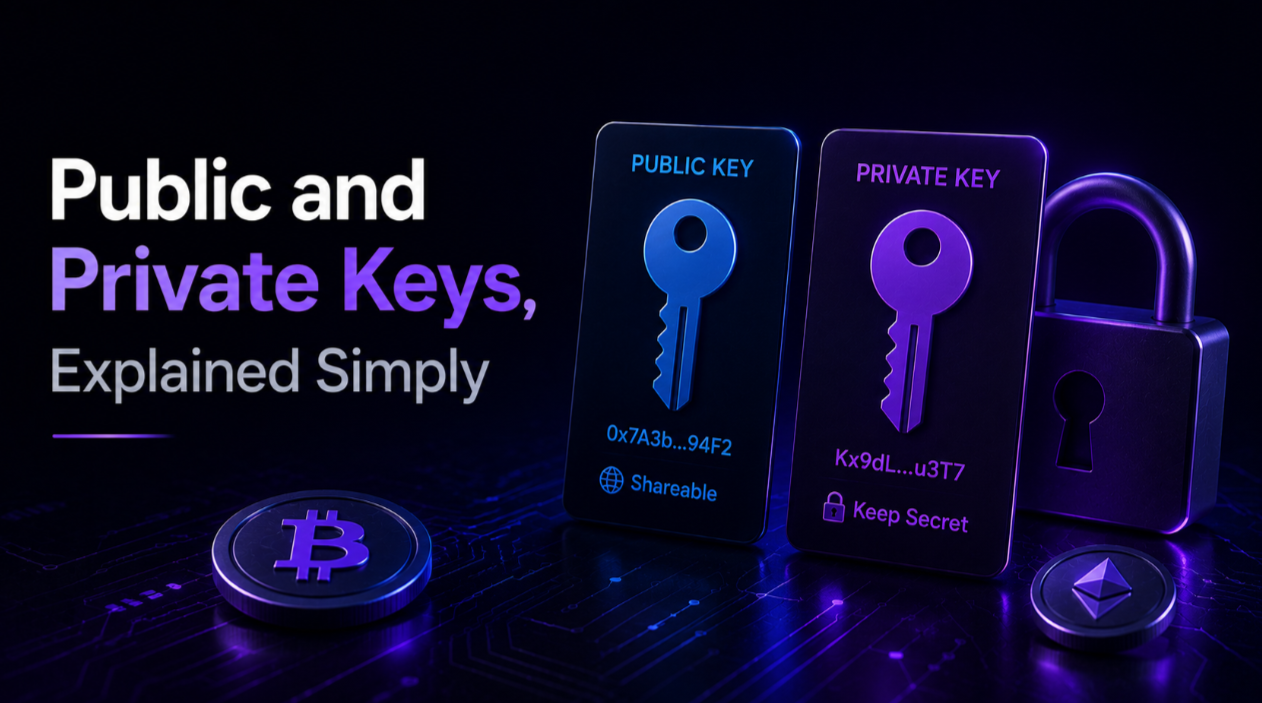
Under the bonnet, a wallet generates and safeguards your public and private keys. When you want to receive funds, it shows an address derived from your public key. When you want to spend, it uses your private key to sign the transaction and broadcasts it to the network.
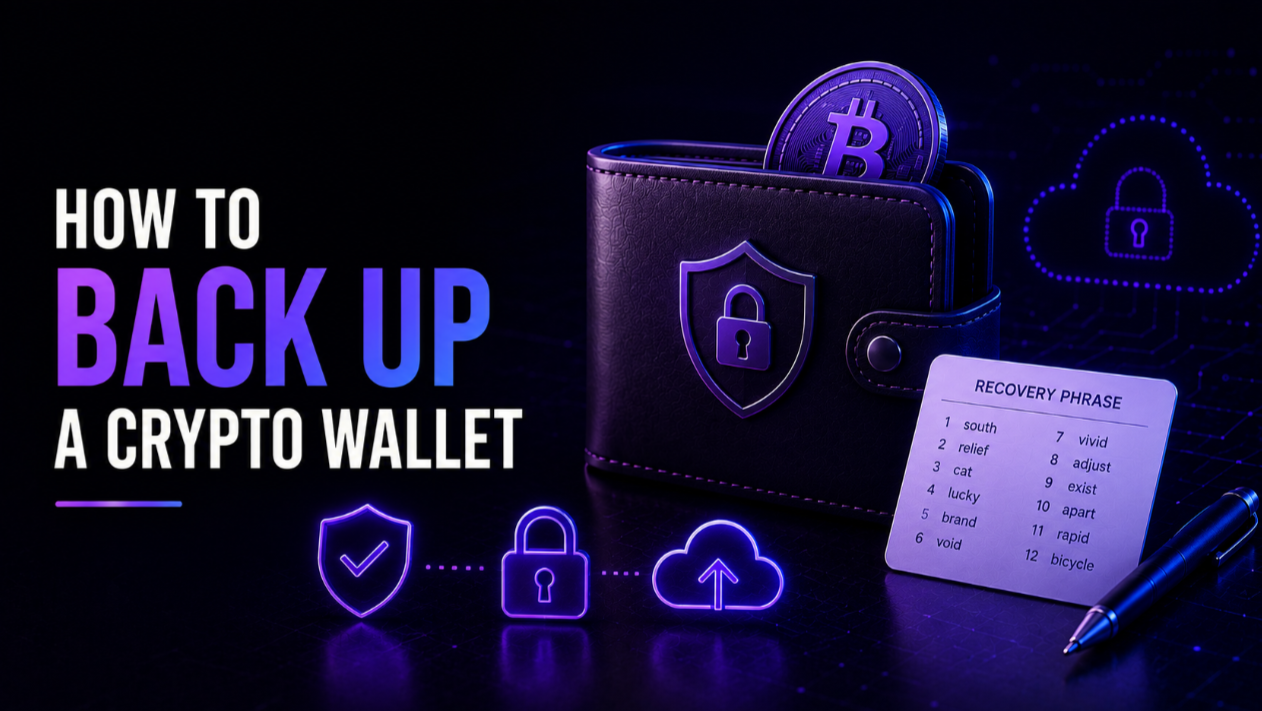
Most modern wallets also create a recovery phrase, a list of words that can rebuild all your keys on a new device. That phrase is the true backbone of your wallet, and anyone who has it can access your funds.
Once you grasp that a wallet is really a key manager, a lot of confusion falls away. Losing the app does not lose your coins, and reinstalling it does not create new ones; both simply reconnect to the keys and the records already on the chain. This is also why two wallets can show the same balance if you import the same recovery phrase into each.
Custodial vs non-custodial wallets
The first thing to understand about any wallet is who controls the keys.
- Custodial wallets are managed by a third party, such as an exchange. They are convenient and can help recover access if you forget a password, but you are trusting that company to stay secure and solvent.
- Non-custodial wallets put you fully in control of your keys. Nobody can freeze or lose your funds for you, but nobody can recover them if you lose your phrase either.
The phrase not your keys, not your coins refers to this distinction. True ownership means holding your own keys.
Hot wallets and cold wallets
Wallets are also grouped by whether they are connected to the internet.
- Hot wallets run on internet-connected devices, such as phone apps and browser extensions. They are quick to use and ideal for small, everyday amounts, but their online nature makes them more exposed.
- Cold wallets keep keys offline, most often on a dedicated hardware device. They are far harder to attack remotely and suit larger, long-term holdings.
Many people use both: a hot wallet for spending and a cold wallet for savings. If you are weighing the two, our comparison of how ownership works and the wider guides go deeper, and you can compare devices in our reviews of crypto wallets.
What can you do with a wallet?
Beyond simply holding assets, a wallet is your interface to the wider crypto world. The everyday actions are straightforward once you have practised them.
- Receive: share your address, or a scannable code of it, so others can send you funds.
- Send: paste a recipient address, choose an amount, review the network fee and confirm.
- Check balances and history: see what you hold and every transaction tied to your addresses.
- Connect to applications: many wallets let you sign in to crypto services and approve actions directly.
That last ability is powerful but demands care. Connecting a wallet to an unfamiliar site, or approving a request you do not understand, can expose your funds. Treat every signature request as a decision, not a formality, and disconnect from services when you are finished.
How to choose a wallet
The right wallet depends on how you plan to use it. Ask yourself a few questions:
- How much are you storing? Larger amounts justify the extra security of cold storage.
- How often will you transact? Frequent use favours a convenient hot wallet.
- Which coins do you hold? Not every wallet supports every asset or network.
- How comfortable are you managing keys? Be honest about whether you will back things up properly.
There is no single best wallet, only the one that matches your needs and habits.
Common mistakes and risks
- Losing the recovery phrase: without it, a lost or broken device means lost funds.
- Storing the phrase digitally: screenshots and cloud notes are prime targets for thieves.
- Assuming a wallet holds coins: deleting the app without your phrase does not delete your coins, but losing the phrase does lose access.
- Downloading fake apps: always get wallet software from official sources.
- Keeping everything in one hot wallet: spreading risk between hot and cold storage is wiser.
Getting comfortable
A wallet is your gateway to using crypto directly rather than through someone else's platform. Start with a small amount, practise sending and receiving, and make backing up your recovery phrase the very first thing you do. Once that habit is in place, you can hold and move value with genuine independence. If you have not bought any crypto yet, see how to buy your first cryptocurrency.