CoinPulse
Fluid (Instadapp)

What Is Fluid DeFi? Instadapp's Lending, DEX and Lite Vaults Explained

Fluid is a decentralized finance protocol built by the team behind Instadapp. It combines lending, collateralized borrowing vaults, a decentralized exchange and automated yield vaults on top of one shared pool of liquidity 16. Users interact through fluid.io with their own wallets; there is no account or KYC, and deposits sit in smart contracts rather than with a company. The protocol is governed by holders of the FLUID token through a DAO 7. Its distinguishing idea is that the same capital can serve several roles at once: collateral and DEX liquidity, or debt and DEX liquidity 2.

Facts checked 9 cited sources No score on this page, no affiliate links

At a glance

What it is
Non-custodial DeFi protocol stack: lending, vaults, DEX, yield vaults 16
Built by
Instadapp team; founder Samyak Jain 7
Products
Fluid Lending (fTokens), Vaults (borrowing), Fluid DEX, DEX Lite, Fluid Lite 6
Chains (DefiLlama, Oct 2026)
Ethereum, Arbitrum, Base, Polygon, Plasma; Solana in fee data 6
Total value locked
About $874M (DefiLlama, Oct 23, 2026) 6
Token
FLUID (formerly INST), 100M total supply 69
Lite fees
0.05% exit fee; 20% performance fee on the ETH vault 5
2026 incidents
Resolv-linked bad debt ($21M underwater, covered); rewards-distributor compromise ($215K) 678
Official site
fluid.io
Profile updated
October 23, 2026

Who builds Fluid

Fluid grew out of Instadapp, a DeFi platform that offered smart-wallet tooling and the Instadapp Lite yield vaults. After the Fluid DEX launched in late October 2024 and quickly drew volume, Instadapp proposed rebranding around Fluid and reworking its token economics 39. The INST token became FLUID, and Fluid now has its own DAO and treasury 7. Samyak Jain is named as founder in 2026 coverage 7. Fluid's protocols are smart contracts; no single legal entity offering terms of service was identified on the pages checked.

The liquidity layer: how the pieces connect

Every Fluid product draws on a single core contract, the Liquidity Layer, which holds all deposited funds. Users never touch it directly; they use protocols built on top of it, such as Lending or the Vaults 1. New protocols added later can tap the same pool.

Two safety valves are built into the layer 1:

  • Withdrawal limits. Above a base amount, withdrawals are rate-limited: the withdrawable amount expands by a set percentage over a set time. A very large exit may therefore take more than one transaction or some waiting.
  • Borrow limits. Borrowing capacity expands gradually from a base toward a hard maximum.

These limits slow sudden drains, but they also mean "withdraw any time" can be subject to pacing during heavy outflows.

Fluid Lending and vaults

Lending is the simple side. You deposit an asset such as USDC or ETH and receive an fToken (for example fUSDC), an ERC-4626 vault token whose value grows as borrowers pay interest 1. Withdrawing burns the fToken.

Vaults are the borrowing side. You deposit collateral and borrow another asset against it, with the collateral valued by an oracle 1. Each vault has its own maximum loan-to-value (LTV) and liquidation threshold, shown in the app. If the value of your debt rises too close to the value of your collateral, the position is liquidated. Fluid's own launch materials gave examples such as a 95% LTV wstETH/ETH vault, high because the two assets track each other closely 2. High LTVs magnify leverage and shrink the safety buffer.

Interest rates on both sides float with utilization. Fluid's lending market passed $800 million in its first three months, according to the company 2.

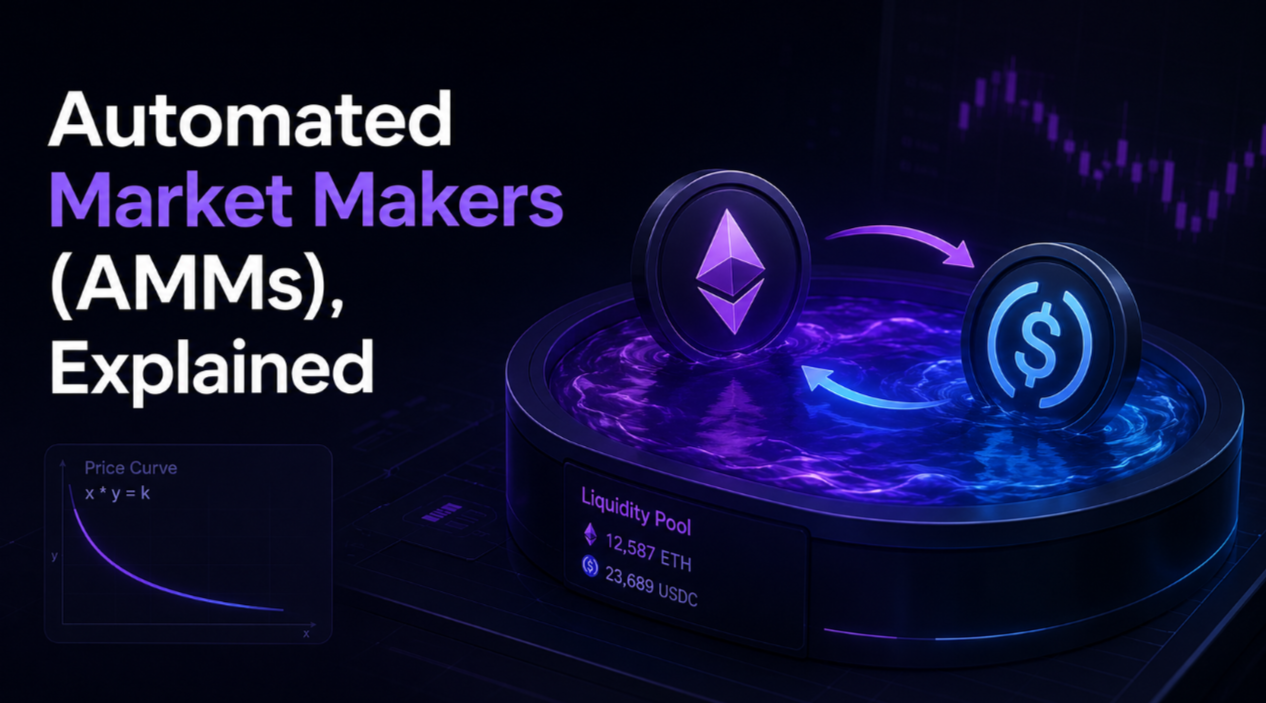
Fluid DEX: Smart Collateral and Smart Debt

The Fluid DEX, launched on October 29, 2024 3, turns vault positions into trading liquidity:

  • Smart Collateral: your vault collateral (for example, a mix of ETH and wstETH) is also used as liquidity in a DEX pool. You earn swap fees on top of lending yield, while borrowing against the same position 2.
  • Smart Debt: your borrowed assets are used as liquidity, so swap fees can offset the cost of borrowing 2.

Traders who swap on the DEX trade against this liquidity. Fluid takes a share of trading fees, and some smart vaults carry an extra fee, set by governance; the launch post cited 1% on a USDC/USDT smart-debt vault as an example 2. DEX Lite, a gas-optimized swap router, launched in August 2025 7. A DEX v2 design with range orders, hooks and on-chain limit orders has been announced; check its live status in the app 3.

The trade-off: your position's balance between the two pool assets changes as traders swap, just as with any AMM liquidity, and that changes your collateral or debt mix.

Fluid Lite: automated looping vaults

Fluid Lite, formerly Instadapp Lite, runs automated leveraged strategies. It supplies your asset to lending markets, borrows against it, swaps and re-deposits ("looping"), and compounds the returns 4.

Vault Deposit Receipt token Performance fee Exit fee
Lite ETH ETH or stETH iETHv2 20% of net profit, already reflected in displayed APY 5 0.05% 5
Lite USD USDC fLiteUSD None 5 0.05% 5

Withdrawals are available at any time with the 0.05% exit fee, which goes to the DAO 45. Because the strategy is leveraged, a sharp change in borrowing rates or a depeg of a staked-ETH asset can cut returns or cause losses.

Fees in summary

  • Lending: no deposit fee; you earn the supply rate, set by utilization.
  • Borrowing: you pay the variable borrow rate; liquidation costs part of your collateral.
  • DEX: swap fees per pool; Fluid takes a share; certain smart vaults add a governance-set fee 2.
  • Lite: 0.05% exit fee on both vaults; 20% performance fee on the ETH vault 5.
  • Network gas on every action, which varies by chain.

Risks and incidents

Fluid's design concentrates many products on one liquidity layer. That improves capital efficiency, but a problem in one market can reach depositors elsewhere.

Resolv bad debt (March–May 2026). In late March 2026 the Resolv stablecoin protocol was exploited and its USR token lost its peg. Fluid had about $100 million of USR used as collateral; around $21 million of positions became bad debt. Fluid's own contracts were not exploited. The loss was split among Resolv ($9.7M), Fluid's treasury ($8.2M) and its core team (~$1.5M), and the coverage reported no loss to user deposits 7. The episode drew criticism because the team drew about $8 million from the shared liquidity layer through a DEX Lite credit line before the governance vote authorizing treasury use 7.

Rewards distributor compromise (May 2026). On May 27, 2026 an attacker abused compromised roles in Fluid's off-chain Merkle rewards system and claimed about 125,000 FLUID and 51,900 GHO; DefiLlama lists the loss at about $215,000 68. Fluid said the core contracts were not affected and user funds were not at risk, and paused reward claims while it rotated roles 8.

Other risks to weigh: smart-contract bugs, oracle errors, liquidation in high-LTV vaults, depegs of collateral assets such as liquid staking tokens, and withdrawal pacing under heavy outflows 1.

Incident record

2 outcome unclear

Resolv USR exploit leaves Fluid lending markets with bad debt

Mar–May 2026outcome unclear
Outcome
Covered by protocol and partners; governance dispute over funding route
Loss
~$21M positions underwater
Recovered or reimbursed
Covered by Resolv, Fluid treasury and core team; no user deposit loss reported
Source: defiprime.com

Off-chain Merkle rewards infrastructure compromised

May 27–31, 2026outcome unclear
reward tokens claimed by attacker
Outcome
Protocol-side loss in rewards contracts; core contracts reported unaffected; post-mortem pending in sources checked
Loss
~125K FLUID + 51.9K GHO (~$215K per DefiLlama)
Recovered or reimbursed
No recovery reported; Fluid said user funds not at risk
Source: defillama.com

Hacks in DefiLlama’s public database are also scored as the security record on the Fluid (Instadapp) rating page.

Questions about Fluid (Instadapp)

Is Fluid the same as Instadapp?
Fluid was built by the Instadapp team and has become its main product; the INST token became FLUID and Instadapp Lite became Fluid Lite 479.
Do I need an account to use Fluid?
No. You connect a self-custody wallet at fluid.io and sign transactions; there is no sign-up or KYC.
Can I withdraw from Fluid at any time?
Generally yes, but withdrawals above a base amount are rate-limited by the liquidity layer, and borrowed funds must stay available 1. Lite vaults charge a 0.05% exit fee 5.
Did users lose money in Fluid's 2026 incidents?
Coverage of the Resolv bad debt reported no loss to user deposits after Resolv, the treasury and the team covered it 7. In the May rewards compromise, Fluid said user funds were not at risk 8.
What is the FLUID token used for?
Governance of the Fluid DAO, including fee settings and treasury decisions 27. Its total supply is 100 million 6.

Fluid (Instadapp) elsewhere on CoinPulse

Sources

  1. 1[Fluid contracts technical docs — GitHub]()raw.githubusercontent.com
  2. 2[Fluid DEX — Instadapp blog]()blog.instadapp.io
  3. 3[Introducing Fluid DEX v2 — Instadapp blog]()blog.instadapp.io
  4. 4[Getting started with Fluid Lite — Fluid Lite guides]()lite.guides.instadapp.io
  5. 5[Fluid Lite fees]()lite.guides.instadapp.io
  6. 6[Fluid — DefiLlama]()defillama.com
  7. 7[Fluid's $8.2M bad-debt cleanup and the governance fight — DeFiPrime (May 17, 2026)]()defiprime.com
  8. 8[Fluid protocol loses 125K FLUID, 51.9K GHO in key compromise attack — Crypto Times (May 31, 2026)]()cryptotimes.io
  9. 9[Instadapp proposes rebrand and new tokenomics following Fluid launch — The Defiant (Dec 4, 2024)]()thedefiant.io

Other decentralized exchangesAll →

What changed on this page

  • 2026-10-23Profile created.
All companies