33-minute Base halt after a failed sequencer handoff
Aug 5, 2025funds not affected- Outcome
- Service outage, no loss reported
- Loss
- None reported
- Recovered or reimbursed
- Block production moved to a healthy sequencer manually
The Base Bridge is the native bridge between Ethereum and Base, the layer-2 network built and operated by Coinbase. It is a set of smart contracts on Ethereum: you lock assets there to receive them on Base, and you withdraw by proving your Base transaction back on Ethereum 2. Coinbase opened it in August 2023 6. The original bridge.base.org website has been retired, so today you reach the same contracts through third-party front ends or skip them with a Coinbase withdrawal 1. Deposits arrive in minutes. Standard withdrawals to Ethereum take one to five days 13.

Base is an optimistic-style rollup built on the OP Stack. Its bridge has two directions with very different trust and timing.
Deposits (Ethereum → Base). You send ETH or a supported ERC-20 to the L1StandardBridge or OptimismPortal on Ethereum. The contract locks the funds and emits a message that Base's nodes read, and the same amount is credited on Base 2. No challenge period applies, so deposits arrive once Ethereum includes the transaction 1.
Withdrawals (Base → Ethereum). Funds are burned or locked on Base. Ethereum then has to accept a proof that Base's state includes your withdrawal. Since the Azul upgrade (May 2026), two proof types exist 5:
When both agree, the withdrawal can finalize after 1 day. Otherwise a single-proof dispute game runs for 5 days. That window was cut from 7 days in the Beryl upgrade on June 25, 2026 34. After the window ends, you send a final transaction on Ethereum to claim the funds.
The bridge.base.org page is gone. Base's docs list these routes as of October 23, 2026 1:
| Starting point | Route | Security model |
|---|---|---|
| Coinbase account | Withdraw ETH or USDC directly to Base | Coinbase custody until sent; no bridge |
| Ethereum wallet | Superbridge or Brid.gg (canonical contracts) | Base's own bridge |
| Any chain, fast | Across, Relay, Stargate | The third party's model, not Base's |
| Many chains | Jumper or Bungee aggregators | Depends on the bridge they pick |
| Solana | Base–Solana bridge | Separate Base bridge contracts |
| Bitcoin | Garden (BTC → cbBTC) | Third party |
Base's docs warn that "fast bridges do not inherit Base's security" and that Superbridge can also route through third-party bridges 1. Check which route is selected before you sign.
A typical canonical deposit from Ethereum:
For withdrawals, expect at least two Ethereum transactions (prove and finalize) and a 1–5-day wait in between.
The canonical bridge charges no bridge fee of its own. You pay:
Fast bridges trade a fee or spread for speed: you receive funds from their liquidity in seconds or minutes, and they wait out the canonical window themselves 13.
The contracts are upgradeable. Base's docs list a ProxyAdmin owner, a Guardian, an Incident Multisig, a Coinbase multisig and a Base Security Council multisig 2. Coinbase Technologies manages the keys that post Base's transaction batches, propose state outputs and act as challenger 2. Azul's permissionless ZK override was presented as a step toward less reliance on these operators 5. Users still depend on the multisigs not to push a harmful upgrade.
Base also runs a separate bridge to Solana for SOL and SPL tokens, with cross-chain messaging and optional automatic relaying. Its Base contract is 0x3eff766C76a1be2Ce1aCF2B69c78bCae257D5188, and its Solana program is HNCne2FkVaNghhjKXapxJzPaBvAKDG1Ge3gqhZyfVWLM 1. It uses different contracts from the Ethereum bridge and should be assessed separately.
Hacks in DefiLlama’s public database are also scored as the security record on the Base Bridge rating page.
How It WorksLayer 1 vs Layer 2, ExplainedLayer 1 is the base blockchain that settles transactions and provides security. Layer 2 is a network built on top of it for faster, cheaper transactions.6 min read·
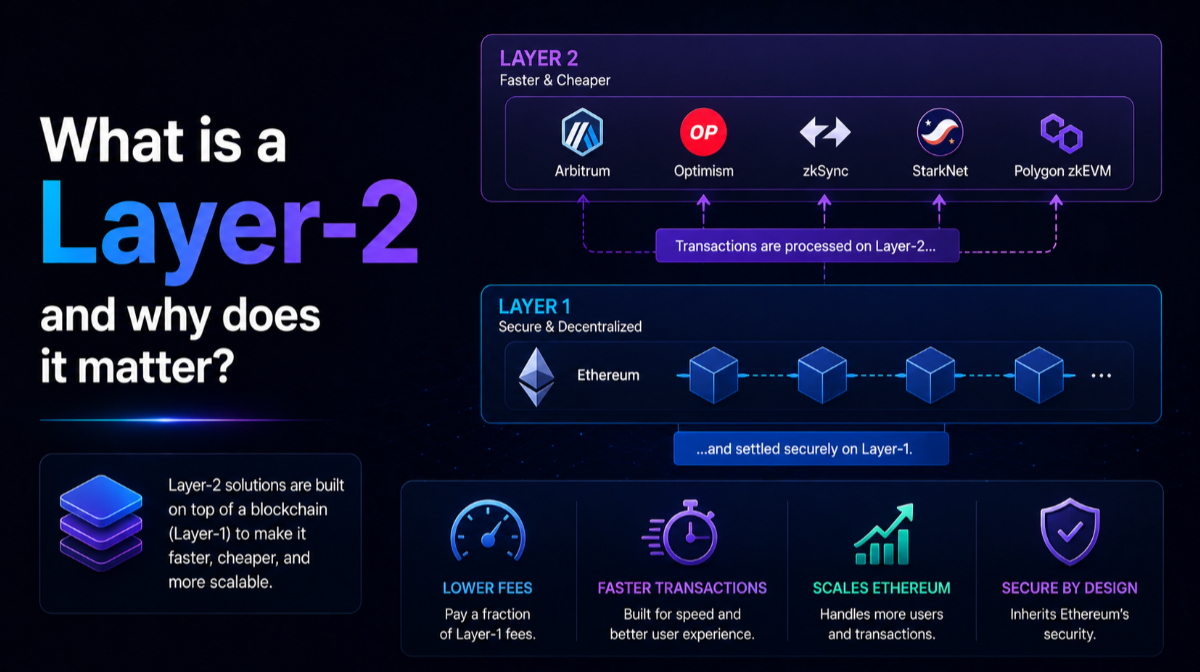
TechnologyWhat is a Layer-2 and why does it matter?A beginner-friendly guide to Layer-2 networks: what they are, how rollups scale blockchains, and why they matter for fees and speed.8 min read·
RegulationBitcoin ETF Outflows Weigh on Market as Interactive Brokers Launches Ethereum StakingSpot Bitcoin ETFs recorded $65.4 million in net outflows as hawkish Federal Reserve comments pressured prices. Meanwhile, Interactive Brokers rolled out Ethereum staking for eligible US clients.4 min read·
MarketsCFTC Opens Retail Crypto Leverage Rulemaking as Bitcoin Holds Near $84KThe CFTC has begun a rulemaking on leveraged retail crypto trading, while Bitcoin hovers near $84,000 and traders wait for U.S. inflation data and the Fed’s October meeting.4 min read·
MarketsUS Moves $1B in Seized Bitcoin as Senate Scrutiny of Tether GrowsU.S.-linked wallets shifted 12,267 BTC from a Bitfinex hack seizure address without any exchange deposit, while Senator Richard Blumenthal pressed Cantor Fitzgerald over its Tether partnership.3 min read·