CoinPulse
LayerZero
Bridge· founded 2024

What Is LayerZero? How the Omnichain Messaging Protocol Works

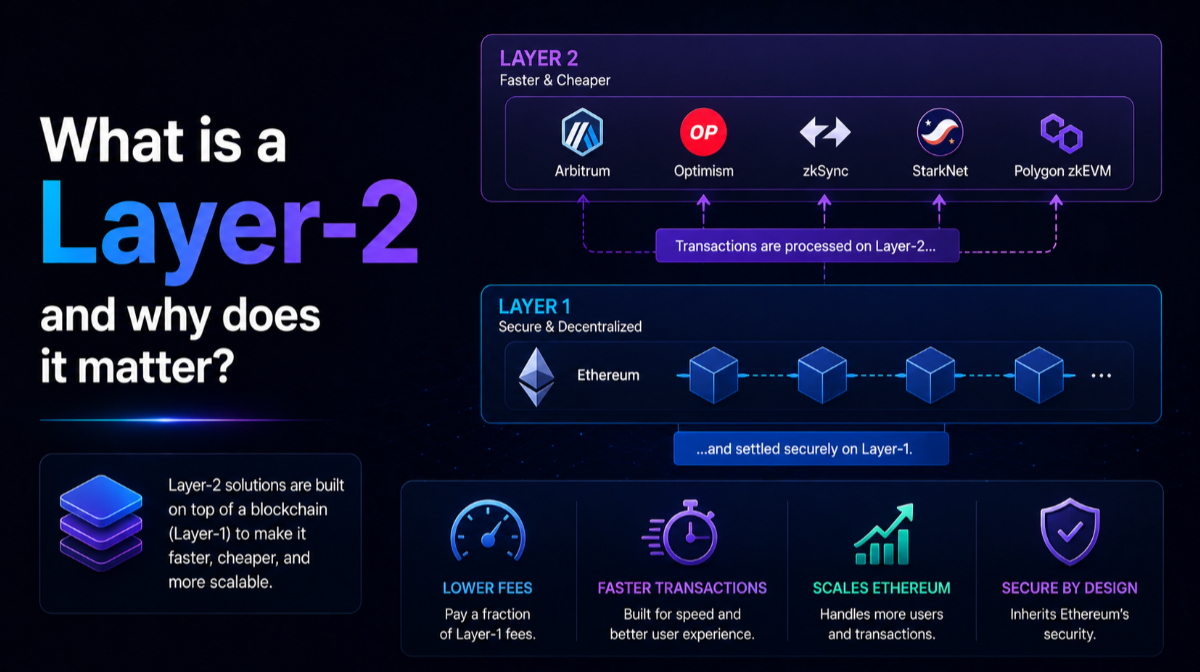
LayerZero is a cross-chain messaging protocol. It lets an app on one blockchain send verified messages, and therefore tokens, to its own contracts on another chain 1. It is not a single bridge with one pool of funds. Each app (an "OApp") picks the independent verifiers, called DVNs, that must confirm its messages. The protocol's endpoint contracts cannot be upgraded 13. LayerZero Labs, led by CEO Bryan Pellegrino, builds the protocol. The LayerZero Foundation stewards the ZRO token 89. In April 2026 the protocol's single-verifier setups were exposed when attackers took about $292 million from KelpDAO 1213. LayerZero is unrelated to LayerZero Power Systems, an electrical equipment maker.

Facts checked 14 cited sources No score on this page, no affiliate links

At a glance

What it is
Omnichain (cross-chain) messaging protocol 1
Developer
LayerZero Labs; CEO Bryan Pellegrino 8
Token
ZRO, 1 billion supply, launched June 20, 2024 9
Current version
V2 (immutable Endpoints, configurable DVNs) 17
Connected chains
165+ (company figure, Feb 2026) 8
Who pays fees
The sender, upfront on the source chain 2
Bridge app
Stargate, acquired by the LayerZero Foundation in 2025 11
New products
Zero blockchain (announced Feb 2026), ATLAS, Console 58
Major incident
KelpDAO rsETH exploit, Apr 18, 2026, ~$292M 1213
Official site
layerzero.network
Profile updated
October 23, 2026

Who is behind LayerZero

LayerZero Labs is the company that writes and maintains the protocol code, runs one of the DVNs and acts as the default Executor 3. Bryan Pellegrino is its CEO 89. A separate LayerZero Foundation opened the ZRO airdrop claims and bought Stargate 911.

LayerZero calls its core protocol "immutable, censorship-resistant and permissionless" 7. The company says more than 80% of all cross-chain volume moves over its rails, a figure it has not independently audited 6. Partner logos on its site include PayPal, Tether, Paxos, Google and Ondo 5.

How LayerZero V2 works

A LayerZero message passes through four parts 13:

  1. Endpoint (source chain): the app calls LayerZero's Endpoint contract with a message, such as "credit 100 tokens to this address on Arbitrum." Endpoints are deployed on every supported chain and cannot be upgraded 1.
  2. DVNs (Decentralized Verifier Networks): independent services watch the source chain and confirm the message's hash on the destination chain. The app chooses which DVNs to use. Required DVNs must all sign, and optional DVNs must reach a threshold (X of Y of N) 3. Providers include LayerZero Labs, Google Cloud and Polyhedra 3.
  3. Executor: once the DVN requirements are met, a permissionless Executor delivers the message and pays destination gas 13.
  4. OApp (destination chain): the app's own contract receives the message and acts on it, for example minting or releasing tokens.

Apps built for tokens follow the OFT standard. A native OFT burns tokens on the source chain and mints them on the destination chain. An OFT Adapter locks an existing token in a contract on its home chain and releases it when a message comes back 4. The contract owner controls the peers, libraries and DVN settings 4.

The point to understand: security is set per app, not by LayerZero for everyone. Two tokens that both "use LayerZero" can have very different protection.

Is LayerZero a bridge?

Not in the narrow sense. LayerZero is messaging infrastructure. Bridges and tokens are built on top of it. Stargate, a liquidity bridge for moving assets between chains, is the main bridge app built on LayerZero. In August 2025 Stargate's DAO voted, with about 95% in favor, to be acquired by the LayerZero Foundation. STG holders could convert at 0.08634 ZRO per STG, and the Stargate DAO was dissolved. For six months, half of Stargate's revenue went to veSTG holders, and the rest goes to buying and burning ZRO 11. Wormhole made a last-minute counter-offer that the DAO did not take up 11.

Compared with lock-and-mint bridges run by one operator, LayerZero hands the trust decision to each app. That gives flexibility, but it also lets an app pick a weak configuration. See CoinPulse's bridge ratings for how the protocol is assessed against other bridges.

Fees

You pay every cost upfront on the source chain, in its native token 2:

  • the source-chain gas for your transaction;
  • DVN fees, split among the verifiers the app has configured;
  • an Executor fee for delivery;
  • destination gas, converted into the source chain's token at current prices.

Apps quote the total on-chain before you send, and the quote can change, so a quote should be fetched right before sending 24. LayerZero's docs also allow fees to be paid in the "LZ token" 2. Apps such as Stargate may add their own fees on top.

Security model

LayerZero's guarantees come from three places:

  • Immutable Endpoints. LayerZero Labs cannot change the core contracts after deployment 17.
  • App-chosen verification. Security is only as strong as the DVN set an app configures. LayerZero's docs warn that default settings are placeholders that can change. The defaults include LayerZero Labs as a required DVN and as Executor, so a single operator can control both steps. The docs recommend at least one required DVN not run by LayerZero Labs 3. The OFT docs add that with a single DVN, "one compromised verifier" can forge messages 4.
  • Owner control. Each OApp's owner can change its peers, libraries and DVNs 4. Users depend on that owner's key security.

LayerZero Labs publishes audit reports in a public GitHub repository 7. Audits reduce risk but do not cover off-chain infrastructure such as RPC nodes, which is where the 2026 attack happened 12.

The 2026 KelpDAO exploit

On April 18, 2026, attackers stole about 116,500 rsETH, worth roughly $292 million, from KelpDAO's LayerZero OFT Adapter on Ethereum 13.

  • How it worked: Kelp's rsETH route relied on a single DVN, operated by LayerZero Labs, in a 1-of-1 configuration 1213. The attackers compromised two RPC nodes that the DVN used to read chain data, by swapping their node software. They then flooded the healthy nodes with a denial-of-service attack, so the DVN failed over to the poisoned ones. The DVN confirmed a message, supposedly from Unichain, for a transaction that never existed, and the adapter released the rsETH 1213. A second forged message for 40,000 rsETH was stopped when Kelp paused its contracts 46 minutes later 13.
  • Spread: the attacker posted the rsETH as collateral on Aave V3 and borrowed WETH against it, leaving Aave with estimated bad debt of $124–230 million 1314. LayerZero's preliminary attribution is North Korea's Lazarus Group (TraderTraitor) 12.
  • LayerZero's response: its first statement said the protocol "functioned exactly as intended" and pointed to Kelp's 1-of-1 choice 12. In a May 8, 2026 apology it said it should not have let its DVN be the sole verifier for high-value transfers and had not tracked what its DVN secured. A Dune analysis cited by Kelp found the same setup in about 47% of roughly 2,665 active OApps 14.
  • Changes: the LayerZero Labs DVN no longer signs for 1-of-1 setups 12. LayerZero says defaults are moving to at least five verifiers where possible, with a floor of three. It is also building a second DVN client in Rust, raising its multisig threshold from 3-of-5 to 7-of-10, and building a Console for issuers to monitor their settings 14.
  • Recovery: a "DeFi United" effort raised over $300 million. LayerZero contributed 10,000 ETH: 5,000 donated and 5,000 lent to Aave. Arbitrum DAO released 30,766 frozen ETH. Kelp announced a move to Chainlink CCIP, and Solv said it would move more than $700 million in tokenized bitcoin off LayerZero 14. As of May 2026, the official post-mortem was still pending 14.

ZRO token

ZRO is LayerZero's token, with a total supply of 1 billion. Claims opened on June 20, 2024. About 85 million ZRO (8.5%) went to eligible users through a "proof-of-donation" claim: claimants donated $0.10 per ZRO to Protocol Guild, a fund for Ethereum core developers, and the Foundation matched up to $10 million 9. Since the Stargate deal, part of Stargate's revenue funds ZRO buy-and-burn 11. CoinPulse does not cover ZRO price or forecasts on this page.

Zero, ATLAS and Console

On February 10, 2026, LayerZero Labs announced Zero, a new blockchain. It named Citadel Securities, DTCC, ICE and Google Cloud as collaborators and targeted a fall 2026 launch 8. Its site also lists ATLAS, a "headless exchange" built on Zero, and Console, a control panel for asset issuers. Both were described as launching later in 2026 56. Check LayerZero's site for current availability.

Incident record

2 outcome unclear

Forged message verified by the LayerZero Labs DVN (poisoned RPC nodes + DDoS) drained KelpDAO's rsETH OFT Adapter, which used a 1-of-1 DVN setup

Apr 18, 2026outcome unclear
Outcome
Off-chain infrastructure compromise of LayerZero Labs' DVN, enabled by single-verifier configuration; no Endpoint contract bug; LayerZero accepted partial responsibility
Loss
~116,500 rsETH (~$292M); Aave bad debt est. $124–230M
Recovered or reimbursed
DeFi United raised $300M+; LayerZero contributed 10,000 ETH; Arbitrum released 30,766 frozen ETH; full recovery not confirmed
Source: layerzero.network

A multisig signer used a production hardware wallet for a personal trade

~2023 (disclosed May 2026)outcome unclear
Outcome
Key-hygiene lapse, no loss
Loss
None reported
Recovered or reimbursed
Signer removed, wallets rotated
Source: theblock.co

Hacks in DefiLlama’s public database are also scored as the security record on the LayerZero rating page.

Questions about LayerZero

What blockchains does LayerZero support?
LayerZero said in February 2026 that it connects more than 165 chains 8. Each app chooses which of them it deploys to. The live list is in LayerZero's deployed-contracts documentation.
Was LayerZero hacked?
Its core contracts were not exploited. In April 2026 attackers compromised RPC infrastructure behind the LayerZero Labs DVN and drained about $292 million from KelpDAO, which relied on that one DVN 1213. LayerZero later admitted it should not have served as a sole verifier 14.
Who pays LayerZero fees?
The person sending the message pays everything upfront on the source chain: gas, DVN fees, the Executor fee and destination gas 2.
Is ZRO needed to use LayerZero?
No. Fees can be paid in the source chain's native token 2.
How can I check a token's LayerZero security setup?
Look up its OApp configuration on LayerZero Scan, or ask the issuer, to see how many required DVNs it uses and who runs them. LayerZero's own docs advise against relying on a single verifier 34.

LayerZero elsewhere on CoinPulse

Sources

  1. 1[What is LayerZero — LayerZero docs]()docs.layerzero.network
  2. 2[Transaction pricing — LayerZero docs]()docs.layerzero.network
  3. 3[Security stack (DVNs) — LayerZero docs]()docs.layerzero.network
  4. 4[OFT standard — LayerZero docs]()docs.layerzero.network
  5. 5[LayerZero homepage]()layerzero.network
  6. 6[About LayerZero]()layerzero.network
  7. 7[LayerZero V2 repository — GitHub]()github.com
  8. 8[LayerZero announces Zero blockchain — Business Wire via Enid News (Feb 10, 2026)]()enidnews.com
  9. 9[LayerZero's proof-of-donation ZRO claiming mechanism — The Block (Jun 20, 2024)]()theblock.co
  10. 10[ZRO trades at $1.1B market cap after claims launch — The Defiant (Jun 20, 2024)]()thedefiant.io
  11. 11[Stargate DAO approves LayerZero acquisition — The Block (Aug 24, 2025)]()theblock.co
  12. 12[KelpDAO incident statement — LayerZero (Apr 19, 2026)]()layerzero.network
  13. 13[How a single LayerZero DVN compromise drained $292M from KelpDAO — Blockaid (Apr 19, 2026)]()blockaid.io
  14. 14[LayerZero issues public apology for Kelp DAO exploit response — The Block (May 2026)]()theblock.co

Other bridgesAll →

What changed on this page

  • 2026-10-23Profile created.
All companies