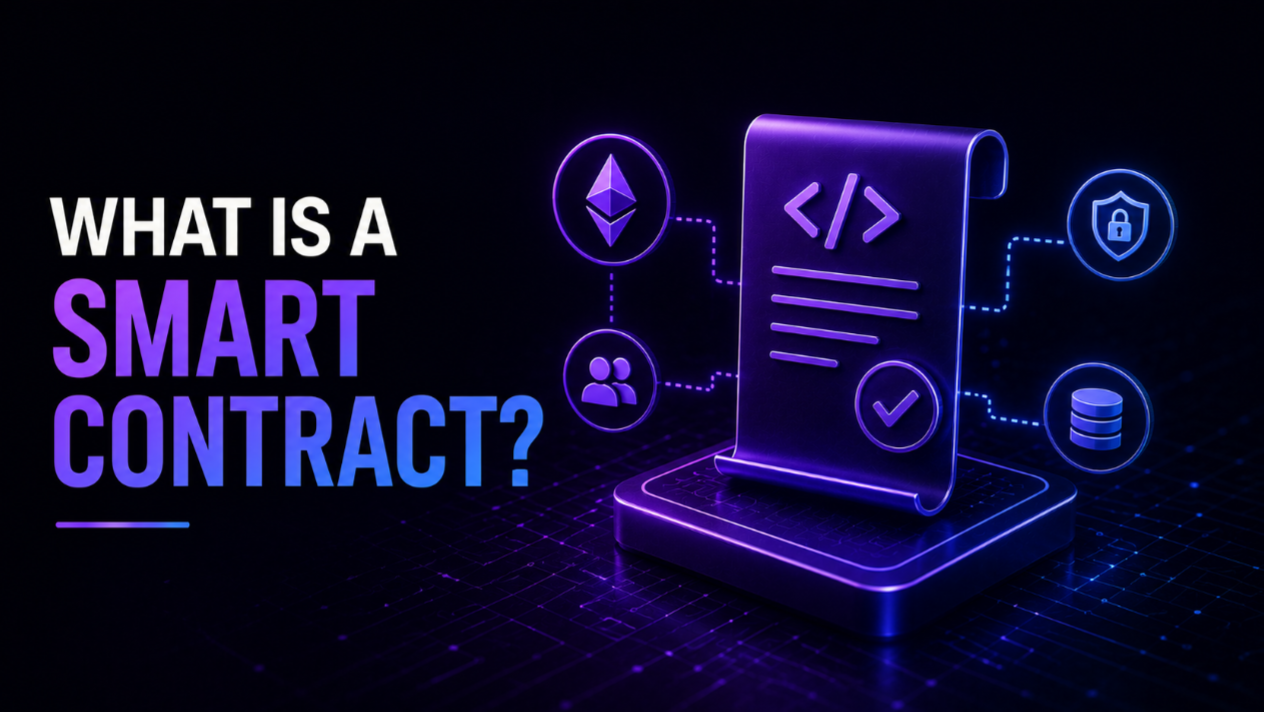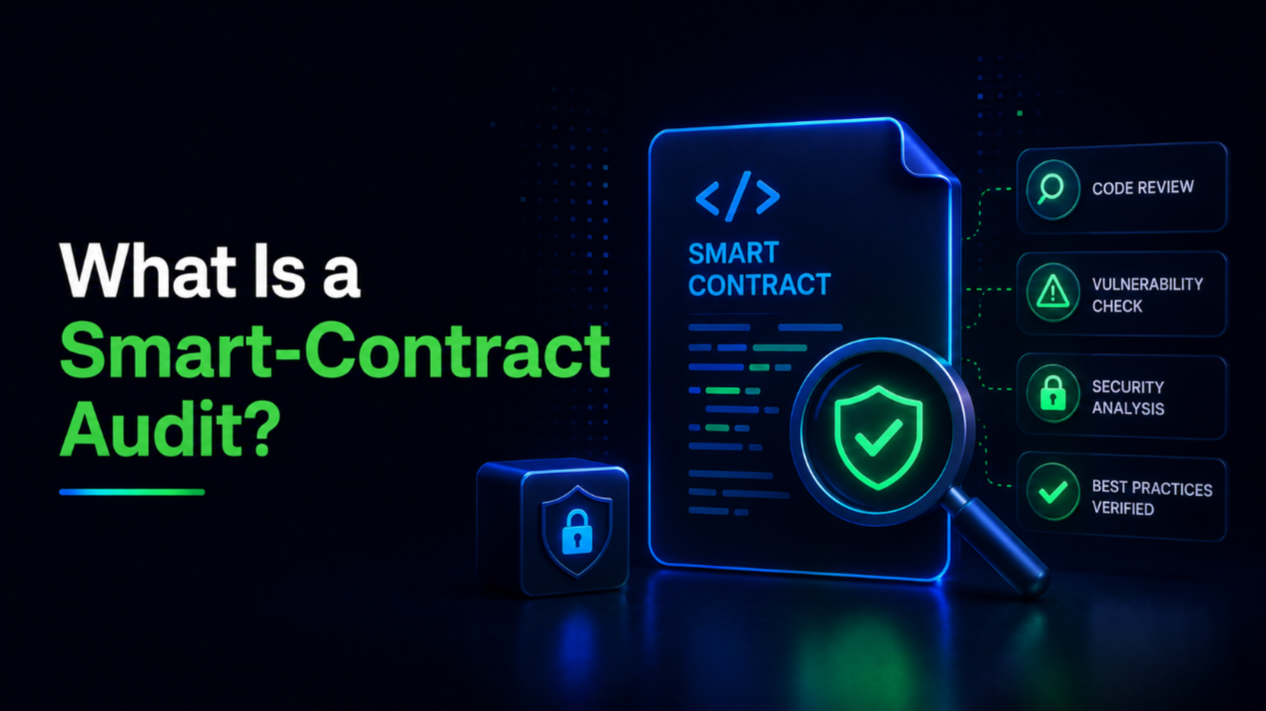
A smart-contract audit is an independent, in-depth review of a blockchain project's code carried out by security specialists to find bugs, vulnerabilities, and design flaws before attackers can exploit them. Because a deployed smart contract is difficult to change and often holds real funds, a mistake in its code can be catastrophic and irreversible. An audit is the industry's main line of defense: a structured attempt to catch those errors while they can still be fixed. It lowers risk substantially, but it never reduces it to zero.
Key takeaways
- An audit is an independent security review of smart-contract code to find flaws before deployment.
- It matters because deployed contracts are hard to change and often hold user funds.
- Auditors combine manual code review, automated tools, and testing to surface vulnerabilities.
- A clean audit reduces risk but does not guarantee a contract is safe or trustworthy.
- Who audited a project, how recently, and whether issues were fixed all matter more than a badge alone.
Why audits matter so much
Ordinary software can be patched the moment a bug is found. A smart contract usually cannot. Once deployed, its logic is typically immutable, and any funds it controls are exposed to whatever the code actually does rather than what the developers intended. History is full of protocols that lost enormous sums to a single overlooked flaw. Because outcomes on a blockchain are final and there is no support desk to reverse them, catching a vulnerability before launch is far more valuable than fixing one afterward.
This is why audits have become a baseline expectation for any serious project that handles user funds. An audit will not make code profitable or a project honest, but it signals that experienced reviewers have deliberately tried to break the code and documented what they found.
What an audit actually examines
A thorough audit goes well beyond scanning for typos. Reviewers try to think like an attacker and stress the code against known and novel attack patterns. Typical areas of focus include:
- Logic errors: places where the code does something different from what the specification intended.
- Access control: whether sensitive functions are properly restricted so that only authorized parties can call them.
- Reentrancy and ordering flaws: vulnerabilities where an attacker manipulates the sequence of calls to drain funds.
- Arithmetic and rounding issues: overflow, underflow, or precision errors that can be exploited.
- External dependencies: risks introduced by price feeds, oracles, and other contracts the code relies on.
- Economic and incentive design: whether the protocol can be gamed even when the code works exactly as written.
How the work is carried out
Auditors typically combine several methods. They read the code line by line to understand its intent, run automated analysis tools that flag common vulnerability patterns, and write tests that push the contract into edge cases. Many also model how the contract behaves under adversarial conditions. The result is a report that lists findings by severity, from critical issues that could lose funds down to minor suggestions, along with recommendations. A responsible project then fixes the serious issues and, ideally, has the fixes re-reviewed.
The limits of an audit
An audit is a snapshot, not a guarantee. It reflects the code as it existed at the time of review, so any later change can introduce new risks that the audit never covered. Auditors also work within a defined scope and a limited timeframe, which means they can miss issues, especially subtle economic exploits or bugs in dependencies outside their scope. A contract can pass a reputable audit and still be drained later, and some projects display an audit badge while quietly omitting that critical findings were never fixed.
Judgment matters. When evaluating whether a contract's audit means anything, consider who performed it and their reputation, how recently it was done relative to the current code, whether the findings were actually addressed, and whether the full report is public. A vague claim of being audited, with no named firm or readable report, is close to meaningless.
How to use audit information
For everyday users, audits are one input among several rather than a green light on their own. Treat a strong, recent, public audit from a respected reviewer as a positive signal, and treat its absence as a reason for extra caution. Combine it with other checks: how long the protocol has operated safely, how much value it secures, and how transparent the team is. Our independent Ratings methodology explains how we weigh audit quality alongside these other factors, and you can find related background in our guides.
It also helps to understand the environment the contract runs in. The cost of interacting with audited code still depends on gas fees, and the network's security ultimately rests on its consensus mechanism. An audit protects the contract layer; it does not protect you from every other risk in the stack.
The bottom line
A smart-contract audit is a serious, structured attempt to find flaws in code before they cost users money, and it is one of the most valuable safeguards in crypto. But it is a risk reducer, not a seal of safety. The most useful question is never simply whether a project was audited, but by whom, how recently, and whether the problems that were found were actually fixed. Read audits as evidence to weigh, not as proof to trust blindly.
Ongoing security beyond a one-time review
The strongest projects treat security as a continuous process rather than a single event. Beyond an initial audit, many maintain a bug bounty program that pays independent researchers to report vulnerabilities responsibly, which extends scrutiny well past the original review window. Some commission repeat audits whenever they ship significant changes, precisely because a new feature can reintroduce risk into code that was previously clean. A few also use formal verification, a rigorous mathematical technique that proves certain properties of the code always hold.
For a user, the presence of these ongoing measures is often more reassuring than a single audit badge. A project that invites continuous review, publishes its findings, and responds quickly to reported issues is signaling a healthy security culture. One that audited an early version, then changed the code repeatedly without further review, offers far weaker assurance despite still displaying the audit. Looking for evidence of sustained diligence, rather than a one-off stamp, is one of the clearest ways to separate serious projects from those merely checking a box.