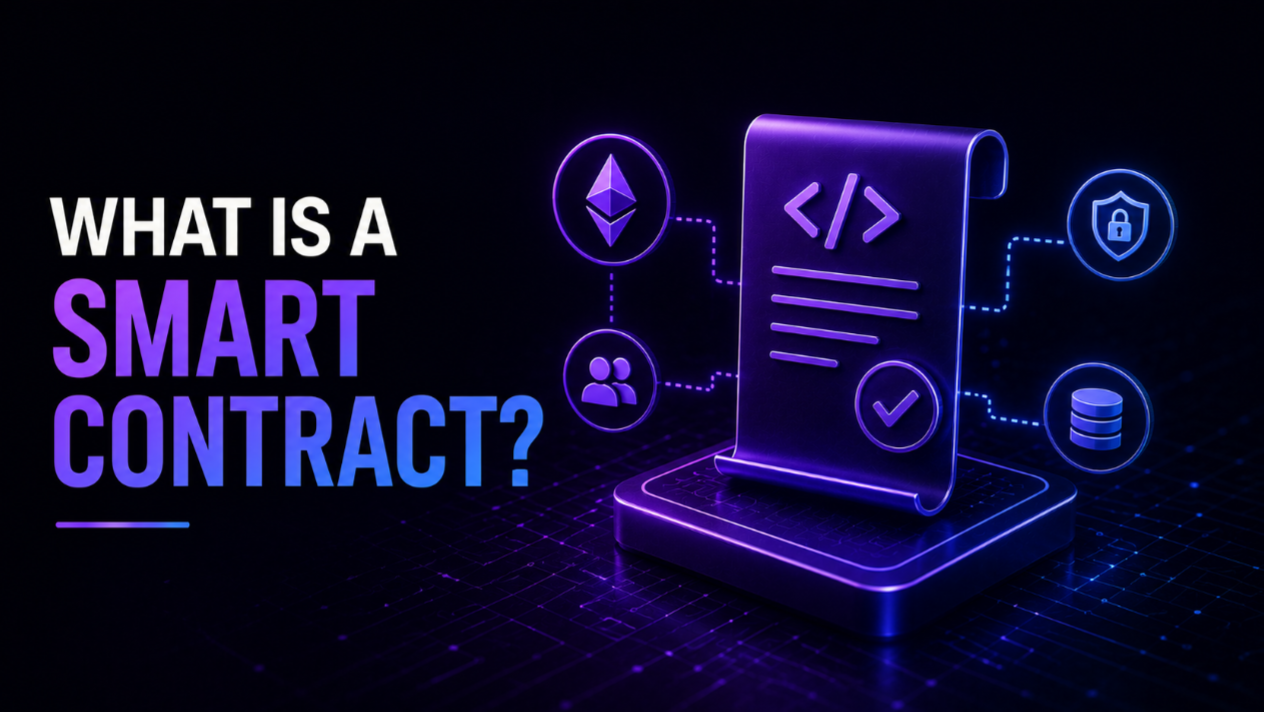
A smart contract is a program stored on a blockchain that automatically executes its rules when predefined conditions are met. Instead of relying on a bank, lawyer, or company to enforce an agreement, a smart contract holds the logic and often the funds directly, and carries out the terms exactly as written the moment they are triggered. Because it lives on a public blockchain, anyone can inspect its code, and no single party can quietly change or reverse what it does.
Key takeaways
- A smart contract is self-executing code on a blockchain that runs automatically when its conditions are satisfied.
- It replaces trusted intermediaries with transparent, verifiable rules that anyone can inspect.
- Once deployed, its logic is difficult or impossible to change, which is both a strength and a risk.
- Smart contracts power decentralized finance, tokens, NFTs, and much of the wider blockchain economy.
- Bugs and exploits are irreversible, so audits and caution before signing are essential.
How a smart contract works
At its core, a smart contract follows simple if-then logic: if a certain condition is met, then a specified action executes. A developer writes this logic in code and deploys it to a blockchain, where it receives its own address. From that point, anyone can send it a transaction to interact with it. When you do, the network runs the contract's code and updates the blockchain according to the result, whether that means transferring tokens, recording ownership, or releasing funds held in escrow.
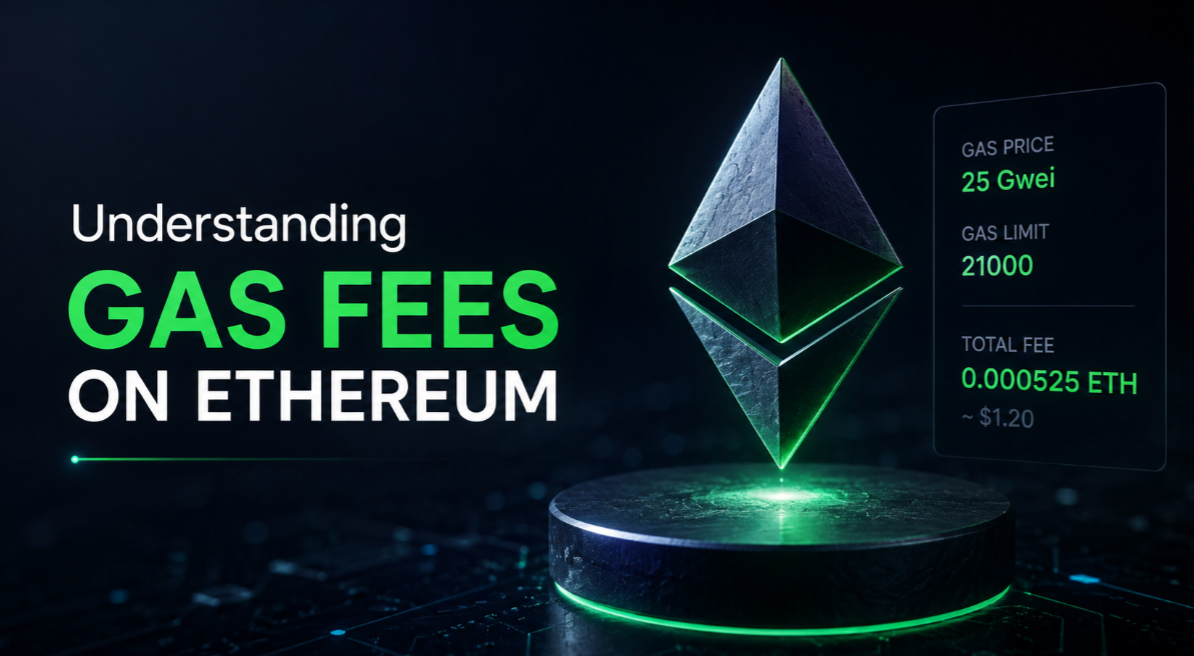
Crucially, the contract runs on every participating node in the network, and they must all reach the same result. This is what makes the outcome trustworthy: no single computer decides what happens, and the rules cannot be applied selectively. Running that code consumes resources, which is why interacting with a smart contract costs a fee, as explained in our guide to gas fees. More complex contracts require more computation and therefore cost more to use.
What makes them different from ordinary programs
Smart contracts share several properties that set them apart from software running on a normal server:
- Deterministic: given the same inputs, a contract always produces the same output, which is necessary for every node to agree.
- Transparent: the deployed code and every interaction with it are visible on the public ledger.
- Autonomous: once live, a contract runs on its own whenever triggered, without needing an operator to press a button.
- Immutable: deployed code generally cannot be edited, so mistakes cannot simply be patched the way a normal app can be updated.
That last property deserves emphasis. Immutability is a feature because it means no one can secretly alter the rules after you rely on them. But it is also a danger, because a flaw written into the code is permanent, and any funds lost to it may be unrecoverable.
What smart contracts power
Smart contracts are the engine behind most of what people do beyond simply holding coins. They issue tokens and stablecoins, define how NFTs prove ownership, and run the entire world of decentralized finance covered in our consensus explainer and related guides. A decentralized exchange, for example, is a set of smart contracts that hold pooled funds and swap tokens according to fixed rules. A lending protocol is a contract that accepts collateral and issues loans automatically.
The common thread is automation of agreements. Anywhere a traditional process relies on a trusted middleman to hold funds, verify conditions, and enforce terms, a smart contract can potentially do the same job with transparent code. You can explore more of these applications in our guides.
The risks you should understand
The power of smart contracts is matched by real hazards, and most of them stem from the fact that the code does exactly what it says, not what you assumed it would do:
- Code bugs: a flaw in the logic can be exploited to drain funds, and because the contract is immutable, the damage is often permanent.
- Unlimited approvals: interacting with a contract often means granting it permission to move your tokens; overly broad permissions can be abused if the contract is malicious or compromised.
- Composability failures: contracts that plug into one another can pass a failure or exploit down the chain to everything built on top.
- Oracle dependence: contracts that need outside data rely on feeds called oracles, which can be manipulated or report bad values.
Because outcomes are final, verifying a contract before you trust it matters more than in ordinary software. An independent audit reduces the odds of a hidden flaw, though it never guarantees safety. Sticking to established, reviewed contracts and limiting the permissions you grant are the most reliable defenses.
The bottom line
A smart contract turns an agreement into transparent, self-enforcing code that runs on a blockchain without a middleman. That design unlocks powerful applications, from tokens to entire financial systems, but it also shifts responsibility onto you: there is no support line to reverse a bad transaction and no way to patch a contract you have already trusted. Treat every interaction as final, favor code that has been reviewed, and understand what you are approving before you sign. Used carefully, smart contracts are one of the most important building blocks in all of crypto.
How to interact with a contract safely
Because a smart contract does exactly what its code says, the most important protection is understanding what you are authorizing before you confirm a transaction. When you connect your wallet to an application, you are usually interacting with one or more contracts, and each action prompts a signature. Reading those prompts carefully, rather than clicking through them, is the single habit that prevents the most losses. A request to move a specific amount is very different from a request to grant open-ended access to your entire balance of a token.
A few practical habits go a long way. Interact only with contracts whose addresses you have verified from a trusted source, since scammers frequently promote look-alike contracts. Prefer applications that request limited, specific permissions over unlimited ones, and periodically review and revoke approvals you no longer use. Start with small amounts when trying an unfamiliar contract, and pay attention to warnings your wallet surfaces. None of this makes a contract risk-free, but it shifts the odds meaningfully in your favor and turns an opaque, intimidating interaction into a deliberate, informed one.