No exploit or loss event found in b14g's docs or in DefiLlama's hacks database as of October 2026
—outcome unclear- Outcome
- No incident on record
- Loss
- —
- Recovered or reimbursed
- —
b14g is a Bitcoin staking protocol that lets BTC holders earn rewards on Core chain and Babylon Genesis without sending their bitcoin to a custodian or wrapping it. BTC is time-locked in the holder's own wallet, and b14g's Merge Marketplace pairs that lock with stakers of the chain's own token (CORE or BABY). The pairing unlocks higher "dual-staking" reward tiers, which the two sides share 124. b14g also runs vaults: dualCORE for CORE holders and a lending vault for WBTC 67. It has no token today; one is on its roadmap without a date 10.
Core chain rewards BTC holders who lock bitcoin and delegate it to a Core validator. Since mid-2024, Core pays more when the same staker also stakes CORE, a model the Core Foundation calls Dual Staking 13. Many BTC holders don't own CORE. b14g's role is to find someone who does. It describes this matching as a general dual-staking layer that other proof-of-stake chains could adopt, with Core and Babylon as the live integrations 5.
There are two order types. With Merge Order, you pick a validator and set how boosted rewards are split; rewards are claimable daily in CORE. With Fair-Share, the system matches CORE from the dualCORE vault and sets the split; rewards auto-compound as dualCORE 2. Large holders are advised to split BTC across several locks and validators, because big single locks need more CORE to reach a high tier 3.
On Babylon Genesis, the flow is similar but uses Babylon's own staking rules. You create an order, set the reward share for future BABY partners and choose a finality provider. You then lock BTC with a CSV timelock. BABY holders match the order by staking BABY into Babylon's staking module 4.
Two differences matter. Early unbonding takes 301 Bitcoin blocks, about three days. And Babylon can slash staked BTC for defined validator misbehavior, capped at 0.1% of the stake according to b14g's docs 4. On Core, the docs state BTC is not slashable 2.
dualCORE is for CORE holders. You deposit CORE and receive dualCORE, a token whose value in CORE rises as rewards compound; your token count stays the same. The vault stakes CORE into BTC orders on the Merge Marketplace. b14g states a target APY of "20%+", described as variable and not guaranteed 6. dualCORE can be moved or used in other DeFi apps.
BTCFi Lending Vault takes WBTC, supplies it to the Colend lending protocol, borrows CORE against it and stakes that CORE in the Merge Marketplace. Rewards are converted back to WBTC. This adds borrowing: a sharp drop in WBTC's price can push the position toward liquidation. b14g says it targets a health factor of 1.5 and will reduce borrowing as that level nears. Strategy changes need approval from a multisig Safe 7.
Bittery is a monthly draw built on Core BTC staking. Participants lock at least 0.01 BTC and assign that lock's rewards to a prize pool; one winner takes the pool. Everyone else earns no staking rewards for the round, though their BTC stays in their wallet. Withdrawal is possible only in the first five days of a round, and b14g takes 5% of the prize pool 8.
coBABY, a liquid staking vault for BABY, is listed as "Coming Soon" 9.
b14g's docs do not list a protocol fee on self-custodial BTC staking. Users still pay Bitcoin network fees to lock and unlock, which is why the minimum is 0.01 BTC 3. Product-level costs that are published:
| Product | Exit | Stated fee |
|---|---|---|
| BTC staking (Core) | After timelock expiry | Not stated; Bitcoin network fees apply 23 |
| BTC staking (Babylon) | Early unbonding ~3 days (301 blocks) | Not stated 4 |
| dualCORE | Normal: 1-day unbonding | 0% 6 |
| dualCORE | Instant | 10% 6 |
| BTCFi Lending Vault | 1-day unbonding | Not stated 7 |
| Bittery | First 5 days of a round only | 5% of prize pool 8 |
Yields come from Core and Babylon reward schedules and the match ratio, so they move with governance changes and with how much CORE or BABY is available.
Hacks in DefiLlama’s public database are also scored as the security record on the b14g rating page.
 Staking & YieldWhat Is Restaking?Restaking reuses already-staked tokens to help secure additional services, layering extra rewards on base staking. Learn the mechanics and stacked risks.7 min read·
 Staking & YieldLiquid Staking, ExplainedLiquid staking lets you stake tokens and receive a tradable receipt (an LST) that stays usable across DeFi. Learn how it works and where the risks hide.7 min read·
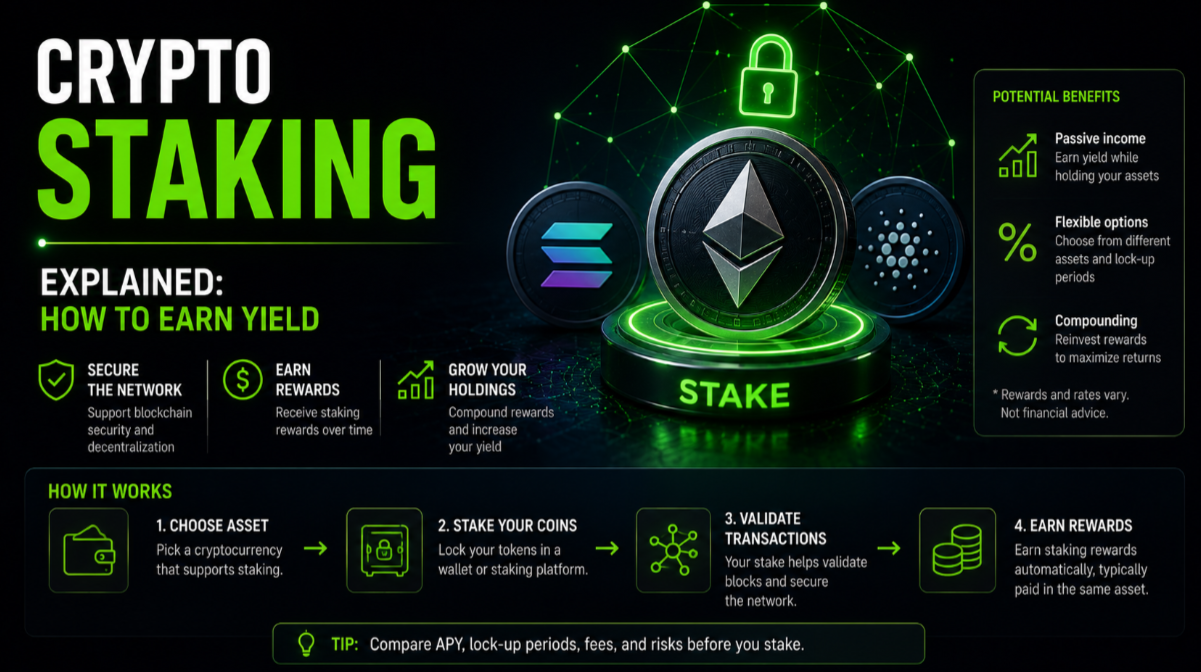 EarningCrypto staking explained: how to earn yieldA beginner-friendly guide to crypto staking: how it works, the rewards and risks, and practical steps to start earning yield safely.8 min read·
 RegulationBitcoin ETF Outflows Weigh on Market as Interactive Brokers Launches Ethereum StakingSpot Bitcoin ETFs recorded $65.4 million in net outflows as hawkish Federal Reserve comments pressured prices. Meanwhile, Interactive Brokers rolled out Ethereum staking for eligible US clients.4 min read·
 MarketsCFTC Opens Retail Crypto Leverage Rulemaking as Bitcoin Holds Near $84KThe CFTC has begun a rulemaking on leveraged retail crypto trading, while Bitcoin hovers near $84,000 and traders wait for U.S. inflation data and the Fed’s October meeting.4 min read·
 MarketsUS Moves $1B in Seized Bitcoin as Senate Scrutiny of Tether GrowsU.S.-linked wallets shifted 12,267 BTC from a Bitfinex hack seizure address without any exchange deposit, while Senator Richard Blumenthal pressed Cantor Fitzgerald over its Tether partnership.3 min read·