Investor email compromise and EIGEN theft
October 4, 2024funds not affected- Outcome
- Protocol not affected; restakers' funds not affected (off-chain social-engineering theft from one investor).
- Loss
- about $6 million in EIGEN (partly frozen)
EigenLayer is a restaking protocol on Ethereum. Depositors pledge ETH, liquid staking tokens or other tokens as collateral for additional services, called AVSs, run by node operators. In exchange they can earn extra rewards and accept extra slashing risk 2. Since June 2025, Eigen Labs, the company that develops EigenLayer, has marketed it as part of EigenCloud, a developer platform for "verifiable" apps and AI agents 110. Withdrawals take about 14 days 4. The EIGEN token is governed separately by the Eigen Foundation 7.
Several similar names refer to different things:
EigenLayer does not issue its own liquid restaking token. Tokens such as those from ether.fi, Renzo or Kelp come from separate protocols that deposit into EigenLayer on their users' behalf, and they carry their own contract and liquidity risks.
Restaking lets the same collateral that secures Ethereum, or other tokens, also back the promises of extra services 2. The roles are:
Operator sets and unique stake. Since April 2025, operators join specific operator sets created by AVSs and allocate a slice of their delegated stake to each one. An AVS can slash only the stake allocated to its own set 36. Joining a slashable set is opt-in for operators. Restakers choose their exposure by choosing which operator to delegate to 6.
What happens to slashed funds. In standard operator sets, slashed ERC-20 tokens are burned by sending them to a dead address. In "redistributable" sets, they go to a recipient the AVS named when it created the set, after a seven-day delay. Slashed native ETH cannot be redistributed; it stays permanently locked in the EigenPod contract 3.
Rewards come from AVSs, not from EigenLayer itself, and are paid in whatever tokens each AVS chooses 5. EigenLayer calculates rewards off-chain and posts a weekly Merkle root on Ethereum. Each payout becomes claimable one week after its root is posted 5.
Operators take a commission that can be set anywhere from 0% to 100% per AVS, with a default of 10% 5. Separately, the Eigen Foundation pays programmatic incentives in EIGEN to qualifying stakers and operators. These began accruing on August 15, 2024 9.
Returns therefore depend on which AVSs your operator serves and on their token prices. EigenLayer publishes no fixed yield. Gas for deposits, withdrawals and claims is paid on Ethereum. Rewards stop accruing once you queue a withdrawal 5.
Leaving EigenLayer takes two steps. First you queue a withdrawal. Once the mainnet withdrawal delay of 100,800 blocks, about 14 days, has passed, you complete it 4. Operators face similar delays: removing stake from an operator set takes about 14 days, and changing allocation settings takes about 17.5 days 4.
These delays give AVSs time to slash misbehavior that happened before you left. They also mean you cannot exit quickly in a market drop through EigenLayer itself. Holders of liquid restaking tokens may be able to sell on secondary markets, though possibly at a discount.
EIGEN launched with an initial supply of about 1.67 billion tokens. It became transferable on September 30, 2024 89. Its stated purpose is to cover "intersubjective" faults: misbehavior that cannot be proven on-chain but that most observers would agree happened. Holders can resolve such disputes by forking the token 9.
EigenLayer's contracts and the EIGEN token are "mostly upgradeable" 7. Control is split among four multisigs 7:
| Multisig | Signers required | Role |
|---|---|---|
| Protocol Council | 3 of 5 | Upgrades and parameter changes |
| Operations | 3 of 6 | Upgrades and parameter changes |
| Community | 9 of 13 | Upgrades and parameter changes |
| Pauser | 1 of 8 | Pausing |
Safety-critical changes go through a minimum 10-day timelock. Pausing does not: a single Pauser signer can pause the protocol 7.
The main risks to weigh:
Hacks in DefiLlama’s public database are also scored as the security record on the EigenCloud (EigenLayer) rating page.
See CoinPulse's EigenCloud rating and evidence, the liquid restaking ratings and the DeFi protocol ratings. For background, read what restaking is, liquid staking and crypto staking explained.
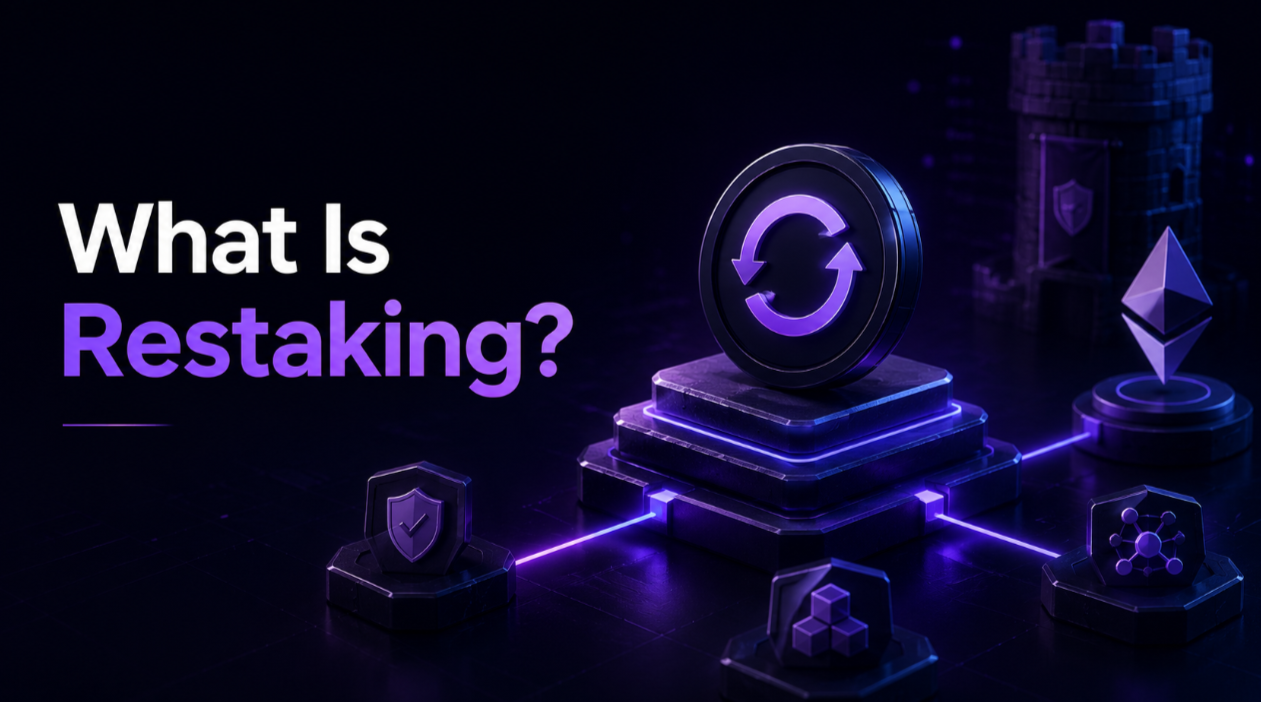
Staking & YieldWhat Is Restaking?Restaking reuses already-staked tokens to help secure additional services, layering extra rewards on base staking. Learn the mechanics and stacked risks.7 min read·
Staking & YieldLiquid Staking, ExplainedLiquid staking lets you stake tokens and receive a tradable receipt (an LST) that stays usable across DeFi. Learn how it works and where the risks hide.7 min read·
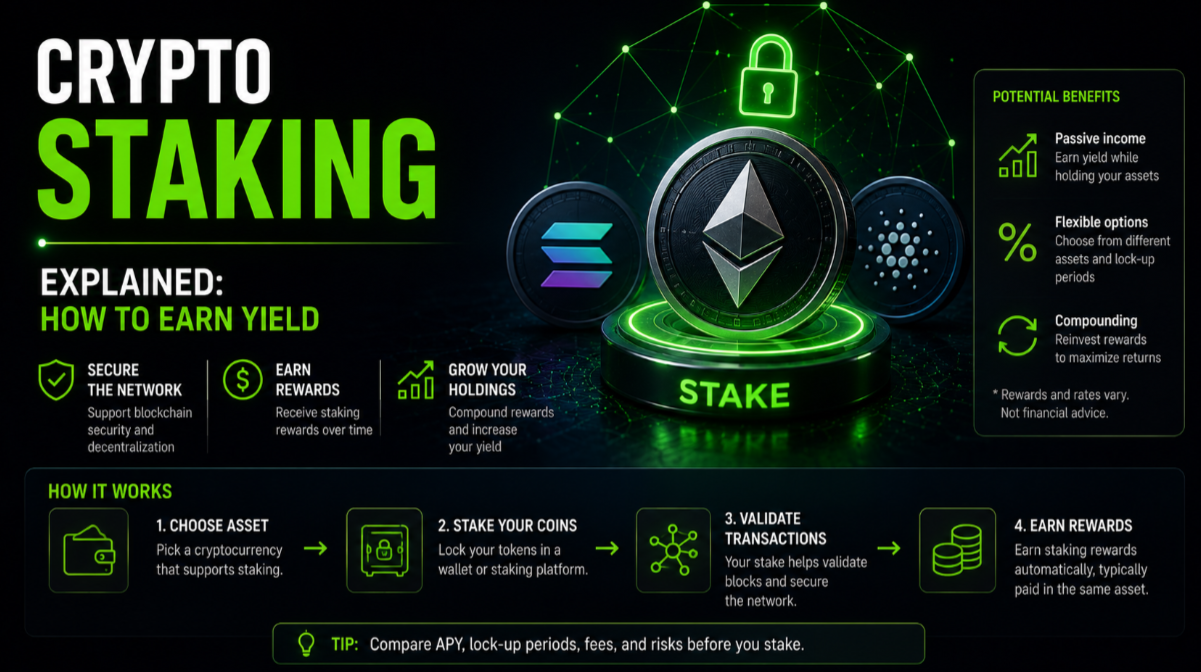
EarningCrypto staking explained: how to earn yieldA beginner-friendly guide to crypto staking: how it works, the rewards and risks, and practical steps to start earning yield safely.8 min read·
MarketsBitcoin Slips Below $70K as Fed Hike Fears Meet JPMorgan’s Bigger BetBitcoin fell below $70,000 on November 13 as Fed rate-hike talk and ETF outflows hit sentiment, while JPMorgan quietly raised its Strategy and IBIT holdings.4 min read·
MarketsBitcoin ETF Outflows Deepen Ahead of CPI as NYSE Backs Avalanche for 24/7 Tokenized TradingUS spot Bitcoin ETFs lost about $201 million in a single session as traders braced for key inflation data and a possible Fed hike. Meanwhile, the NYSE chose Avalanche as the settlement layer for its planned 24/7 tokenized securities platform.3 min read·
MarketsFinCEN Cuts MEXC Off From US Banks as Bitcoin ETFs Extend Weekly OutflowsThe US Treasury has barred American financial institutions from dealing with MEXC over alleged illicit flows of at least $16 billion, while spot Bitcoin ETFs lost $1.28 billion in a week and BTC held near $76,000.3 min read·