CoinPulse
KeepKey
Hardware wallet· founded 2015

What Is KeepKey? The Open-Source Hardware Wallet Explained

KeepKey is a USB hardware wallet. It stores your private keys offline on a small device with a large OLED screen, and you confirm each transaction on that screen 1. You run it through the free KeepKey Desktop app, which handles setup, balances, sending, swaps and firmware updates 6. KeepKey sells the device for $59.95 7. ShapeShift bought the company in 2017, but KeepKey now says it operates independently. The footer names KeepKey LLC 13. Its firmware is open source 1.

Facts checked 10 cited sources No score on this page, no affiliate links

At a glance

Product type
USB hardware wallet with OLED screen 1
Company
KeepKey LLC (per site footer), Denver, CO 1
Founded
2014, per the company 2
Price
$59.95, free US shipping (Oct 23, 2026) 7
Companion software
KeepKey Desktop (Vault), browser extension, iOS app 6
Backup
12- or 24-word recovery phrase 6
Firmware
Open source, signed; free updates 16
Official site
keepkey.com
Updated
October 23, 2026

Who makes KeepKey

KeepKey says it has secured private keys since 2014. It names Darin Stanchfield and Ken Hodler as founders, who started the company after the Mt. Gox collapse 2. In August 2017, the exchange ShapeShift, then led by Erik Voorhees, bought KeepKey. The price was not disclosed 4. Under ShapeShift, KeepKey added in-wallet swaps and later THORChain's RUNE (December 2020) 5.

KeepKey now states that ShapeShift is neither its owner nor its maker and that it has been independent "for several years" 3. Its docs connect that change to ShapeShift becoming a DAO in 2021 5. The website footer reads KeepKey LLC, and the listed team includes a lead engineer, a firmware lead and a COO, all named by handle 12.

How KeepKey works

KeepKey generates and keeps your keys on the device. Your computer builds a transaction, the device displays it, and you approve it with the button on the KeepKey before it signs 16. Background: what is a hardware wallet.

The software around it 6:

  • KeepKey Desktop (Vault): the main app for setup, portfolio, send and receive, swaps and firmware updates.
  • Browser extension: connects web dApps through the desktop bridge. How much a request can be decoded on screen depends on the request and the firmware.
  • Mobile app: iOS only for now. It pairs with the desktop app by QR code; Android is listed as "coming soon."
  • Developers: the desktop app exposes a local REST API.

KeepKey says it supports 11 native chains plus all EVM chains, with more than 6,980 additional assets 1. Check the supported-coins list in the docs before sending a specific token.

Setup and recovery

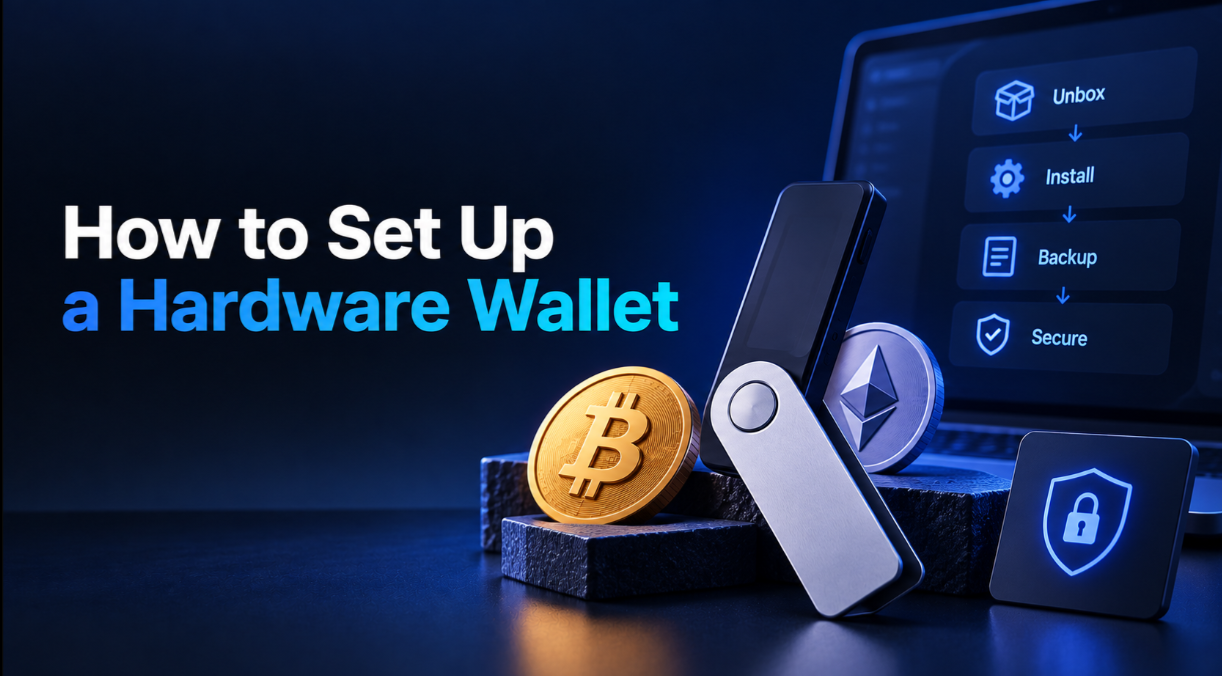
During setup the device shows a 12- or 24-word recovery phrase. That phrase is your only backup if the device is lost, broken or stolen 6. Two recovery cards come in the box for writing it down 7.

Your PIN is entered on the computer using a grid whose layout shuffles every time. That way, software watching your screen or clicks cannot learn the digits 6. KeepKey also documents a "scrambled recovery entry" mode for restoring a phrase 6. Step-by-step help: how to set up a hardware wallet.

KeepKey staff will never need your phrase. Anyone asking for it is running a scam; see crypto phishing.

Price and what's in the box

The KeepKey costs $59.95 with free US shipping. It comes in five finishes: Classic black, red, green, gold and silver 7. The box holds the device, a USB cable, two recovery cards and a quick-start guide 7. KeepKey says it ships anywhere, but international shipping costs are on a separate policy page 7. No subscription is mentioned. Firmware updates are free 1.

Security model and the 2019 glitching finding

KeepKey publishes its firmware as open source and signs releases. It asks researchers to report flaws privately to [email protected] 168. Its security page does not name the chip, mention a secure element or describe a bug bounty 8.

The most significant public research on the device came from Kraken Security Labs in December 2019. Researchers showed that someone with about 15 minutes of physical access could extract the encrypted seed using voltage glitching, then brute-force the PIN 9. Kraken said the issue sits in the microcontroller and could not be fixed by firmware alone 9. KeepKey replied that its focus is protecting against remote attacks 9.

The documented mitigation is a BIP39 passphrase. The passphrase is never stored on the device, so a glitching attack cannot recover it 9.

What KeepKey protects against, and what it does not:

  • Protects: malware on your computer stealing keys, since signing happens on the device and you confirm on its screen 1.
  • Does not protect:
    • an attacker with physical access and lab tools, unless you use a passphrase 9;
    • a leaked recovery phrase;
    • approving a malicious transaction you did not read on screen.

How KeepKey differs from Trezor and Ledger

These are design differences, not a ranking:

KeepKey Trezor Ledger
Key storage / firmware Open-source firmware 1 Open-source firmware; EAL6+ secure element on current Safe models Secure-element devices
Main app KeepKey Desktop 6 Trezor Suite Ledger Live
Mobile use iOS app paired to desktop 6 See Trezor profile See Ledger profile
Physical-extraction research Kraken 2019 glitching (passphrase mitigates) 9 Kraken Jan 2020 glitching on older Model One/Model T See Ledger profile

Trezor and Ledger cells summarize CoinPulse's existing profiles of those companies, which carry their own sources. For a scored view, see the hardware wallet ratings.

Incident record

2 outcome unclear

Kraken Security Labs discloses seed extraction via voltage glitching with ~15 min physical access

Dec 10, 2019outcome unclear
Outcome
Research finding, not an exploit in the wild. Not fixable in firmware per Kraken; passphrase mitigates
Loss
No user losses reported
Recovered or reimbursed
n/a
Source: blog.kraken.com

No remote hack or customer-data breach found

—outcome unclear
no KeepKey entry in DefiLlama's hacks database as of Oct 23, 2026 10
Outcome
No known incident (absence of reports, not proof of safety)
Loss
—
Recovered or reimbursed
—
Source: defillama.com

Hacks in DefiLlama’s public database are also scored as the security record on the KeepKey rating page.

Questions about KeepKey

Is KeepKey still owned by ShapeShift?
No, according to KeepKey. ShapeShift bought it in 2017, but KeepKey says it has been independent for several years and operates as KeepKey LLC 31.
Can I use KeepKey with my phone alone?
Not fully. The iOS app pairs with KeepKey Desktop by QR code, and Android is listed as coming soon 6.
Does a passphrase matter on KeepKey?
Yes. Kraken's 2019 research names a BIP39 passphrase as the defense against physical seed extraction, because the passphrase is never stored on the device 9.
Can I report a security bug?
Yes. Email [email protected] with "[VULNERABILITY]" in the subject line. No bug bounty is advertised 8.
Where can I see how CoinPulse evaluates KeepKey?

KeepKey elsewhere on CoinPulse

Sources

  1. 1KeepKey, home page —keepkey.com
  2. 2KeepKey, About —keepkey.com
  3. 3KeepKey, "ShapeShift" history page —keepkey.com
  4. 4Bitcoin Magazine, "Crypto Exchange ShapeShift Acquires KeepKey Hardware Wallets" (Aug 16, 2017) —bitcoinmagazine.com
  5. 5KeepKey Docs, Team/history —docs.keepkey.com
  6. 6KeepKey Docs —docs.keepkey.com
  7. 7KeepKey Store —keepkey.com
  8. 8KeepKey, Security —keepkey.com
  9. 9Kraken Security Labs, "Flaw Found in KeepKey Crypto Hardware Wallet" (Dec 10, 2019) —blog.kraken.com
  10. 10DefiLlama, Hacks database —defillama.com

Other hardware walletsAll →

What changed on this page

  • 2026-10-23Profile created.
All companies