Planned wind-down
Oct 1, 2026outcome unclear- Outcome
- Orderly closure announced; outcome of pending orders not independently verified
- Loss
- None reported
- Recovered or reimbursed
- Support by email to Nov 30, 2026
LetsExchange was an instant crypto swap service at letsexchange.io that let people trade one coin for another without opening an account. It did not hold funds itself. Each order was routed to a third-party exchange provider, which executed it and sent the coins to the user's wallet 4. The service was run by CryptoLightHouse Ltd., a Seychelles company 3. LetsExchange stopped taking new exchanges on October 1, 2026, and its support desk is open by email only until November 30, 2026 12.
LetsExchange announced on October 1, 2026 that it was closing. Exchange operations ended at 07:00 UTC that day. Exchanges created before that time were still to be processed 2. The homepage now carries only a closure notice. It says operations ran for five and a half years and that support stays available until November 30, 2026 1. The reason for the closure was not stated in the parts of the announcement that are publicly readable.
If you had an exchange in progress:
The Terms of Use, last updated May 15, 2026, name CryptoLightHouse Ltd. as the contracting party. It is a company incorporated in the Republic of Seychelles, with an office at Sound & Vision House, Francis Rachel Street, Victoria, Mahe 3. Seychelles law governed the terms, and Seychelles courts had exclusive jurisdiction 3. In a March 2026 sponsored press release, the company dated its launch to March 2021 9.
LetsExchange acted as an aggregator, not as a counterparty. The Terms say it did not exchange currencies, hold wallets or accept funds. Providers listed on its site carried out every order under their own terms 4. The company said in 2026 that it routed orders across more than 20 providers 9.
A typical swap ran like this:
Fixed rate. The provider held the quoted rate for 30 minutes from the moment the exchange was created. A deposit credited after that window got the rate at that time instead. If the market made the swap impossible, the provider refunded the deposit minus its fees, typically within 10 business days 5.
Floating rate. The final amount moved with the market while the swap was processed. The terms capped the deviation from the expected rate at 5% 5.
The company described a broad catalog: more than 5,000 assets on 300+ networks, 60+ fiat currencies, and tokenized US stocks and ETFs through xStocks and Ondo. It also had an API and a widget for partners 9. These are company figures from a sponsored release and were not independently checked.
LetsExchange did not publish a separate fee table in the sources reviewed. Costs were built into the provider's quote. Refunds came back minus provider fees 5. Users also paid the network fee on their own deposit. Sending a coin without its required memo or destination tag left the user to pay for any return 7.
The service was never open to everyone. The Terms excluded people located in or resident of the United States, EU member states and the United Kingdom. They also excluded a list of sanctioned or high-risk places, including Afghanistan, North Korea, Iran, Cuba, Syria and the Russian-occupied territories of Ukraine 6. Users had to be 18 or older. Using a VPN to get around the geographic blocks was prohibited 6.
LetsExchange never held user balances 4. That cut both ways. You did not need to trust it with a stored account. But it also disclaimed responsibility for how providers executed orders, issued refunds or handled funds 4. Its liability was capped at the greater of fees paid in the previous three months or USD 100 8. Deposits sent from shielded addresses for coins like Zcash or Dash were not supported and could be lost permanently 7. The company said it ran a bug bounty on HackenProof 9.
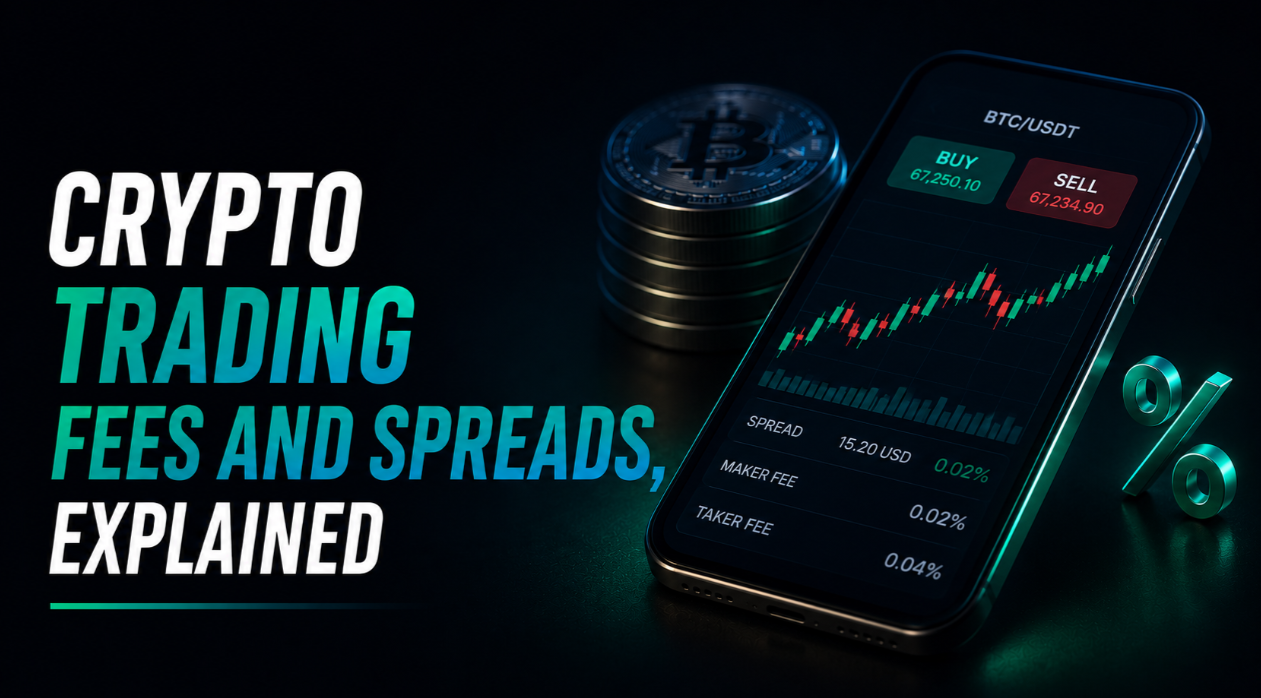
ExchangesCrypto Trading Fees and Spreads, ExplainedCrypto trading fees include more than the headline rate. Learn how maker-taker fees, spreads and network costs combine into what you really pay.5 min read·
ExchangesCEX vs DEX: Which Should You Use?CEX vs DEX comes down to custody, convenience and control. Compare how centralized and decentralized exchanges work so you can pick the right one.5 min read·
MarketsBitcoin Slips Below $70K as Fed Hike Fears Meet JPMorgan’s Bigger BetBitcoin fell below $70,000 on November 13 as Fed rate-hike talk and ETF outflows hit sentiment, while JPMorgan quietly raised its Strategy and IBIT holdings.4 min read·
MarketsBitcoin ETF Outflows Deepen Ahead of CPI as NYSE Backs Avalanche for 24/7 Tokenized TradingUS spot Bitcoin ETFs lost about $201 million in a single session as traders braced for key inflation data and a possible Fed hike. Meanwhile, the NYSE chose Avalanche as the settlement layer for its planned 24/7 tokenized securities platform.3 min read·
MarketsFinCEN Cuts MEXC Off From US Banks as Bitcoin ETFs Extend Weekly OutflowsThe US Treasury has barred American financial institutions from dealing with MEXC over alleged illicit flows of at least $16 billion, while spot Bitcoin ETFs lost $1.28 billion in a week and BTC held near $76,000.3 min read·In our ratings: See CoinPulse's LetsExchange rating and evidence · Instant exchanger ratings